
10 Best Apollo io Alternatives for 2026

Apollo.io earns its place on a lot of sales stacks because it gives reps one login for data, sequencing, and basic workflow management. For many early-stage teams, that’s enough. You get a huge database, a familiar UI, and a price point that’s easier to justify than most enterprise vendors.
The problem starts when the motion gets more demanding. Data that’s good enough for broad outbound can break down when you’re targeting narrow ICP slices, calling into specific regions, or trying to protect domain health across a scaled cold email program. Apollo’s database is large, with over 300 million leads across 200 countries, but real-world tests cited by Artisan’s Apollo alternatives analysis point to meaningful quality gaps, including 73% accuracy for general data, email bounce rates above 30%, and phone accuracy around 40%. That’s manageable when one rep is testing a niche. It gets expensive when a full team is burning credits, domains, and time.
That’s usually the point where teams start looking at apollo io alternatives. Not because Apollo is bad, but because they’ve outgrown the trade-offs. Some need stronger US enterprise coverage. Some need better EMEA compliance. Some need cleaner verified emails. Others don’t want another tool at all. They want someone else to run outbound and only pay for qualified meetings.
If you’re at that point, this roundup should help. It covers software options, where each one fits, what each one does well, and where each one falls short. It also includes the service-based route for teams that would rather outsource outbound entirely than rebuild their stack internally. For a second opinion on the category, this roundup of Top 9 Apollo.io alternatives is worth skimming too.
1. ZoomInfo
ZoomInfo is the upgrade teams buy when Apollo stops being reliable enough for a serious outbound machine. If your SDR team lives in Salesforce, runs account-based motions, and needs ops control across routing, enrichment, and intent, ZoomInfo is usually on the shortlist.
Its strength is depth, especially in the US. Landbase cites ZoomInfo at 321 million contacts and 104 million companies, with email verification rates above 95% in its positioning as an Apollo alternative, plus buyer intent monitoring across more than 1,000 sources in enterprise workflows, according to Landbase’s ZoomInfo comparison.
Where it fits best
This isn’t a “buy it for one rep” tool. It fits best when sales ops needs governance, marketing needs enrichment, and leadership wants one vendor that can support multiple GTM motions without duct-taped workflows.
A few practical use cases stand out:
-
Enterprise outbound: Direct dials, org charts, technographics, and intent give reps more context before first touch.
-
RevOps standardization: Enrichment APIs and integrations make it easier to keep CRM records cleaner.
-
Website-led prospecting: Visitor identification is useful when you already have meaningful traffic and a follow-up process.
Practical rule: If your team is losing deals because reps can’t identify the right buying committee fast enough, ZoomInfo is usually worth a serious look.
Trade-offs that matter
The downside is cost and procurement friction. Landbase notes quote-based pricing starting at $14,995 per year per seat for enterprise use in its overview of the category, which puts it well outside the range of most early-stage teams. It also excels most clearly in US coverage, so international teams often end up supplementing it rather than replacing their whole stack with it.
For teams building a more formal outbound engine, ZoomInfo makes sense as part of a broader modern B2B lead generation system. If you’re still figuring out ICP, testing messaging, or operating with a lean budget, it’s probably too much platform too early.
Visit ZoomInfo.
2. Cognism
Cognism is one of the clearest apollo io alternatives for teams selling into Europe or teams that care a lot about compliant phone-based outreach. When Apollo struggles on regional coverage or deliverability-sensitive lists, Cognism is often the first serious replacement to test.
Its positioning is straightforward. Cognism says it has a database of 400 million-plus profiles and emphasizes phone-verified mobile numbers, weekly refreshed leads, signal data, and GDPR-oriented workflows in its Apollo competitors breakdown.
Why teams switch
The strongest case for Cognism is not “more features.” It’s better fit for a specific motion. If your reps need mobile numbers they can trust and your legal or ops team cares about compliance standards, Cognism tends to be easier to defend internally than a cheaper tool with weaker controls.
That matters even more when targeting a narrow market. If you haven’t nailed account selection yet, start there before changing tools. This guide on how to identify a B2B target market with precision is the right precursor to any data vendor decision.
What stands out in practice
Cognism’s Diamond Data and on-demand verification model are useful because they match how real teams prospect. You don’t always need a massive raw export. Sometimes you need fewer records, but you need them to be callable now and usable without burning rep time.
Landbase also notes that Cognism offers 3x connect rates in EMEA scenarios relative to ZoomInfo’s need for supplementation there, and Cognism’s own category framing highlights up to 3x higher connect rates versus Apollo in phone-led outreach. For teams where calls are a real part of pipeline creation, that’s the deciding factor.
Teams usually don’t buy Cognism to save money. They buy it to remove risk from international prospecting and get cleaner contact paths.
The trade-off is predictable. Pricing is custom, sales-led, and generally not aimed at tiny teams. If you only need quick self-serve list building, Lusha or UpLead will feel lighter. If you need verified mobile coverage and compliant workflows, Cognism is the stronger fit.
Visit Cognism.
3. Lusha
Lusha is what I recommend when a team wants less complexity, not more. It’s a cleaner choice for founders, solo sellers, and small outbound teams that need quick contact lookups without buying into a heavy platform.
The appeal is operational. Lusha tends to fit fast-moving workflows where reps prospect directly from LinkedIn, enrich a few accounts, and move into outreach the same day. That’s different from ZoomInfo’s “centralized ops system” role.
Best for lean workflows
Lusha works well when your motion is email-first and the team wants transparent usage. It’s easier to trial than most enterprise tools, and it doesn’t ask you to redesign your sales process to justify the purchase.
That makes it useful for:
-
Founder-led outbound: Fast lookup flow, low admin burden.
-
Small SDR pods: Easier seat rollout and simpler adoption.
-
Recruiting-style research: Browser-driven prospecting with minimal setup.
If your reps are still learning the basics of prospecting and personalization, the bigger win may be process, not data volume. Tighten the message first. This playbook on how to cold contact prospects is the kind of groundwork that makes a lightweight tool perform better.
Trade-offs
The limitation is usually phone economics and depth. Lusha is good when you need a practical workflow, not when you need deep buying committee mapping, heavy enrichment logic, or broad ops controls across a large team.
That’s why Lusha often ends up as a rep-friendly layer in the stack rather than the whole stack. Teams use it when they want speed and clarity. They outgrow it when ops needs stronger admin controls or when outreach shifts from “find a contact” to “run a coordinated account strategy.”
Visit Lusha.
4. SalesIntel
SalesIntel is the option I’d put in front of teams that are tired of arguing about data quality and want a vendor whose pitch is centered on verification. It’s especially relevant for high-stakes outbound where a bad record doesn’t just waste a credit, it wastes a rep’s best account slot for the day.
Its Research-on-Demand model is the practical differentiator. That matters when your ICP is narrow, the titles are inconsistent, or your reps are chasing accounts that broad databases don’t handle well.
Where it earns its keep
SalesIntel makes sense when you’re prospecting into defined segments and need confidence more than volume. It can be a better fit than Apollo for teams that don’t need an all-in-one sequencer and would rather buy cleaner contact sourcing.
A few scenarios where it tends to work:
-
Niche B2B targeting: Useful when standard databases miss the right contact layer.
-
Calling-heavy teams: Better when a wrong number creates immediate workflow friction.
-
Ops-led list building: Helpful when marketing ops or RevOps wants a verification buffer before records hit the CRM.
The real trade-off
The trade-off is that it’s less self-serve and less transparent than smaller tools. You’re usually dealing with a sales process, not a quick card-swipe signup. For some teams, that’s fine. For others, that slows testing too much.
If your reps are rewriting emails all day but still sending them to the wrong people, the bottleneck isn’t copy. It’s data selection and verification.
That said, SalesIntel pairs well with strong outbound execution. Cleaner contacts still need better messaging, follow-up, and offer framing. For teams that know the audience but need sharper outbound copy, this guide on how to write a cold mail is a useful complement to a more quality-first data stack.
Visit SalesIntel.
5. UpLead
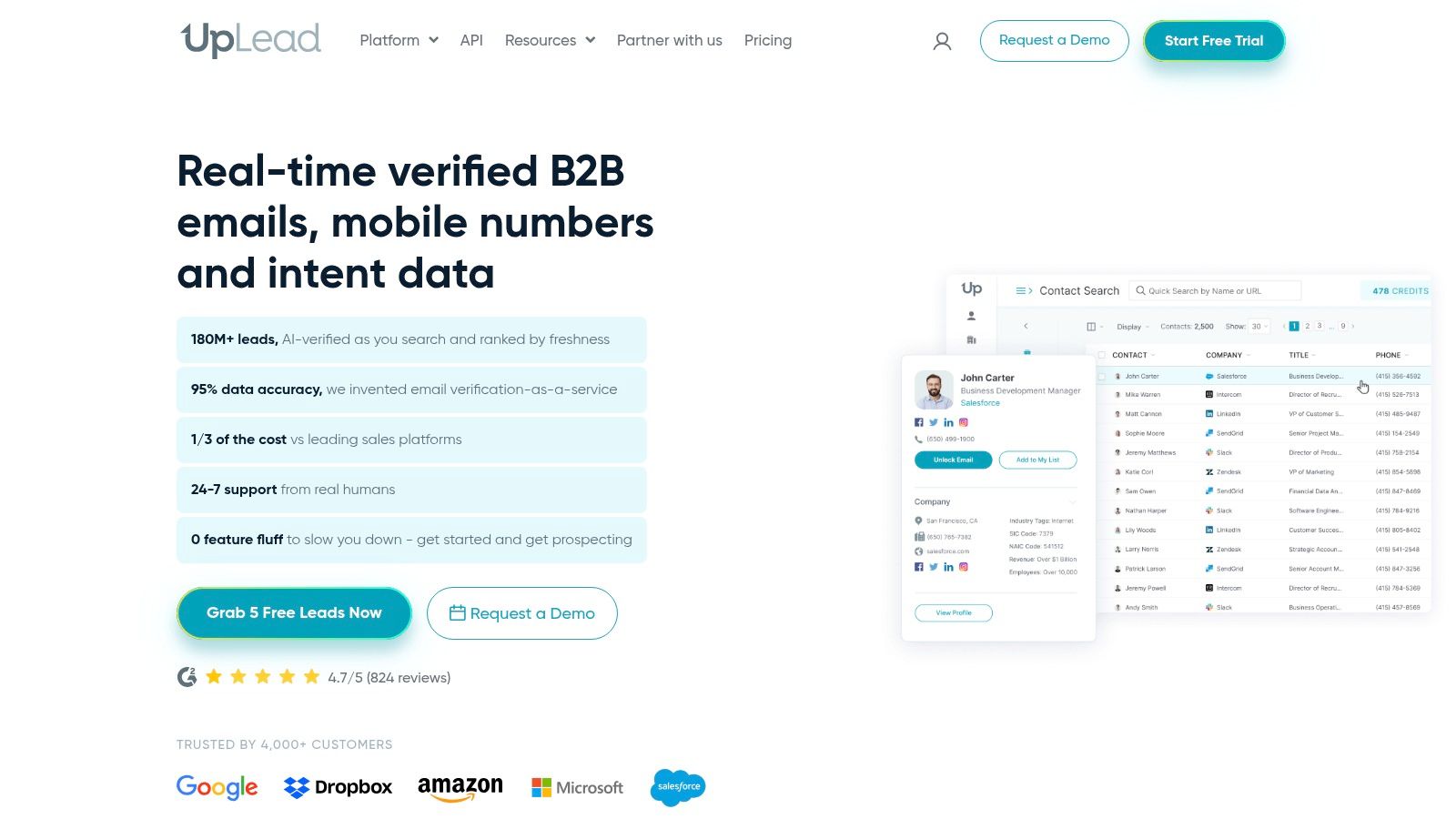
A common Apollo replacement decision looks like this. The team is sending enough volume, reply rates are acceptable, but too many records are weak. Reps waste time fixing bounced emails, second-guessing contact data, and rechecking lists before every launch.
UpLead fits that problem well. It is a practical choice for smaller outbound programs that want cleaner contact data, predictable pricing, and a tool reps can start using without a long rollout. If your sales motion is email-first and your stack already includes a sequencer and CRM, UpLead usually makes more sense as a focused data layer than as an all-in-one platform.
Where UpLead fits best
UpLead works best for teams that value accuracy and speed of execution over feature sprawl. You use it to build a cleaner list, enrich a record, and move the contact into the rest of your workflow.
That tends to matter in a few cases:
-
Email-first outbound: Better for teams where bounced emails hurt deliverability and campaign efficiency faster than missing phone numbers.
-
Small sales teams: Easier to test when leadership wants clear pricing and low setup overhead.
-
Agency and RevOps workflows: Useful when one team sources and verifies contacts, then passes approved records into outreach tools or the CRM.
If your team is still arguing about what should count as a sales-ready contact, fix that before judging any database vendor. This guide on what qualifies as a lead in business is a good reset for sales and marketing teams that are mixing raw contacts with actual pipeline opportunities.
The real trade-off
UpLead is narrower by design. That is part of the appeal, but it also sets the limit.
You are not buying the broad company intelligence, workflow depth, or phone-heavy coverage that larger platforms try to provide. Teams that rely on aggressive cold calling, international territory coverage, or an all-in-one rep workspace may outgrow it quickly. In those cases, the lower price can become less relevant because reps still need other tools to fill the gaps.
For many teams, the best use of UpLead is inside a modular stack. Source and verify contacts in UpLead. Run outreach from your sequencer. Keep system-of-record discipline in the CRM. That setup is often easier to migrate into, easier to replace later, and easier to compare against outsourced options like pay-per-meeting agencies if the team decides lead generation should be handled outside the sales org.
Visit UpLead.
6. Lead411
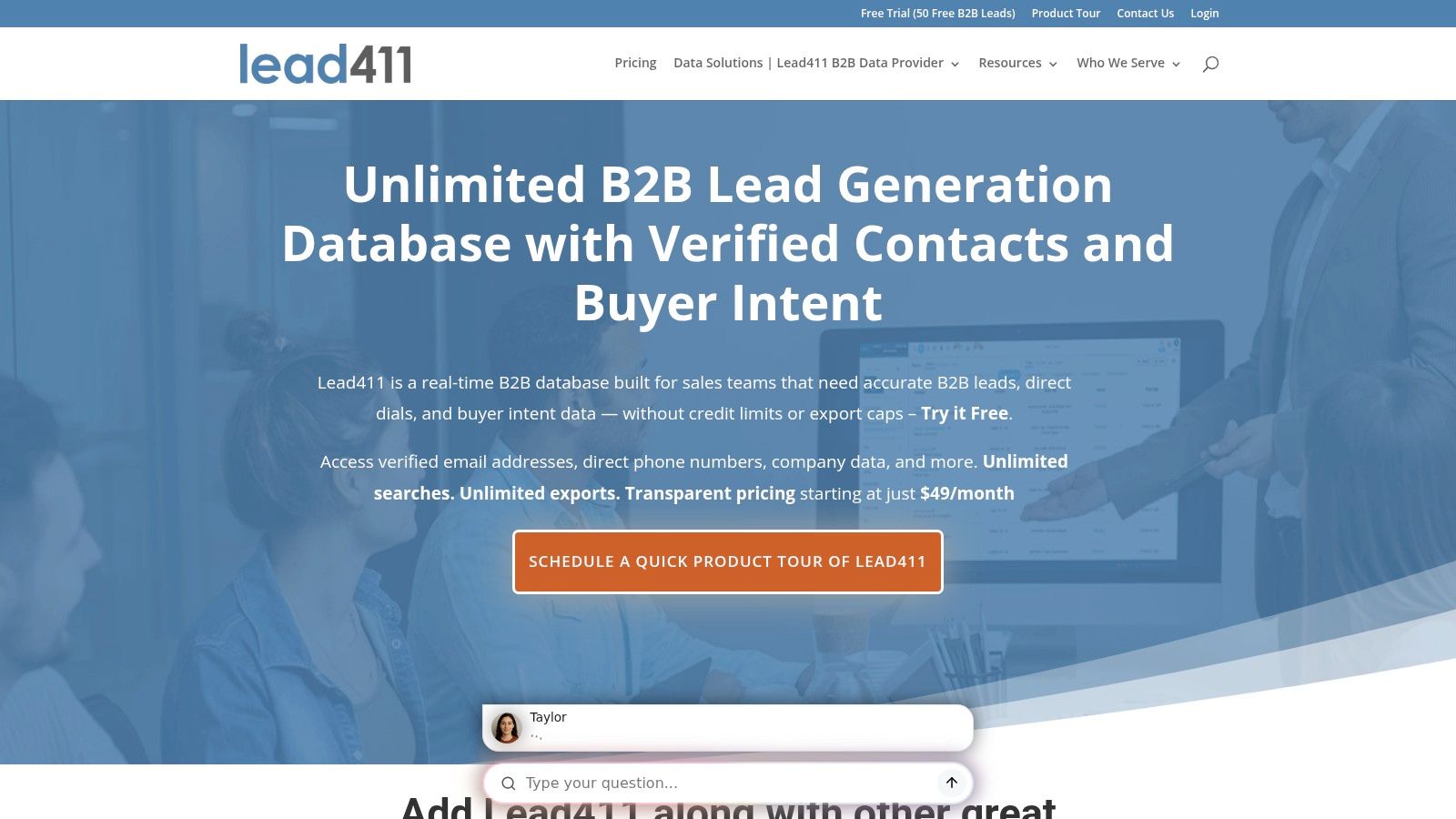
Lead411 is a practical tool for teams that sell mostly into the US and want solid targeting filters without stepping into enterprise pricing. It sits in the middle of the market well. More capable than bare-bones lookup tools, less heavy than a full enterprise platform.
The value is usually in the combination of direct dials, hiring signals, tech install filters, and intent-style data for focused campaigns. If your reps know the market and just need better slices of it, Lead411 can be enough.
Best use case
Lead411 is strongest when you’re building targeted US campaigns around timing and relevance. Hiring trends and tech stack filters can sharpen the list before a rep writes a single line of copy.
That usually helps in motions like:
-
US SaaS outbound: Reps can segment accounts by installed tech and likely use case.
-
Agency prospecting: Teams can build smaller, more relevant lists instead of huge generic exports.
-
Budget-conscious teams: It gives more targeting power than many entry tools without requiring an enterprise purchase path.
Trade-offs to watch
The main concern is international depth. If your team covers Europe, APAC, or mixed-region territories, you’ll want to test it hard before standardizing. Lead411 can be very good inside its sweet spot and less compelling outside it.
It also works best when the team has discipline. Better filters don’t matter if reps still export massive lists and run generic messaging. Used correctly, Lead411 helps tighten targeting. Used poorly, it becomes another noisy list source.
Visit Lead411.
7. RocketReach
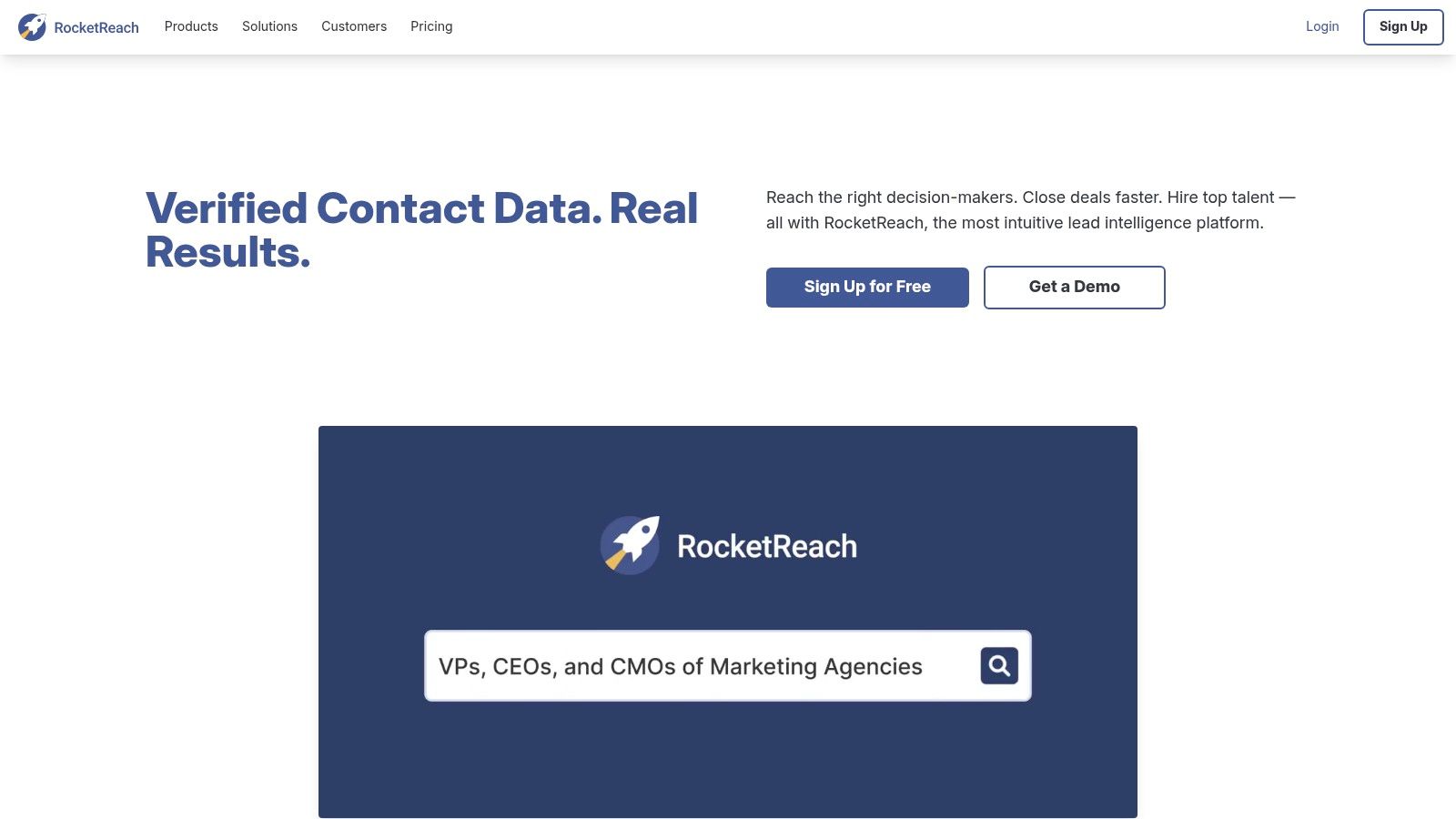
A common scenario is a rep missing one stakeholder on a live account and needing an answer in two minutes, not after a list build, enrichment job, or admin request. RocketReach is built for that kind of work. It is usually fastest when the job is simple: find a person, verify whether the record looks usable, and hand it to the rep.
That makes RocketReach a practical Apollo alternative for teams that value speed at the rep level more than heavy process control. I would not pick it first for a large outbound org trying to standardize territory rules, enrichment logic, and team-wide governance. I would pick it for teams that need quick lookups across sales, recruiting, partnerships, or founder-led outreach.
Where RocketReach fits
RocketReach works best as a day-to-day sourcing tool inside a broader stack. The platform is strong when the motion depends on one-off contact discovery and quick research, not on building huge, highly filtered lists that flow through a tightly managed outbound engine.
It tends to fit well in cases like these:
-
AE and SDR account work: Reps can fill gaps on named accounts without waiting on ops.
-
Founder-led sales: Fast lookups matter more than advanced admin controls.
-
Recruiting plus GTM teams: One tool can support candidate and prospect research.
-
Backup sourcing: Useful when your main data vendor misses a contact and the rep still needs to act today.
For teams comparing lookup-first workflows, this review of Rocket Email Finder is a useful reference because it shows how this style differs from tools built around larger database exports.
Trade-offs to watch
The main trade-off is scale economics. A tool that feels efficient for a few reps can become expensive once every user needs credits, and that cost is harder to justify if the team still has to verify records elsewhere.
Coverage consistency is the other issue. RocketReach is often good enough to keep reps moving, but “good enough” is different from “ready to use at volume.” If you are running a structured outbound program, test it on your actual segments before migrating. Pull contacts from your top industries, check match rates, validate emails, and see how often reps still need a second source.
That is the core decision framework here. If your team wants faster individual research, RocketReach can help. If you want one system to power list building, governance, sequencing inputs, and reporting across the whole outbound motion, it is usually better as a supporting tool than the core database.
Visit RocketReach.
8. Snov.io
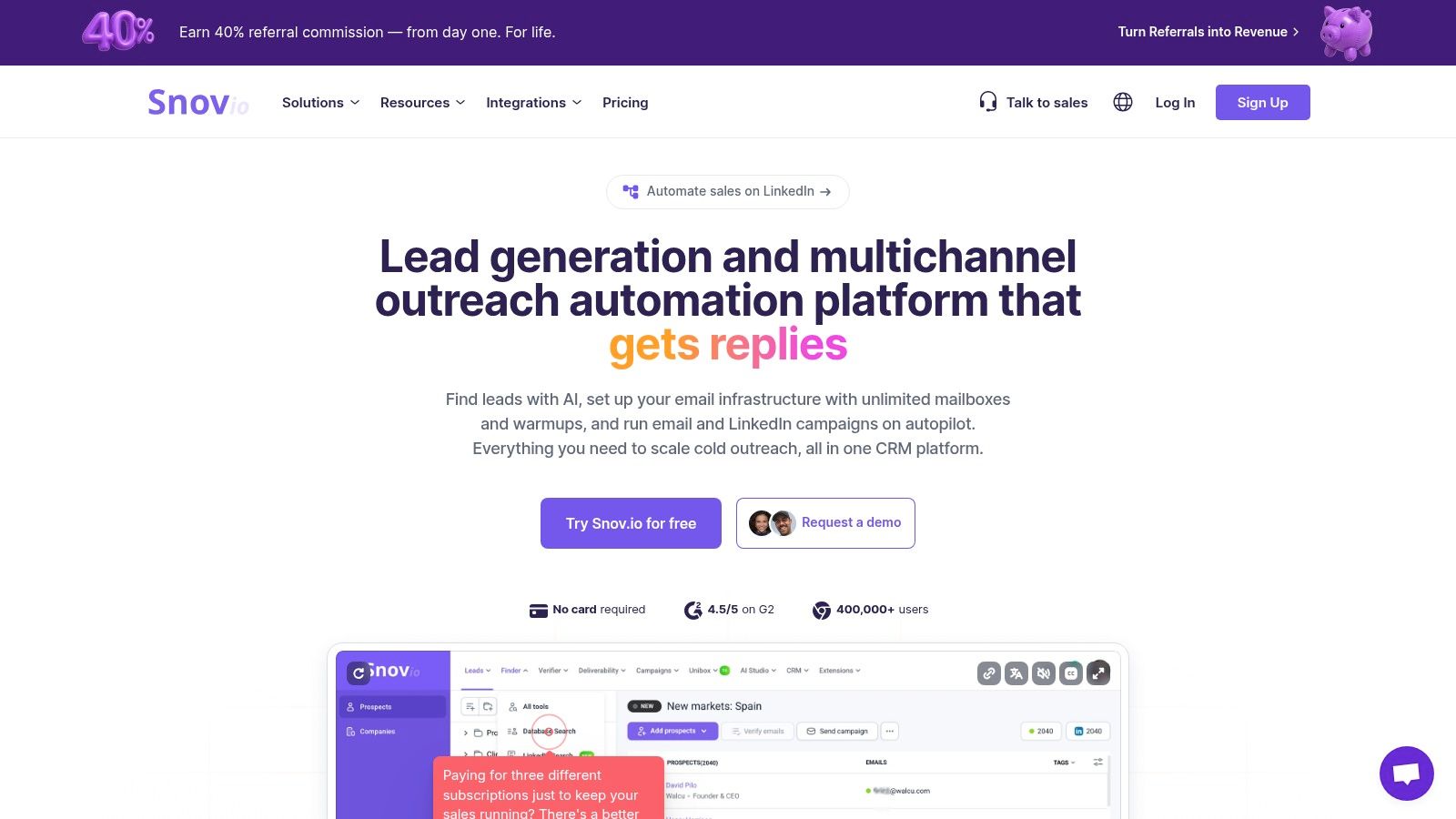
Snov.io is a different kind of Apollo alternative because the appeal isn’t just data. It’s the combination of prospecting, verification, sequences, and deliverability support in one place. For lean teams that want to run outbound without stitching together too many tools, that’s attractive.
This makes Snov.io more of an execution platform than a pure database play. If your current problem is fragmented workflow, not just missing contacts, Snov.io deserves a look.
Why teams choose it
Snov.io is useful when you want a tighter loop between finding leads and contacting them. Credits can go toward search and verification, and the platform also supports campaign execution and warm-up related workflows.
That combination tends to help:
-
Small outbound teams: Fewer handoffs between tools.
-
Early-stage startups: Easier to launch a basic cold email system.
-
Teams rebuilding deliverability: Useful when the issue is stack sprawl and poor sending hygiene.
Operator note: The best all-in-one tools work when your motion is still simple. Once phone outreach, routing rules, or multi-region governance matter, modular stacks usually win.
What to be realistic about
Snov.io is not the best answer for phone-first teams. If direct dials drive your pipeline, you’ll still want another source. It also requires discipline on campaign setup. An all-in-one platform doesn’t save you from weak targeting or thin messaging.
Still, for teams that want fewer moving parts and decent end-to-end coverage, it’s one of the more practical options on this list.
Visit Snov.io.
9. Clearbit by HubSpot
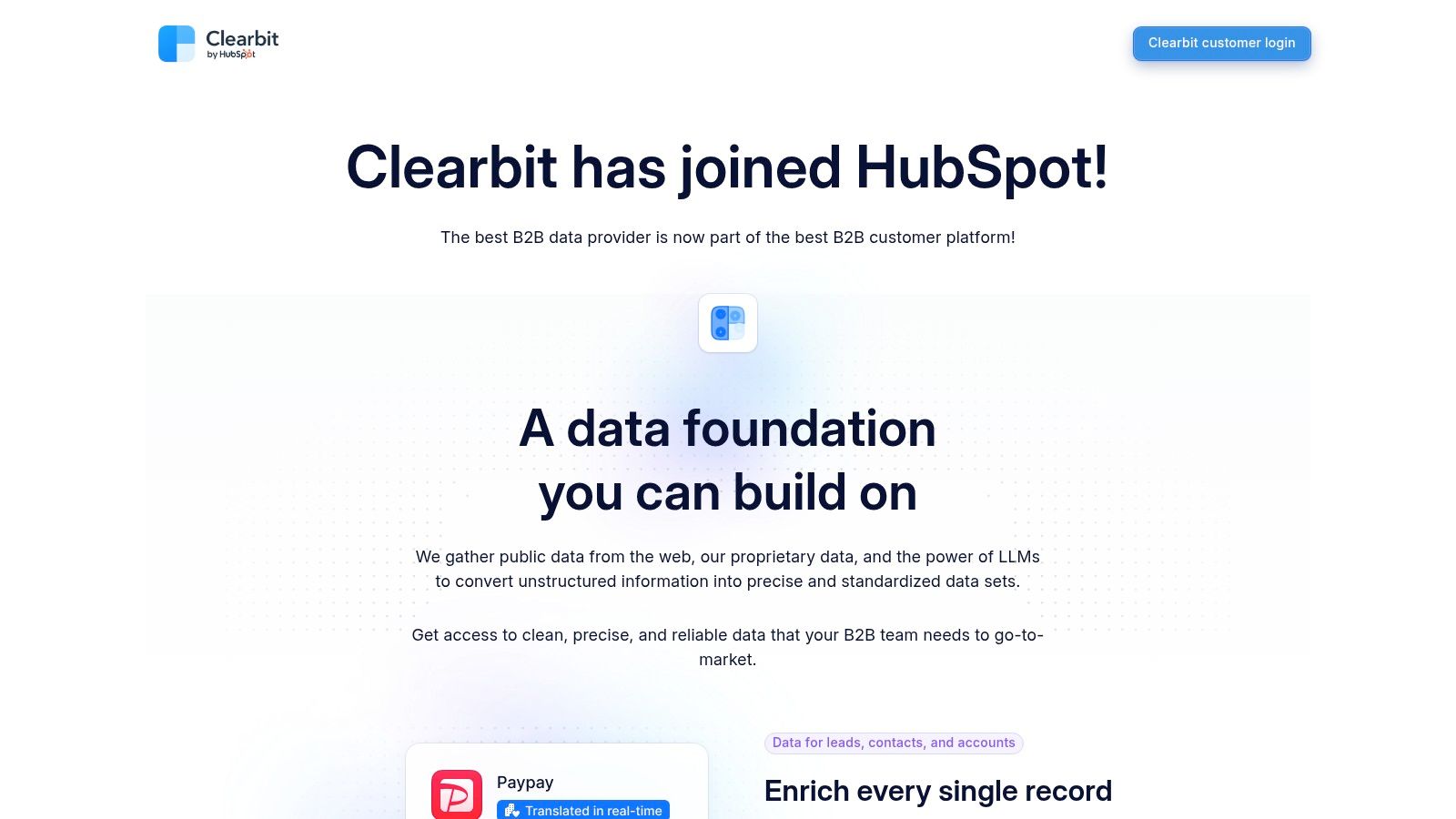
Clearbit is not the most direct Apollo replacement, and that’s exactly why some teams should consider it. If your main pain isn’t prospect list generation but enrichment, routing, and form conversion inside a HubSpot-centric stack, Clearbit can be more useful than another contact database.
Think of it as infrastructure for better lead handling. It helps teams understand who filled out a form, route the record properly, and enrich accounts so reps don’t waste time doing basic research manually.
Best fit
Clearbit makes the most sense for marketing-led and inbound-heavy motions. If your team already generates demand and needs stronger data downstream, enrichment is often a better investment than buying another outbound database.
It tends to work well for:
-
HubSpot-centered GTM teams: Better fit when CRM and marketing automation are already standardized there.
-
Inbound optimization: Form shortening and routing improvements can reduce friction.
-
Website intelligence: Visitor de-anonymization helps sales follow up with more context.
The trade-off
If you want direct self-serve contact sourcing for outbound reps, Clearbit usually isn’t the first tool I’d buy. Its value shows up in process quality, not just list volume. That means it can be a great addition to the stack, but not always a complete Apollo replacement.
For teams that care about enrichment, website intelligence, and operational fit with HubSpot, it’s one of the better options. For teams that need reps pulling lists all day, look elsewhere first.
Visit Clearbit.
10. Seamless.AI
An SDR pulls 150 contacts in an afternoon, launches a sequence the next morning, and then ops spends the week cleaning up bounce issues and bad fits. That is the primary evaluation lens for Seamless.AI. It is fast to adopt, fast to search, and built for reps who want to prospect directly from LinkedIn or a browser tab without much setup.
That speed is the reason teams keep testing it.
The trade-off is consistency. In practice, I would treat it as a sourcing layer, not a source of truth, unless your team already has a solid verification step before anything gets pushed into sequencing. If reps can pull data quickly but your deliverability process is weak, list volume turns into cleanup work for sales ops and revenue operations.
Where it fits best
This AI solution tends to work best in motions where speed matters more than perfect record quality on the first pass. It can be a practical option for:
-
New SDR teams: Reps can start prospecting quickly without a long onboarding cycle.
-
LinkedIn-heavy workflows: The extension supports fast contact collection while reps research accounts live.
-
Supplemental coverage: Useful when your primary provider misses a contact and the rep needs another place to check.
-
Early testing: Good for trying small segments or territories before ops builds a more structured list process.
Where teams hit limits
The problem shows up when leadership expects predictable pipeline from a velocity-first workflow. Faster list building does not fix weak targeting, poor verification, or shaky sender health. If contact quality swings from one campaign to the next, reps lose trust in the tool and managers lose confidence in the numbers.
That matters more than feature breadth.
For some companies, this is also the point where the software comparison breaks down. The primary question is not which database replaces Apollo. The primary question is whether the team should own prospecting, verification, deliverability, and meeting generation internally at all.
When a service-based alternative makes more sense
If the bottleneck is execution, another tool usually adds one more login and one more process to manage. A service model can be the better alternative when:
-
You lack experienced outbound operators: Better data will not fix weak list strategy, copy, and campaign management.
-
Deliverability is already unstable: Domain setup, inbox placement, and sending discipline need active management.
-
Leadership wants meetings, not tooling experiments: Outcome-driven services can map more directly to pipeline goals.
That is the practical difference between buying software and buying an operating model. Teams that want control, internal process ownership, and rep-led sourcing may still prefer a tool like Seamless.AI. Teams that want qualified meetings without building the function from scratch should also evaluate pay-per-meeting or outsourced outbound partners alongside software options.
Visit Seamless.AI.
Top 10 Apollo.io Alternatives Comparison
| Product | Core features | Quality (★) | Price / Value (💰) | Target (👥) | USP (✨/🏆) |
|---|---|---|---|---|---|
| ZoomInfo | Contact & company search, org charts, intent, visitor ID, enrichment | ★★★★★, broad US coverage | 💰Quote/annual; enterprise-focused | 👥Enterprise sales, RevOps, GTM teams | 🏆Comprehensive dataset & integrations ✨GTM Copilot |
| Cognism | Phone‑verified Diamond Data, verify‑on‑demand, compliance, intent | ★★★★, strong mobile & EMEA | 💰Quote-based; enterprise-leaning | 👥Teams needing mobile numbers & compliance | ✨Phone-verified ‘Diamond’ data + GDPR/CCPA workflows |
| Lusha | Chrome extension, CRM sync, published credit model, free tier | ★★★★, easy, email-first | 💰Transparent credits; generous free tier | 👥SDRs, small teams, email-focused prospectors | ✨Clear credit logic & low-friction trial |
| SalesIntel | Human-verified records, Research‑on‑Demand, re‑verification, APIs | ★★★★, high accuracy | 💰Quote-based; premium accuracy | 👥High-stakes outreach & calling teams | 🏆Human verification + on‑demand research |
| UpLead | Real-time email verification (95% guarantee), technographics, API | ★★★★, deliverability-focused | 💰Published pricing; affordable entry plans | 👥Small teams, deliverability-sensitive outreach | ✨95% email accuracy guarantee (refunds) |
| Lead411 | Direct dials, tech/hiring filters, intent, value-tier plans | ★★★★, budget-friendly US data | 💰SMB-priced; value-oriented | 👥SMBs & agencies targeting US campaigns | ✨Direct dials + practical filters at lower cost |
| RocketReach | Email/phone lookups, bulk exports, extension, CRM sync | ★★★★, fast rep-friendly lookups | 💰Credit-based; solo-friendly economics | 👥SDRs, recruiters, solo users | ✨Quick individual lookups & decent US coverage |
| Snov.io | Email finder/verification, sequences, warm-up, deliverability tools | ★★★, all‑in‑one but tier limits | 💰Subscription bundles; end‑to‑end value | 👥Teams running full cold-email programs | ✨Sequencing + mailbox warm‑up in one platform |
| Clearbit (by HubSpot) | Lead/account enrichment, form shortening, IP reveal, APIs | ★★★★, HubSpot-aligned enrichment | 💰Quote-based; packaging changed under HubSpot | 👥HubSpot-centric marketing & ops teams | 🏆Visitor de-anonymization & native HubSpot fit |
| Seamless.AI | AI-assisted contact search, Chrome extension, sequencing addons | ★★★, fast harvesting; variable accuracy | 💰Contact sales; limited public pricing | 👥SDRs wanting fast list building | ✨AI-assisted reveals + active user community |
The Best Alternative Is the One That Drives Results
This search often starts with the wrong question. Teams ask which tool is “best” instead of asking which bottleneck is hurting pipeline right now.
If the problem is data quality, buy for verification. If the problem is international coverage, buy for regional strength and compliance. If the problem is workflow sprawl, buy for execution fit. If the problem is that nobody on the team has the time or skill to run outbound properly, stop shopping for software and look at a service model.
That framing matters because apollo io alternatives aren’t all solving the same job. ZoomInfo is built for scale, governance, and deep US enterprise coverage. Cognism is the stronger choice when EMEA, mobile accuracy, and compliance matter more. UpLead and Lusha are better for lighter, self-serve list building. Snov.io is useful when you want one place to handle prospecting and email execution. Clearbit helps more with enrichment than with raw outbound sourcing.
The mistake I see most often is trying to force one platform to solve everything. That usually creates a bloated stack or a compromised workflow. Strong outbound teams are more deliberate. They decide whether they need a source of truth, a verification layer, an execution layer, or an outsourced engine. Then they buy accordingly.
A simple selection framework works well.
Choose based on the bottleneck
-
Bad emails and poor deliverability: Prioritize verified email quality and a workflow that protects domains.
-
Weak phone connect rates: Use a provider that specializes in mobile and direct-dial quality.
-
Messy RevOps environment: Favor enrichment, integrations, and governance over flashy prospecting features.
-
Too much rep admin: Simplify the stack or move outbound execution to a partner.
-
International expansion: Test regional coverage before signing anything long term.
Migration matters almost as much as vendor choice. Teams often switch tools, import everything at once, and create a mess in the CRM. Don’t do that. Migrate by motion. Start with one segment, one sequence family, and one success metric. Make sure routing, deduplication, ownership rules, and suppression lists are clean before you roll out broadly.
Don’t measure a new data vendor by how many records it can export. Measure it by whether reps can turn those records into conversations without hurting deliverability or wasting selling time.
There’s also a bigger strategic call here. Some teams should replace Apollo with another tool. Others should replace Apollo with a stack. And some should replace Apollo with a service. That last option gets more attractive when leadership doesn’t want to manage inbox setup, list QA, copy testing, and sender reputation internally.
For those teams, pay-per-meeting agencies are worth real consideration. The model is simple. You stop paying for software seats and internal trial-and-error that may or may not produce pipeline. Instead, you pay for qualified meetings that meet agreed criteria. That changes the economics and the accountability.
That’s why the best alternative is the one that gets your team closer to revenue with less operational drag. Not the one with the longest feature list. Not the one with the biggest database claim. The one that fits your motion, your market, and your team’s actual capacity to execute.
Run a controlled test. Pick one motion. Evaluate it hard. Then commit.
If you’d rather skip the tool migration and hand outbound to specialists, Fypion Marketing is worth a serious look. Fypion runs cold email lead generation on a pay-per-qualified-meeting model with no upfront fees, retainer, or setup costs. The team handles market research, targeting, infrastructure, copy, list building, and ongoing optimization, so your sales team can focus on closing instead of managing prospecting systems.