
Lead Generation for Startups: The 2026 Growth Guide

You launched the product. The demo lands. Early users say the value is real. Then pipeline stalls.
That’s where most startup teams get stuck. Not because the offer is weak, but because there’s no repeatable system for turning a market into conversations, conversations into meetings, and meetings into revenue. Founders start posting on LinkedIn, running a few ads, sending a handful of cold emails, and hoping one channel suddenly generates growth. It rarely works that way.
Lead generation for startups works when it’s built like an operating system. You define what constitutes a qualified lead, pick one channel that matches your buyer, build the outreach engine, track what matters, and only then decide whether to scale it in-house or hand it off to a partner. That’s the difference between random activity and a real pipeline.
Why Your Startup Needs a Lead Generation Playbook
A lot of startups run growth by improvisation. One week it’s founder outreach. The next week it’s paid social. Then someone suggests webinars, SEO, partnerships, or outbound SDRs. Activity goes up, but learning stays flat because nothing is structured.
That approach breaks fast when cash is tight.
Lead generation is no longer a side experiment. In 2025, 91% of marketers ranked lead generation as their top priority, and 68% of businesses said they were increasing budgets for lead-generation technology, according to Reach Marketing’s 2025 B2B lead generation statistics. Startups aren’t operating in a quiet market. They’re competing against companies that already treat pipeline as a core budget line.
Random tactics don’t compound
Founders often ask for “more leads” when the underlying issue is missing process. If you don’t know who should buy, why they should reply, what channel reaches them best, and what counts as qualified, then every campaign becomes a reset.
A playbook fixes that by answering four practical questions:
-
Who counts as a real prospect Not everyone who downloads a guide or accepts a connection request belongs in your pipeline.
-
Which acquisition path gets you signal fastest Startups need learning speed, not channel sprawl.
-
What handoff standard sales will accept If sales rejects half the meetings, marketing didn’t generate demand. It generated calendar noise.
-
When to scale and when to stop A working system should tell you whether to add volume, tighten targeting, or rewrite the offer.
Practical rule: If your team can’t explain how a lead moves from first touch to qualified opportunity, you don’t have a lead gen engine yet. You have disconnected tactics.
A playbook creates focus
The best startup teams don’t try everything at once. They choose a narrow segment, build one reliable acquisition motion, and force it to prove itself. That discipline matters more than cleverness.
If you’re still shaping the bigger go-to-market picture, this guide to marketing strategies for startups is useful because it frames lead generation inside the broader decisions around positioning, channels, and budget allocation.
Growth hacking is mostly a label. Systems are what scale. A startup that can consistently define, attract, qualify, and convert the right buyers has something far more valuable than a “hack.” It has a repeatable way to create pipeline on demand.
The Foundation Defining Your Ideal Customer Profile
Most ICP advice is too generic to be useful. It tells you to pick an industry, company size, and job title, then start outreach. That’s fine for a slide deck. It’s weak as an operating model.
The problem is earlier. Most startup teams haven’t defined what makes a lead qualified in the first place.
A useful startup ICP starts with lead quality, not list volume. As DataBees’ guide to lead generation for startups points out, a major gap in startup advice is helping early teams define lead quality when they don’t yet have deep historical sales data. The most practical guidance is to define your ICP around urgent pain, buyer role, and trigger events before you even pick a channel.
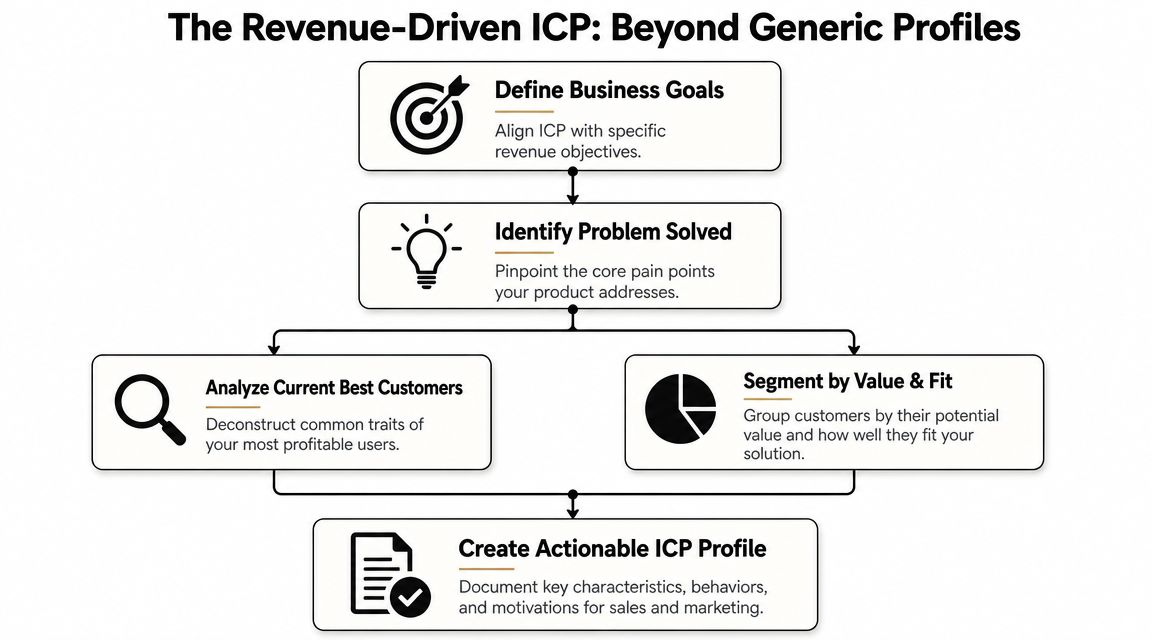
Start with pain that already costs the buyer something
A startup usually makes one early mistake here. It describes the product instead of the buying problem.
“Teams that need better workflow automation” is not an ICP. It’s a category with no urgency. A real ICP sounds more like this: operations leaders at growing B2B companies where manual handoffs are already slowing response times, creating reporting gaps, or forcing headcount workarounds.
Ask three questions:
-
What painful problem does this buyer feel now?
-
Who gets blamed internally when that problem continues?
-
What changed recently that makes this problem harder to ignore?
Those questions produce targeting that sales can use.
Trigger events matter more than broad fit
A company can match your product perfectly and still not buy. Timing matters.
Useful trigger events include things like new hiring, leadership changes, product launches, funding announcements, expansion into a new market, or visible process complexity. You don’t need a huge data model to start. You need a sharp view of what makes a buyer go from “interesting” to “worth a meeting.”
That’s where many generic ICP templates fail. They produce a static description of a company, not a live description of buying readiness.
Ten qualified leads are more valuable than a much larger list of random contacts. Early-stage startups usually win more by tightening fit than by increasing volume.
Define qualified before you scale outreach
Create a simple qualification standard before anyone starts sending campaigns. For most startups, that means documenting:
-
Company fit Industry, size, business model, and operating context where your offer is clearly relevant.
-
Role fit The person who owns the problem, not just someone senior enough to reply.
-
Pain fit Evidence the problem is active, visible, and expensive enough to justify change.
-
Timing fit Trigger events that suggest a buying window is open.
-
Disqualifiers Reasons a lead should never enter sequence, even if the email address is valid.
A lot of teams also benefit from reviewing examples from outside their own company. Fame’s insights on B2B lead gen are helpful here because they push toward sharper messaging and tighter audience definition instead of broad, low-conviction prospecting.
For a deeper framework on how to document and operationalize this inside a B2B motion, this complete guide to building an ideal customer profile is a practical reference.
A contact is not a lead
This sounds obvious, but startups blur it all the time.
A contact is a person in your database. A lead is someone who matches your fit criteria. A qualified lead is someone who matches your fit criteria and shows enough evidence of pain or timing to justify active pursuit.
If you skip that distinction, your metrics lie. Reply rates may look decent while sales quality stays weak. Fix the definition first. Channel selection, messaging, and meeting quality all get easier after that.
Choosing Your First Acquisition Channel
Startups lose months by spreading effort across too many channels before any one of them works. You don’t need omnichannel coverage on day one. You need one acquisition path that gets you signal quickly.
For B2B startups, two channels dominate for a reason. Recent reports show that 87% to 88% of B2B businesses use email for lead generation, and 97% of B2B social media marketers use LinkedIn, according to Dux-Soup’s 2025 B2B lead generation report. That doesn’t mean every startup should use both immediately. It means neither channel is experimental. They’re mainstream.
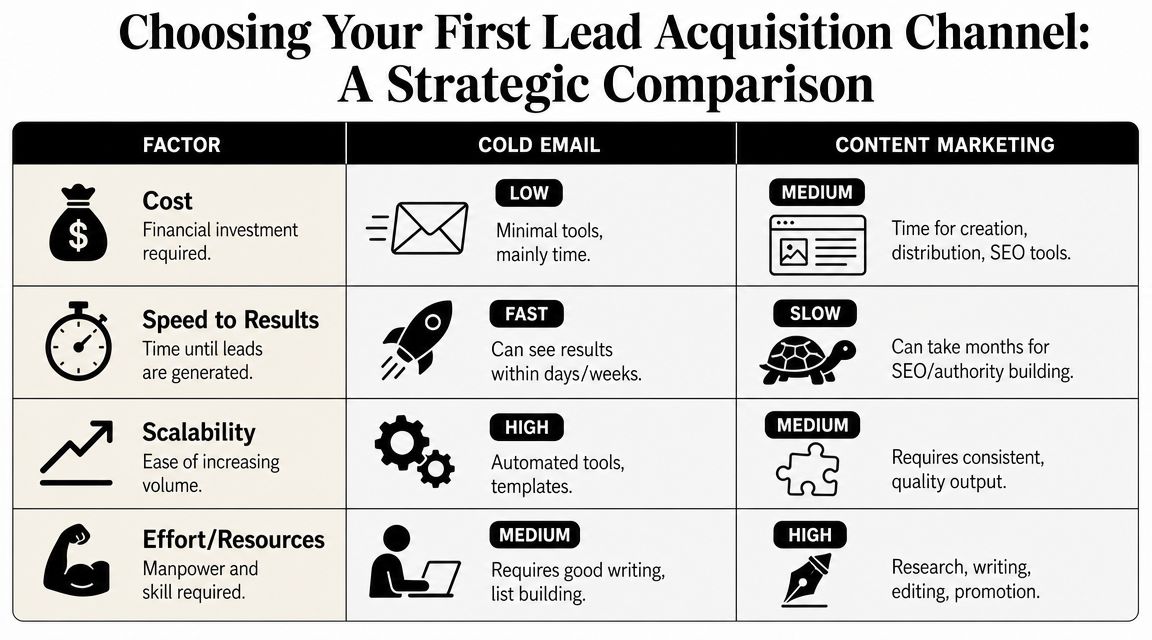
Compare channels by learning speed
If you need pipeline now, compare channels on four factors: targeting precision, speed to feedback, cost structure, and operational load.
| Channel | Best use case | Main strength | Main trade-off |
|---|---|---|---|
| Cold email | Clear B2B ICP with reachable buyers | Fast feedback and strong control over targeting | Requires deliverability discipline and list quality |
| LinkedIn outreach | Higher-ticket offers or hard-to-reach roles | Strong persona targeting and visible context | Slower manual effort if not systemized |
| Content and SEO | Buyers actively research the problem | Compounds over time and supports trust | Usually slower to produce demand |
| Paid ads | Strong offer and landing page already exist | Fast testing at top of funnel | Can burn budget quickly if messaging is weak |
| Partnerships | Adjacent vendors or communities share your buyer | Warm trust transfer | Harder to predict and operationalize early |
Pick the straightest line to your buyer
If your startup sells a defined B2B solution and you know the buyer role, cold email is often the fastest way to test message-market fit. If your audience is highly active on LinkedIn or values visible credibility before replying, LinkedIn prospecting can be the better first motion.
Content is valuable, but many early teams use it too early. They publish before they know which message converts. Paid ads can work, but they punish weak positioning faster than outbound does.
A useful default is simple:
-
If you know who to target and what pain you solve, start with outbound.
-
If buyers already search for the problem category, layer in content once outbound messaging is proven.
-
If your offer needs strong category education, partnerships and founder-led selling can support the early motion.
For a more specific breakdown of channel choices inside SaaS, these SaaS lead generation strategies are a good benchmark for matching channel to business model and deal motion.
The first channel doesn’t need to be permanent. It needs to be testable, measurable, and close enough to the buyer that you can learn fast.
Building Your Outreach Machine
Once you choose outbound, the next mistake is treating it like copywriting instead of infrastructure. Good outreach comes from the full system. Audience, data quality, sending setup, sequence structure, and reply handling all matter.
Start with the workflow, not the template.
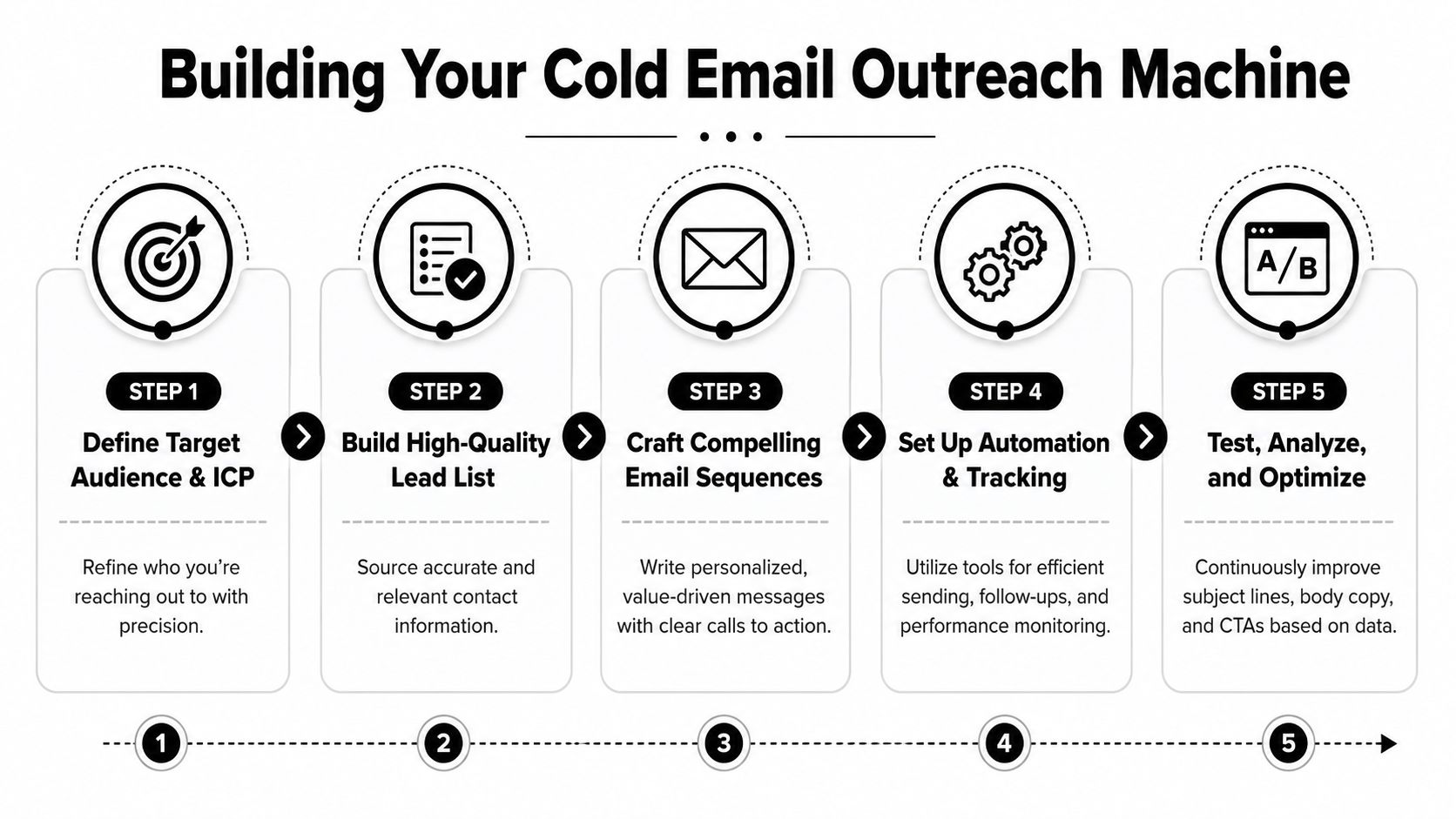
Build the stack before you chase volume
A basic startup outbound stack usually includes:
-
A CRM HubSpot, Pipedrive, or Close to track lead status and handoff.
-
An outreach platform Smartlead, Instantly, Lemlist, or Mailshake for sequencing and inbox management.
-
A data layer Apollo, Clay, or manual research workflows to assemble and enrich the list.
-
A process owner One person should own launch decisions, monitoring, and iteration.
Don’t send from your core brand inbox on day one if you’re going to run serious cold volume. Protect the main domain reputation and treat outbound as its own operating lane.
Build lists like a researcher, not a scraper
Most bad outreach starts with bad targeting. Teams pull thousands of contacts, then blame messaging when the campaign underperforms.
Your list should reflect the ICP rules you already defined. That means each record should answer basic questions: why this company, why this person, why now. If a lead can’t pass that test, it shouldn’t enter the sequence.
A clean prospecting workflow usually includes:
-
Build the account list first.
-
Identify the right buying roles inside those accounts.
-
Add trigger-event context where possible.
-
Verify contact data.
-
Segment before writing copy.
That’s also the point where staffing matters. If you’re hiring internal outbound help, this guide to vetting sales development reps is useful because early outbound success depends heavily on research discipline, not just hustle.
Sequence depth beats one great email
Most founders spend too long polishing email one and not enough time designing the full follow-up arc. That’s backwards.
According to Milk & Cookies Studio’s startup lead gen article, most replies come after 2 to 3 follow-ups, and Salesforce guidance notes that most deals close on the fifth or sixth touchpoint. The lesson is simple. Persistence matters more than perfection.
A single email rarely tells you whether the market is interested. A sequence does.
Your sequence should do different jobs across touches:
-
Touch one opens the problem and relevance.
-
Touch two reframes the pain or outcome.
-
Touch three adds context, proof, or a different angle.
-
Later touches stay short and easy to answer.
Avoid fake personalization. “I saw your recent post” isn’t compelling if it doesn’t connect to a real business issue.
A better cold email usually has four traits:
-
It’s short.
-
It names a problem the buyer recognizes.
-
It speaks to their context, not your features.
-
It asks for a low-friction next step.
Here’s a useful walkthrough on outbound execution:
If you want an outside option rather than building every outbound component internally, Fypion Marketing’s outbound cold email and SDR-led demand generation approach shows what a managed process can look like when outreach, targeting, and meeting qualification are handled as one system.
Testing Optimizing and Tracking Performance
Most startup teams either under-measure or over-measure. They track nothing beyond opens, or they drown in dashboards that don’t help them make decisions.
A usable lead generation system tracks only the metrics that change action.
Adobe’s lead generation guidance emphasizes a workflow that starts with a tight ICP and a single-channel test, then instruments the funnel with KPIs like reply rate and meeting rate so sales only receives prospects that cross a clear qualification bar, as outlined in Adobe’s lead generation steps.
Track the funnel where decisions happen
A simple startup scorecard should answer these questions every week:
-
Are the right people replying Reply volume without fit is noise.
-
Are replies converting into meetings If interest is high but meetings stay low, the CTA or qualification logic may be off.
-
Are meetings being accepted by sales If sales rejects the meeting, your definition of qualified is still weak.
-
Which segment produces the cleanest path forward The best segment isn’t always the one with the most replies. It’s often the one with the best downstream quality.
A lot of founders obsess over opens. That’s understandable, but opens don’t close deals. Replies, positive intent, booked meetings, and accepted opportunities are much closer to revenue.
Test one variable at a time
A/B testing fails when teams change the segment, message, CTA, and timing all at once. Then nobody knows what caused the result.
Test in this order:
-
Segment first Which buyer group shows the strongest pain and relevance?
-
Message second Which problem framing earns the best quality response?
-
CTA third Which ask gets the easiest yes?
-
Volume last Only scale after quality is stable.
If one campaign underperforms, don’t assume the channel is broken. Check the list and qualification rules before rewriting everything.
For a practical dashboard model, these essential lead generation KPIs for 2026 are a useful benchmark for what to monitor without getting lost in vanity metrics.
Keep the feedback loop short
The fastest-moving teams review live campaign data weekly, not quarterly. They read replies, tag objections, compare segments, and tighten targeting while the campaign is still running.
That rhythm matters. Good lead generation for startups comes from quick correction, not heroic planning.
Scaling When to Hire vs When to Partner
Once the first outbound motion works, the next decision gets more strategic. Do you build an in-house team around it, or do you partner with a specialist that already has the process, people, and infrastructure?
There isn’t one right answer. There is a right answer for your stage.
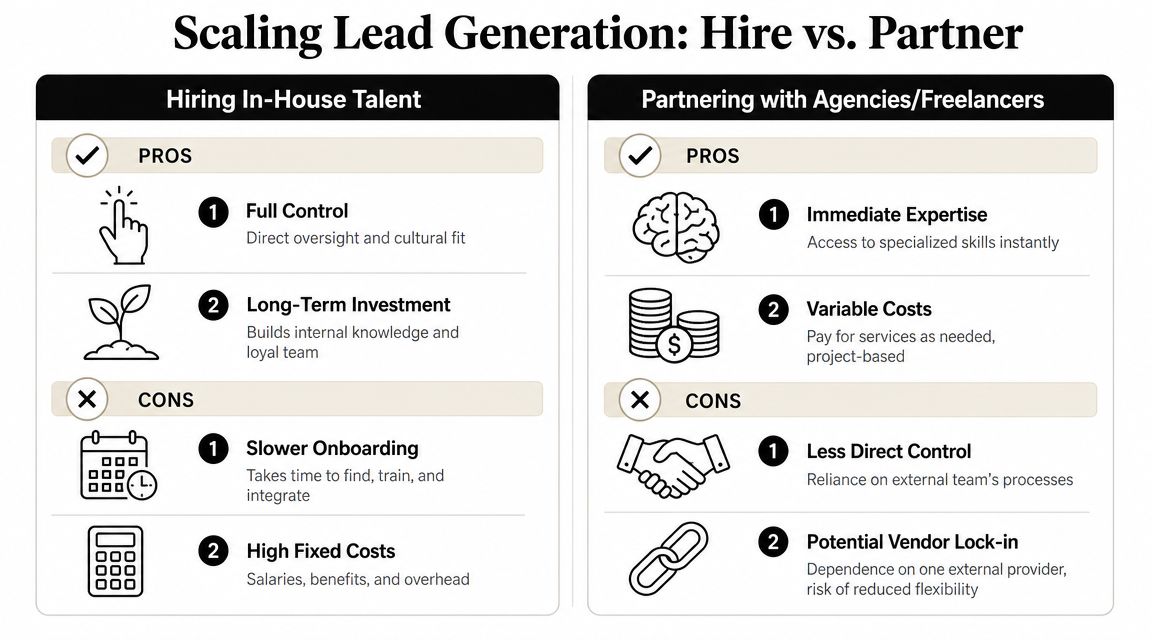
Hire when the motion is already clear
An internal SDR or growth hire makes sense when your startup already knows:
-
who the buyer is
-
what messaging gets replies
-
what qualification standard sales accepts
-
how much management time leadership can spend on training and oversight
In-house gives you control. It also gives you responsibility for hiring, onboarding, ramp time, coaching, process QA, tooling, and performance management. That’s often fine for a team with an established playbook. It’s expensive if you’re still guessing.
Partner when speed and risk transfer matter more
A performance-based or pay-per-meeting partner can make sense when you’ve got product-market fit signs, need pipeline faster, and don’t want to build every outbound function from scratch.
That model is especially useful when leadership wants internal teams focused on demos and closing, not prospecting operations. The trade-off is reduced day-to-day control. You need clear qualification criteria, visibility into process, and a tight feedback loop with the partner.
A good way to think about the decision is this:
| Situation | Better path |
|---|---|
| You’re still testing ICP and message | Keep the motion lean and tightly managed |
| You have a validated playbook and time to manage people | Hire in-house |
| You need faster execution and lower operational burden | Partner with a specialist |
| Sales capacity is strong but pipeline creation is weak | Partnering often makes more sense first |
For teams evaluating that external route, this overview of B2B sales outsourcing is a practical place to compare models and understand where outsourced prospecting fits.
The biggest mistake is scaling too early. If meetings are inconsistent and qualification is fuzzy, adding headcount or agency volume just multiplies the noise. Scale only after the motion is stable enough that more activity should produce more qualified conversations, not just more data.
Startup Lead Generation FAQs
How should an early-stage startup define a qualified lead?
Use a simple rule. A qualified lead should match your company fit, role fit, pain fit, and timing fit. If one of those is missing, keep the lead in research or nurture, not active sales outreach.
Should startups start with inbound or outbound?
If you need signal quickly and know who the buyer is, outbound is usually the faster starting point. Inbound gets stronger once you already understand the pain points, objections, and language buyers respond to.
How long should a startup stay on one channel before adding another?
Stay long enough to learn whether the problem is the list, message, offer, or channel itself. A common error is to switch too soon. Add a second channel only after the first one produces consistent data and a repeatable process.
What tools are actually necessary at the beginning?
You don’t need a huge stack. A CRM, an outreach platform, a way to build and verify lead lists, and a clean method for tracking replies and meetings are enough to start. Complexity usually hurts more than it helps in the early stage.
What’s the biggest mistake founders make with lead generation for startups?
They confuse activity with traction. Sending more emails, publishing more content, or buying more tools won’t fix weak targeting. Most broken lead gen systems fail at the ICP and qualification layer, not the automation layer.
When should a startup outsource lead generation?
Outsource when the internal team can close but can’t reliably create pipeline, or when leadership doesn’t want to build outbound infrastructure from scratch. Don’t outsource confusion. Outsource a motion that has enough clarity to be executed well by a specialist.
How do you know if your meetings are actually high quality?
Ask sales three things after every meeting: did the lead fit the ICP, did the buyer have the problem, and was there realistic buying intent. If the answer is often no, the qualification logic needs work before volume goes up.
What should founders do if outreach gets replies but not booked calls?
That usually points to one of three issues: the CTA is too aggressive, the problem is interesting but not urgent, or the wrong persona is replying. Review the actual inbox responses. Buyers usually tell you what’s off if you read enough of them carefully.
If your startup already has a clear offer and wants a more predictable outbound pipeline, Fypion Marketing is one option to evaluate. They run performance-based B2B cold email campaigns built around qualified meetings, which can be a practical fit for teams that want to scale prospecting without building the full outbound engine internally.