
7 Top Outsourcing Sales Companies for 2026

Your product works. Customers stay. Then a weak month hits, the pipeline thins out, and the team has to decide whether to hire SDRs, patch together outbound internally, or bring in outside help.
That is usually the point where outsourced sales becomes a buying decision, not a theory. The hard part is not finding vendors. It is choosing the right model. Many firms sell the same promise, but the contract structure changes the risk, the speed to value, and the kind of support you get.
Retainer-based firms usually make sense when you need a team that can act like part of your sales function over time. They can be a better fit for complex sales cycles, multi-channel programs, and companies that still need message testing, process building, and close coordination with marketing. Performance models, especially pay-per-meeting, fit a different job. They work best when your offer is already proven, your ICP is clear, and your internal team can handle qualified conversations as soon as they are booked. If you are comparing options, this guide to choosing an outsourced sales company by model and fit will help frame the trade-offs.
This reality explains why sales outsourcing keeps expanding. The global B2B sales outsourcing services market is projected at USD 127.02 billion in 2026 and USD 260.65 billion by 2035, with a 9.78% CAGR. For additional perspective on how outsourced outbound programs are structured in practice, the PitchSmart blog is a useful companion read.
The companies below are not interchangeable. Some are built for long-term sales development support. Others are designed to produce meetings with less upfront financial risk. That difference matters more than branding, and it is the right place to start if the goal is an outsourced partner that fits how your team sells.
1. Fypion Marketing
A common buying situation looks like this. The offer already sells, the ICP is defined, and leadership wants meetings on the calendar without paying a monthly retainer while an outside team figures things out. In that case, Fypion Marketing is one of the clearer pay-per-meeting options in this list.
Fypion focuses on B2B cold email outreach and prices around qualified booked meetings instead of a fixed monthly fee. That changes the evaluation. Buyers are not paying mainly for activity volume or hours worked. They are paying for a specific output, based on qualification standards agreed before launch.
That model fits a narrow but important use case. If your sales motion is already working and the main problem is consistent outbound execution, performance pricing can make more sense than a retainer. If your team is still working through message-market fit, offer structure, or basic ICP definition, this model will expose those gaps fast. Fypion’s own guide to B2B sales outsourcing options and fit is useful background if you are weighing that model decision.
Why the model stands out
A lot of outsourced sales firms describe themselves as performance-driven. The practical question is whether the contract reflects that claim. Fypion’s model is built around meeting output, and that matters because the usual failure point in outsourced outbound is the handoff between response and real sales conversation.
They handle the parts buyers often underestimate: audience research, targeted list building, sending infrastructure, copywriting, inbox management, and campaign optimization. Under the standard structure, there are no setup fees, upfront costs, or recurring retainers. For companies that want cost tied closely to pipeline activity, that is a meaningful difference from a traditional outsourced SDR arrangement.
There is also some flexibility in how the engagement is structured. Teams that want the system built but prefer to manage inboxes or scheduling internally can use a setup-focused approach instead of a pure done-for-you model. That matters for companies that expect to bring outbound in-house later. Their write-up on choosing an outsourced sales company reflects that same logic.
Best fit and trade-offs
This is usually a strong fit for SaaS, tech, B2B services, and B2B e-commerce companies with three things already in place: a proven offer, a clear buying audience, and an internal team ready to run qualified calls quickly.
What works:
-
Incentive alignment: The standard model ties spend to booked, qualified meetings instead of monthly effort.
-
Operational coverage: Research, infrastructure, copy, list sourcing, inbox handling, and optimization stay with one provider.
-
Lower buying friction: The engagement starts with consultation and market research, not a long scoping cycle.
-
Useful for teams that want optionality: Companies can start with execution support and later shift more ownership in-house.
What to watch:
-
Weak positioning gets exposed fast: If the market, message, or offer is still unproven, pay-per-meeting does not solve that strategic problem.
-
You still need follow-up discipline: A booked call has no value if your reps are slow to respond or weak in discovery.
-
Channel coverage is narrower than a retainer-led sales outsourcer: Fypion is centered on cold email. If you need phone-heavy prospecting, partner sales support, or wider revenue operations help, another model may fit better.
For buyers comparing retainer versus performance, Fypion is a useful benchmark. It shows when pay-per-meeting is the right choice: clear ICP, proven offer, and a team that can convert demand once the meetings are booked.
2. MarketStar
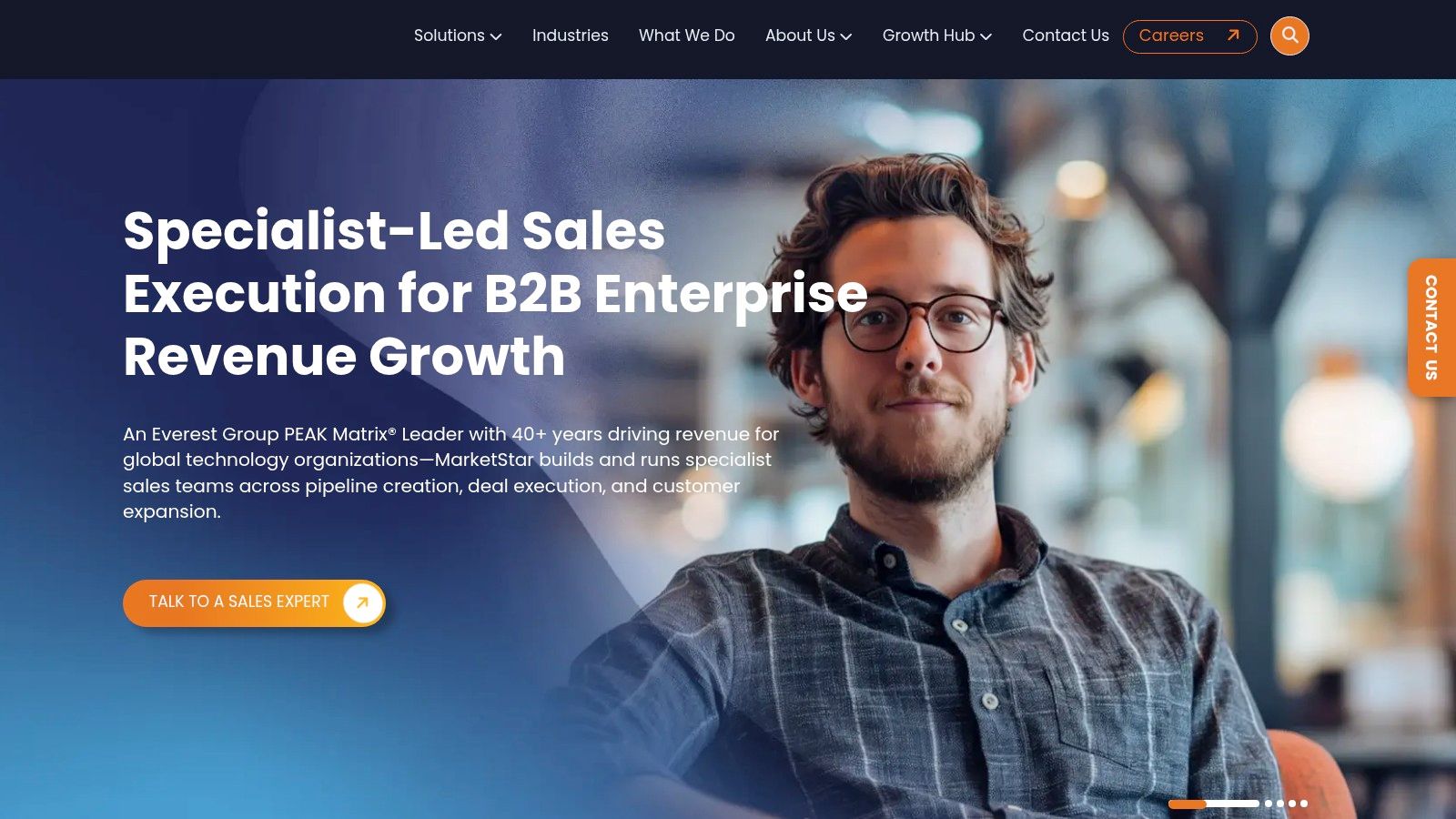
MarketStar sits at the opposite end of the spectrum from a focused pay-per-meeting shop. This is the kind of partner you bring in when you need a substantial external sales function, not just more top-of-funnel meetings.
They cover SDR and inside sales, but that’s only part of the story. MarketStar also works across channel programs, customer success, renewals, and revenue operations. For larger B2B teams, that broader coverage is often the point. You’re buying operating maturity, management infrastructure, and enterprise process discipline.
When a retainer model makes more sense
Retainer-led outsourcing gets criticized for misaligned incentives, and sometimes that criticism is fair. But there are situations where a retainer is the correct structure. If your motion includes multiple handoffs, channel sales, renewal support, or regional expansion, a simple meeting-based fee model usually won’t capture the actual work involved.
Salesforce reports that 89% of sales professionals say partner selling is increasingly important to hit revenue targets. That matters here because MarketStar is built for partner-heavy and operationally complex go-to-market programs, where outsourced support needs to plug into more than prospecting alone.
Complex sales motions usually break when leadership buys “more meetings” but actually needs program management.
MarketStar is best for established companies that already know their market and need to stand up dedicated teams quickly without sacrificing governance. If you’re weighing this option against a narrower appointment-setting agency, a useful framing is whether your bottleneck is lead flow or system capacity. MarketStar helps more with the second problem.
A few quick considerations:
-
Best for enterprise complexity: Strong fit when channel, customer success, and sales development have to work together.
-
Better for scale than experimentation: This isn’t the first stop for a startup testing one ICP.
-
Expect heavier scoping: Enterprise rigor is helpful, but it usually means slower procurement and a larger investment.
If you need a broader primer first, Fypion’s overview of B2B sales outsourcing gives a practical baseline before comparing larger operators like MarketStar.
3. Operatix
Operatix is one of the more focused choices for software and SaaS companies selling into enterprise buyers. They specialize in outsourced SDR and pipeline generation, with coverage across the US and EMEA.
That regional depth matters if you’re trying to penetrate a specific market without building local teams from scratch. Operatix is built around outbound discipline, manager oversight, coaching, and quality assurance. Those aren’t flashy selling points, but they’re often what separate a decent campaign from one that creates a lot of noise and very little pipeline.
Best for enterprise SaaS outreach
Operatix fits companies with a validated ICP, a real enterprise story, and enough internal sales maturity to support longer buying cycles. They’re not the right answer if you want a quick appointment factory without much input from your side. They’re better when your offer is nuanced and the outreach needs to reflect that.
This is also where the business model question becomes practical. Operatix is generally retainer-based, which means you’re paying for disciplined execution capacity rather than only booked outcomes. For complex software sales, that can be reasonable. The rep training, QA, and message refinement are part of the value.
What I’d watch closely with Operatix is whether your company has the materials and positioning needed for enterprise conversations. Even a strong SDR team can’t compensate for vague positioning, weak proof points, or a confused handoff to account executives.
-
Strong fit: B2B software vendors targeting defined verticals or geographies.
-
Less ideal: Teams still figuring out basic messaging or hoping a vendor will invent strategy from scratch.
-
Key trade-off: Higher process quality, but less pricing flexibility than performance-led shops.
Their service model aligns well with companies that see outsourced prospecting as a managed sales discipline rather than a cheap meeting source. If that’s your use case, Operatix deserves a serious look. If you’re comparing that against a narrower booking-first option, this guide to appointment setting outsourcing helps clarify where dedicated SDR programs differ from pure meeting generation.
4. CIENCE
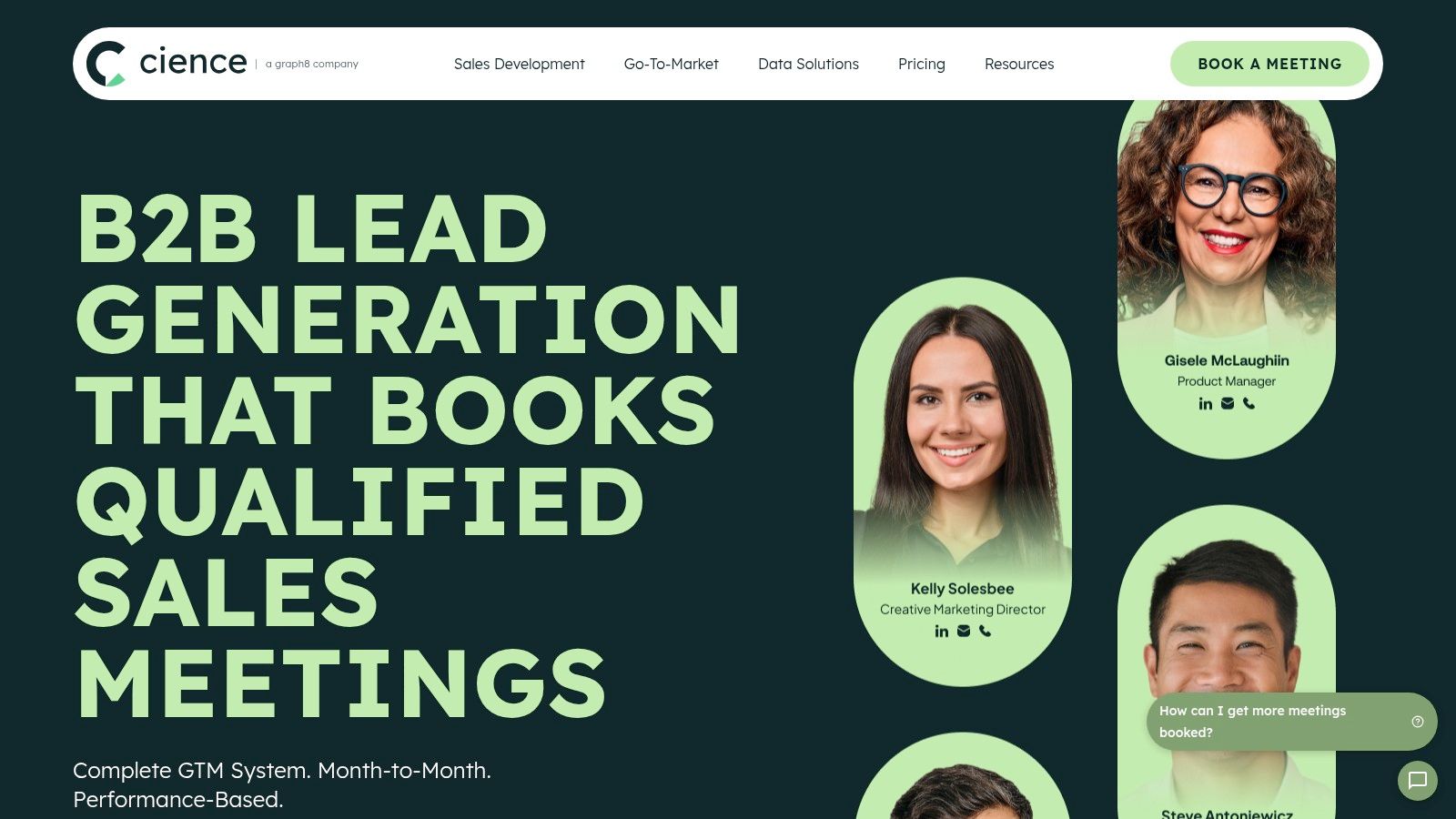
CIENCE is one of the more modular options in this market. Instead of forcing buyers into one standard package, they combine GTM setup, managed services, data support, outreach orchestration, and an optional SDR marketplace.
That flexibility can be helpful if your internal team wants control over some parts of outbound but not others. It can also create complexity fast. Modular offers sound efficient in procurement, but they require sharper KPI discipline from the client side.
Where modular outsourcing works
CIENCE is attractive for teams that want pricing visibility and faster vendor evaluation. Their model makes it easier to compare scopes than many custom-quote competitors. That’s useful if procurement speed matters or if you’re testing whether to outsource one layer of the funnel versus several.
The broader market context supports that kind of specialization. The global sales outsourcing services market was valued at USD 6.8 billion in 2025 and is projected to reach USD 12.1 billion by 2034, implying a 6.5% CAGR. Buyers increasingly treat outsourced sales as a growth function with distinct service layers, not just a blunt cost-cutting move.
Modular outsourcing only works if one person on your team owns the system. Otherwise, the gaps between setup, outreach, and qualification become your problem.
CIENCE makes the most sense when you know how much control you want to keep. If you need a provider to own execution end to end, a simpler managed service may be better. If you already have a sales leader, revops support, and a clear handoff model, CIENCE can be a useful build-your-own approach.
A few trade-offs to weigh:
-
Good for flexible scope: Platform, management, and SDR capacity can be combined in different ways.
-
Requires more oversight: Marketplace-style staffing usually needs tighter management than a fully managed performance partner.
-
Watch pricing layers: Per-meeting or add-on fees can make ROI harder to judge if the scope isn’t tightly defined.
Teams considering CIENCE should also review what it means to outsource the SDR layer versus the broader inside sales function. This short guide to outsourcing inside sales is useful for drawing that line.
5. Belkins
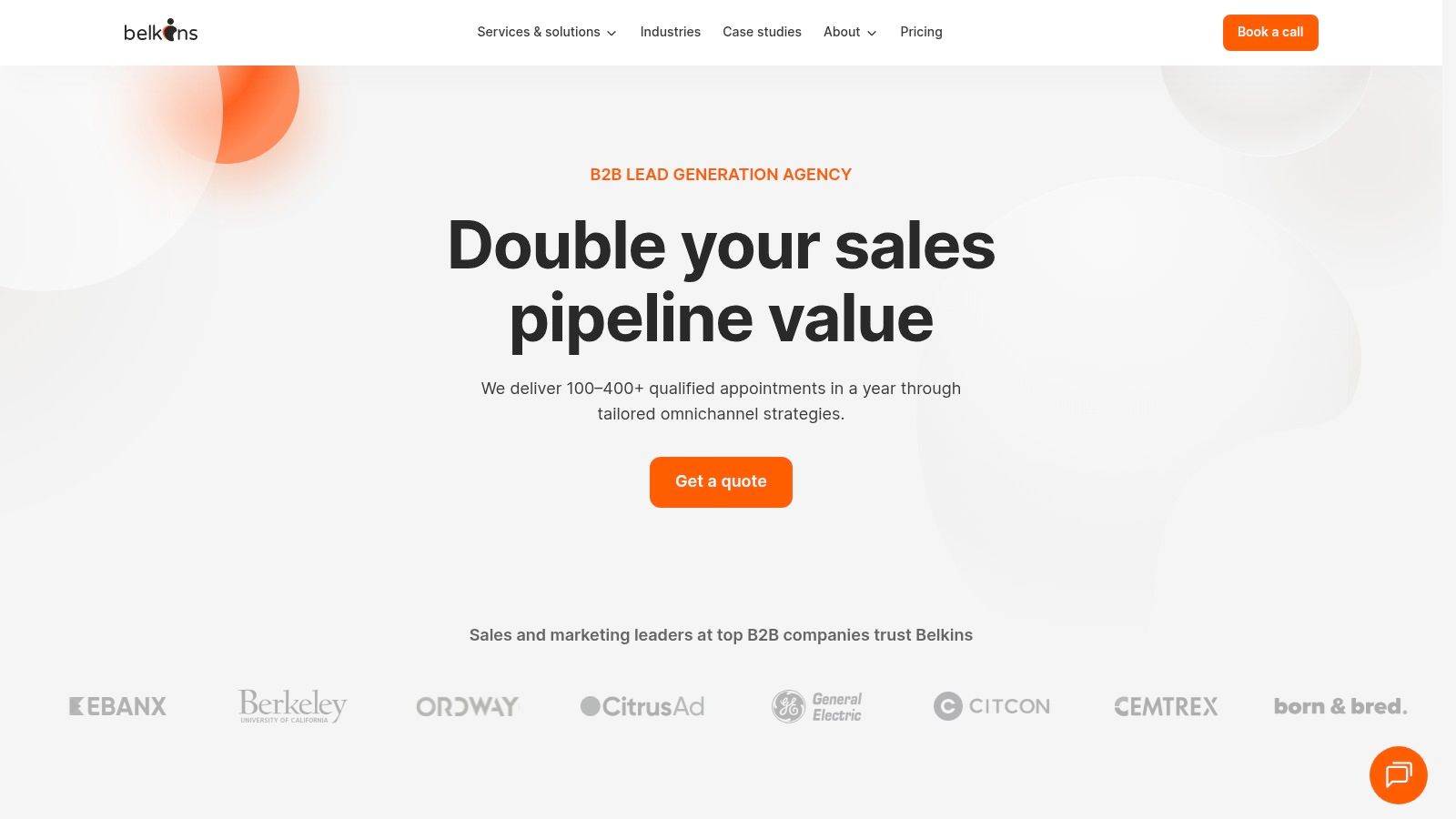
Belkins is one of the more recognizable names in appointment setting, especially for US-focused B2B sellers that want a structured outbound program with clearer packaging than many agencies provide.
Their appeal is straightforward. They emphasize qualified meeting generation, support it with research and copywriting, and give buyers more public information about starter packages than many competitors. For companies comparing outsourcing sales companies for the first time, that transparency reduces friction.
Strong option for teams that want packaging clarity
Belkins is a fit when you want a managed appointment-setting program and don’t want every early conversation to feel like custom consulting theater. They’re built around outbound process, and that usually serves mid-market B2B teams well.
The caution is qualification definition, an aspect that frequently leads many appointment-setting engagements to go sideways. Public market commentary often focuses on speed and efficiency, but the harder operational issue is revenue quality. Industry guidance consistently points buyers toward top-of-funnel ownership, explicit KPI alignment, buyer-persona alignment, and regular data sharing to prevent disconnects, as outlined in this sales outsourcing guide from Everstage.
Belkins can work well if your internal team is disciplined about follow-up and honest about what counts as a real sales opportunity. If your team wants calendar volume more than fit, almost any meeting-based agency can look good for a while.
-
Best use case: Mid-market B2B sellers that want meeting generation with visible scope.
-
Main risk: Misaligned qualification standards create frustration even when activity looks healthy.
-
Buying advantage: More packaging transparency than many competitors.
If you’re reviewing Belkins, it helps to compare their style against broader lead generation support, not just meeting volume. This explainer on B2B lead generation outsourcing is a good companion.
6. Martal Group
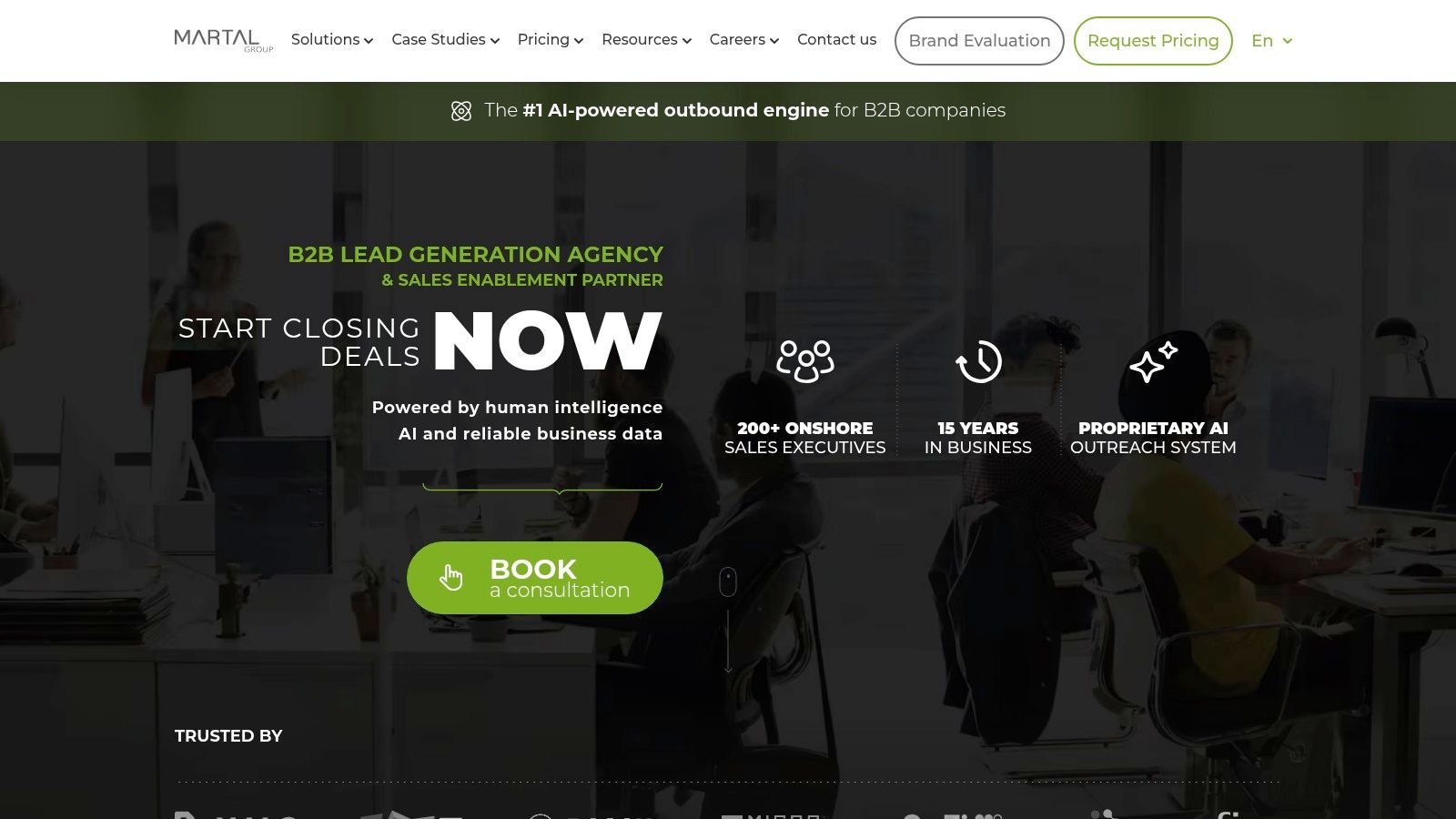
Martal Group is a strong candidate for North American B2B tech and professional services companies that still believe human-led outbound should sit at the center of the program.
Their positioning leans into onshore SDR leadership and multi-channel prospecting through calling, email, and LinkedIn. That matters if your buyers don’t respond well to a pure email motion or if your category requires more contextual outreach than a standard sequence can provide.
Good for tailored SDR execution
Martal doesn’t appear to force buyers into a rigid cookie-cutter package. That’s a strength when your ICP, geography, and sales-cycle complexity need a more customized setup. It also means you should expect a more consultative sales process and less price transparency than some packaged providers.
I tend to like firms like Martal for companies that have already learned a simple lesson the hard way: more channels don’t automatically mean better outreach. Calling, email, and LinkedIn only work together when messaging, cadence, and qualification are managed tightly. Otherwise, your market just gets hit from three directions with the same mediocre value proposition.
The larger BPO backdrop helps explain why providers like Martal remain relevant. The sales and marketing BPO market was estimated at USD 28.65 billion in 2022 and is forecast to reach USD 57.46 billion by 2030 at a 9.4% CAGR, with North America as the largest market and Asia Pacific the fastest-growing region.
A few practical notes:
-
Best fit: Mid-market B2B tech, SaaS, and service firms selling across the US and Canada.
-
Strength: Human-driven outbound across channels, with attention to qualification.
-
Limitation: No public pricing list, and ramp time still matters.
If your shortlist values customization over fixed packaging, Martal Group is a credible option.
7. SalesRoads
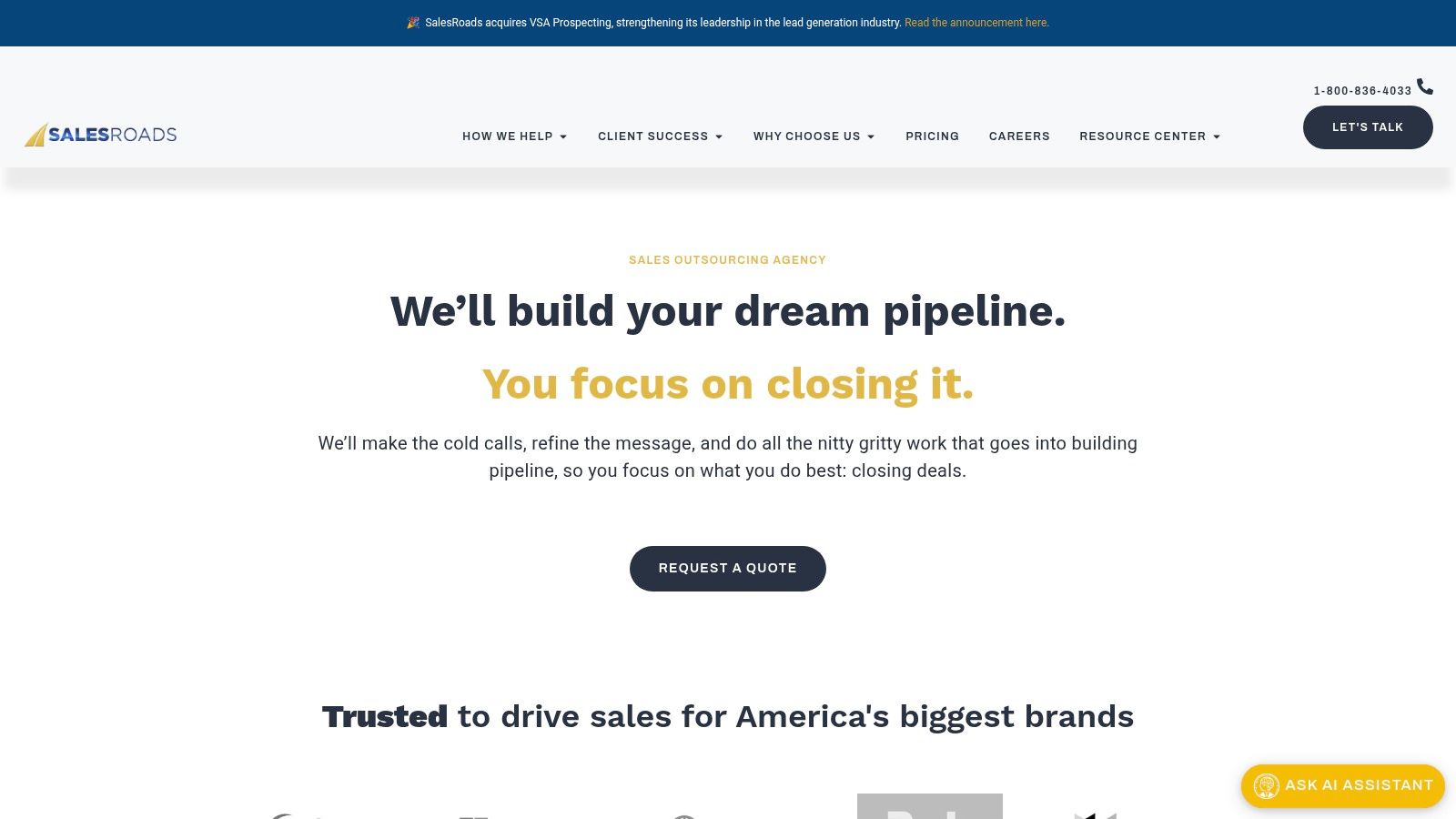
SalesRoads is a practical choice for companies that want dedicated SDR execution, stronger calling capability, and more visible quality control than many smaller appointment shops provide.
Their public positioning leans on dedicated reps, CRM integration, sales operations support, and documented QA. That combination is important. A lot of outsourcing sales companies can generate activity. Fewer show enough operational detail to convince a buyer that the process will stay tight after onboarding.
Where SalesRoads earns attention
What stands out is how SalesRoads frames qualification and sales process support together. That usually signals a provider that understands meetings alone don’t create pipeline. The best outsourced SDR teams reduce friction between outreach, CRM hygiene, and rep follow-up.
This matters even more when companies use outsourcing for market expansion. Guidance from TTEC highlights a useful but often overlooked point: the true value isn’t generic activity growth. It’s controlled experimentation in a new vertical or geography, where an external team can test messaging, refine targeting, and improve positioning before a company scales internally, as discussed in TTEC’s perspective on sales outsourcing and new-market jumpstarts.
If you’re entering a new market, judge the vendor by what they learn in the first phase, not just by how many meetings they book.
SalesRoads is well suited to teams that want a US-based provider with documented process and enough operational maturity to support targeted outbound campaigns across several industries. The premium side of that equation is cost. Smaller teams may find the investment heavier than a boutique agency.
-
Good match: Companies that care about calling quality, QA, and CRM-connected execution.
-
Less ideal: Very early-stage teams looking for the cheapest meeting source.
-
Key question to ask: Who owns the handoff standard, and how is lead quality reviewed each week?
For a structured SDR partner with public credibility materials, SalesRoads belongs on the shortlist.
Top 7 Outsourced Sales Companies Comparison
| Provider | Implementation complexity 🔄 | Resource & pricing ⚡ | Expected outcomes 📊⭐ | Ideal use cases 💡 | Key advantages ⭐ |
|---|---|---|---|---|---|
| Fypion Marketing | Moderate, agency handles end-to-end; typical 3‑month ramp | Pay-per-meeting standard (no upfront); retainer possible for system-only work | Quick qualified meetings in weeks; documented strong growth, ⭐⭐⭐⭐ | B2B with proven PMF: SaaS, tech startups, B2B e‑commerce | Pay-for-performance alignment; full cold-email stack and optimization |
| MarketStar | High, full-service, multi-workstream enterprise programs | Higher investment and longer scoping; enterprise procurement | Enterprise-scale revenue programs and long-term growth, ⭐⭐⭐⭐ | Complex, multi-channel enterprise sales with global needs | Global reach, enterprise governance, exec-level advisory |
| Operatix | Moderate - High, disciplined SDR execution with ramp and ICP fit | Retainer-based; dedicated trained SDR teams and multi-channel resources | Strong pipeline for high‑ACV deals; process-driven results, ⭐⭐⭐⭐ | High‑ACV SaaS/enterprise tech with validated ICPs | Mature outbound methodology, coaching and QA |
| CIENCE | Moderate, modular platform + managed services; fast onboarding options | Published month-to-month pricing; optional at‑cost SDR marketplace | Flexible, measurable pipeline scale; requires KPI alignment, ⭐⭐⭐ | Teams needing quick procurement and flexible engagement models | Transparent pricing, AI-enabled orchestration, modularity |
| Belkins | Moderate, structured starter packages with defined scopes | Published starter packages and pricing; guaranteed appointment options | Predictable appointment volumes when qualifications aligned, ⭐⭐⭐ | US-focused B2B sellers seeking clear starter programs | Clear scope/pricing signals, guaranteed appointment targets |
| Martal Group | Moderate, custom/onshore programs with ramp and ICP refinement | Custom/POA pricing; retainer common; onshore team resources | Tailored qualified pipeline for mid‑market tech, ⭐⭐⭐ | North American tech/SaaS mid‑market needing human outreach | Onshore leadership, human-driven calling + multi-channel prospecting |
| SalesRoads | Moderate - High, builds fit-for-purpose SDR teams and integrates ops | Premium pricing with public ‘starts at’ signals; CRM integration support | Highly qualified appointments and documented case studies, ⭐⭐⭐⭐ | SaaS, manufacturing, public sector needing strong calling capabilities | Strong calling focus, QA, sales ops and transparent starting pricing |
The Smartest Investment is an Aligned Partnership
Outsourcing sales isn’t just about handing lead generation to someone else. It’s about choosing a partner whose operating model fits the problem you have.
If your company has proven product-market fit, a defined ICP, and a sales team that can close, a performance-based option can be the most efficient move. It lowers upfront risk and forces both sides to stay honest about qualification. That’s why a pay-per-meeting model can be ideal when your bottleneck is consistent outbound execution, not strategic uncertainty. Fypion Marketing is the clearest example of that structure in this list.
If your motion is more complex, the answer changes. Companies with partner channels, enterprise governance needs, regional programs, or multiple post-sale workstreams often need a retainer-based provider. In those cases, you’re not just buying meetings. You’re buying management infrastructure, enablement, process control, and broader sales coverage.
The mistake I see most often is choosing based on surface-level promises. Buyers compare outreach channels, dashboards, or package names, then ignore the harder questions. Who owns qualification? How quickly does messaging get refined? What happens when booked meetings aren’t a fit? Can your internal team absorb the volume? Does the provider help you test a new market carefully, or do they just increase activity?
The strongest outsourced sales relationships usually share a few traits. The scope is narrow enough to manage well. Qualification is explicit. Data moves both ways. Internal reps stay close to the feedback loop. And leadership treats the vendor like an operating partner, not a magic pipeline machine.
That’s also the right way to think about the broader market. Outsourced sales is growing because it helps companies scale faster, enter markets more efficiently, and add execution capacity without building every function from scratch. But growth in the market doesn’t make every vendor right for your business.
Choose the model first. Then choose the company.
If you want low-risk outbound execution tied directly to qualified meetings, start with a performance partner. If you need a fuller external sales organization, pay the retainer and make sure the provider has the management depth to justify it. The smartest investment isn’t the cheapest option or the biggest brand. It’s the partner whose incentives, process, and scope line up with how your revenue engine works.
If you want a sales outsourcing partner that gets paid when qualified meetings land on your calendar, Fypion Marketing is a strong place to start. Their performance-driven cold email model is built for B2B companies with proven product-market fit that want predictable pipeline without paying upfront retainers or setup fees under the standard engagement.