
How to Qualify Sales Leads: A B2B Playbook

A lot of teams don’t have a lead generation problem. They have a filtering problem.
The CRM looks healthy. New names come in from paid search, content downloads, outbound replies, referrals, webinars, partner lists, and free trial forms. Reps stay busy. Marketing reports volume. Then the quarter gets messy. Pipeline stalls, follow-ups drag on, demos go nowhere, and sales starts saying the leads are weak.
That usually means qualification is being handled like a form field exercise instead of a working system. In modern B2B sales, the job isn’t to ask a few BANT questions and stamp a lead as good or bad. The job is to combine fit, behavior, timing, and account-level buying signals into a process that gets sharper every month.
If you want to know how to qualify sales leads in a way that scales, treat qualification as operating logic. It should decide who gets attention now, who gets nurtured, who gets recycled, and who should never reach an AE’s calendar in the first place.
Stop Wasting Time on Unqualified Leads
Most qualification problems don’t look dramatic at first. They show up as calendars filled with polite calls that never progress, SDRs chasing people who downloaded one asset and disappeared, and AEs inheriting “opportunities” that were never real opportunities.
That’s why lead qualification matters so much. It doesn’t just clean up the top of funnel. It protects rep time, forecast quality, and morale. Highspot notes that poor qualification is implicated in 67% of lost sales in industry analysis, which is why the strongest qualification systems focus on a combined fit-and-intent test rather than basic BANT fields alone (Highspot on lead qualification).
When teams get this wrong, they overvalue activity. A prospect opened emails. Someone attended a webinar. A contact asked for pricing. None of that automatically means the account is worth sales time. Good teams separate interest from purchase likelihood fast.
What junk pipeline usually looks like
-
Single-contact thinking: One person engages, so the team assumes the account is active.
-
Manual guesswork: Reps decide lead quality based on gut feel instead of shared criteria.
-
No hard disqualification rules: Every lead stays alive “just in case.”
-
Slow response: Qualified inbound leads wait while reps sort through noise.
If your team works in field services, local trades, or multi-location outreach, even the first step of figuring out who belongs in pipeline can be messy. Resources on contractor lead identification strategies can help teams tighten the front end before qualification even starts.
Practical rule: If your reps spend more time investigating whether a lead matters than talking to leads that already do, your qualification system is broken.
The fix isn’t more hustle. It’s a better machine.
Build Your Foundation with an ICP and Qualification Framework
Qualification collapses when “qualified” means something different to marketing, SDRs, and AEs. One team thinks qualified means the lead filled out a form. Another thinks it means they asked for a demo. A third thinks it means there’s a real buying process underway. None of that works at scale.
You need a documented ideal customer profile, then a framework that helps reps inspect the right signals.
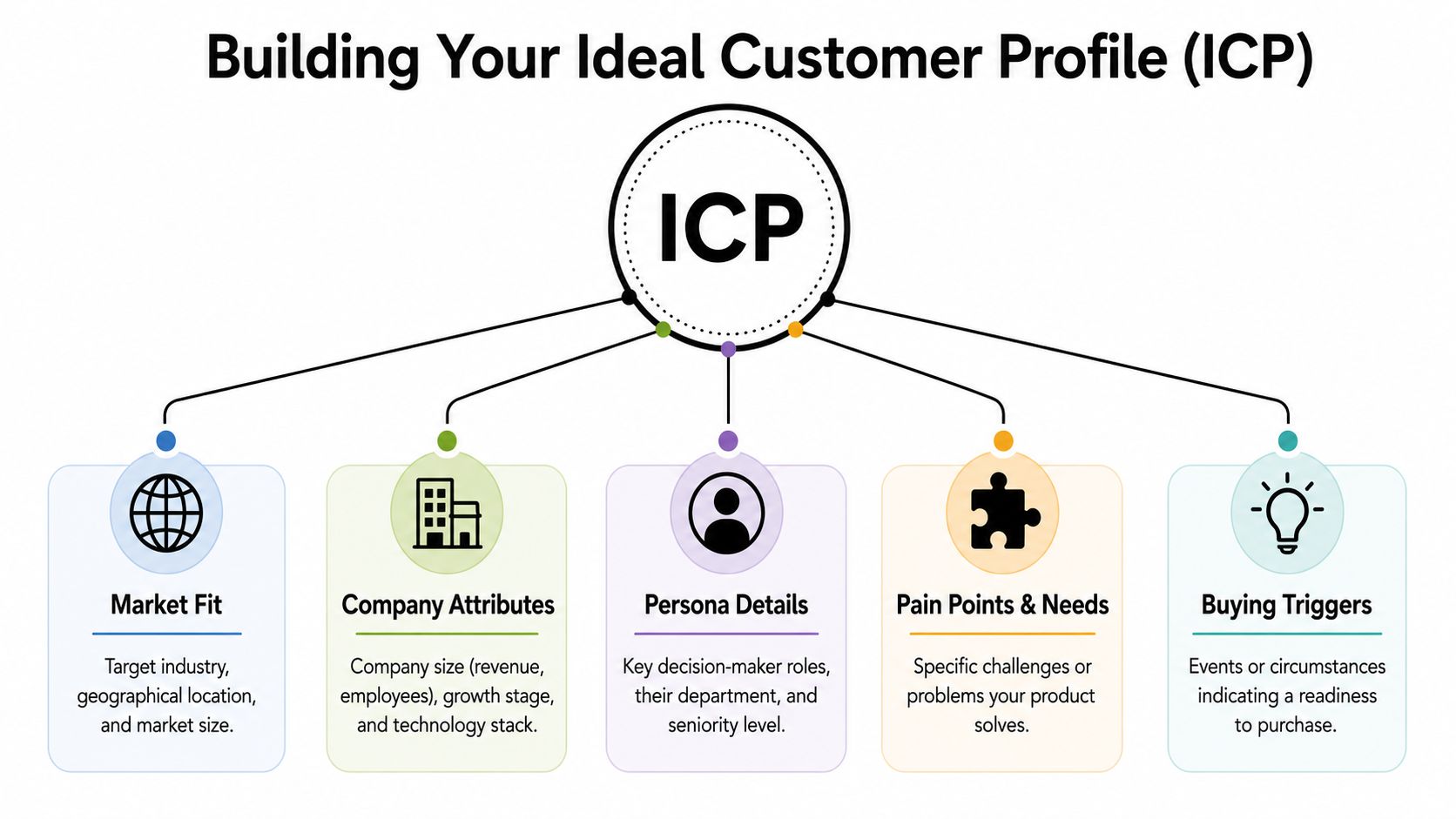
Build the ICP from customers, not opinions
Start with your best current customers, not the logos your team wishes it had. Pull recent closed-won accounts and look for patterns across:
-
Industry and market fit Which verticals close cleanly, onboard smoothly, and renew without drama?
-
Company attributes Employee range, growth stage, internal complexity, and tech stack matter more than broad TAM slides.
-
Buyer roles Identify who starts the process, who blocks it, and who signs off.
-
Pain profile Focus on operational pains your product solves now, not vague strategic aspirations.
-
Trigger events New hiring, tooling changes, expansion, compliance pressure, product launches, and process breakdowns often create urgency.
If you need a cleaner front-end form strategy while collecting inbound data, tools like VeeForm lead capture templates can help standardize the fields you use to capture the signals that matter.
A practical ICP should be narrow enough to exclude obvious bad-fit accounts. It should also be specific enough that a rep can look at an account in a tool like HubSpot, Salesforce, Apollo, or Clay and quickly decide whether it belongs in active pursuit.
For a deeper breakdown of how to document those attributes, this guide to a B2B ideal customer profile is a useful reference.
Qualify the account, not just the lead
One of the biggest mistakes in SaaS pipeline management is treating one responder as the whole opportunity. That’s outdated.
A typical B2B purchase now involves 6 to 10 decision-makers, according to Gartner, which makes it critical to qualify the account and buying group rather than relying on a single contact’s response (Infuse on generating qualified leads).
That changes how you qualify sales leads in practice. You should ask:
-
Is the account in our ICP?
-
Which functions are involved?
-
Has engagement spread beyond one person?
-
Do the active stakeholders map to the buying motion we usually see?
A VP of Operations clicking your pricing page matters. A procurement contact downloading a security sheet matters differently. A manager forwarding your deck internally may matter more than a director who joined one webinar and vanished.
In complex B2B sales, a lead isn’t qualified because one person is interested. It’s qualified when the account shows coordinated buying behavior.
Use frameworks as lenses, not gates
BANT still has value when you need quick signal detection. It’s useful for smaller deals, short cycles, and transactional products. But if your reps wait for a prospect to volunteer budget and authority in the first call, they’ll miss a lot of viable opportunities.
MEDDIC-style thinking works better for larger SaaS and enterprise motions because it forces deeper inspection. Who owns the problem? What criteria will shape the decision? How does the process move internally?
The right approach for most B2B teams is simple. Use the ICP to define who should enter the funnel. Use a qualification framework to understand how real the opportunity is. Don’t confuse the two.
Automate Triage with a Lead Scoring Model
Once your ICP is clear, you need a way to rank incoming demand without relying on rep instinct. That’s where lead scoring earns its keep.
An effective workflow starts by building an ICP from historical customers, enriching leads with firmographic, behavioral, technographic, and intent data, then applying a numeric score so only stronger prospects reach sales. Research cited by Monday.com notes that prospect-to-qualified-lead conversion sits around 10%, while only 1% to 6% of leads become customers overall, which is exactly why prioritization has to be systematic (Monday.com on qualifying sales leads).
What a usable scoring model looks like
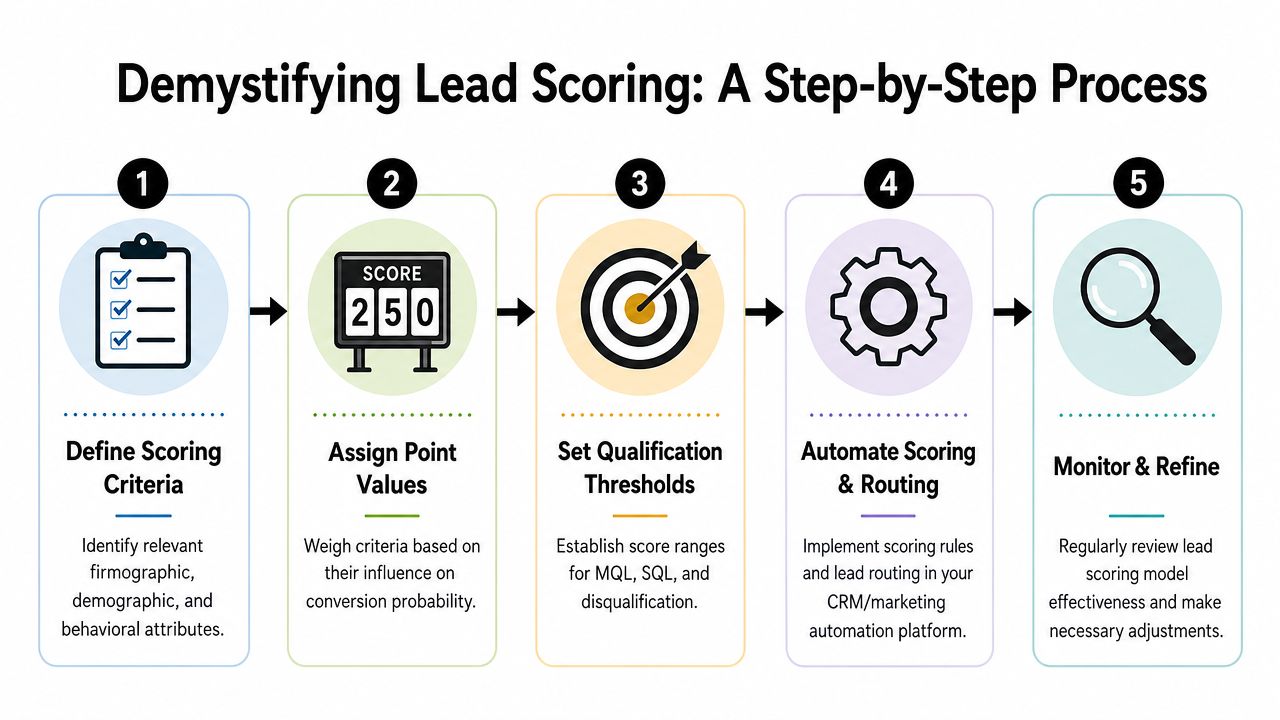
Don’t overcomplicate the first version. A scoring model only needs to do three things well:
-
Reward fit
-
Reward active buying behavior
-
Penalize noise
In SaaS and tech, that usually means combining explicit attributes with behavior from your CRM, MAP, product analytics, and sales engagement stack.
Example scoring categories
| Signal type | What to score | Example interpretation |
|---|---|---|
| Firmographic | Industry, company size, geography, business model | Prioritize accounts that resemble successful customers |
| Role relevance | Department, seniority, buying influence | Give more weight to contacts tied to the problem your product solves |
| Behavioral | Pricing page visits, repeat site sessions, content consumption, demo requests | Distinguish casual interest from active evaluation |
| Intent and sequence | Visit patterns, document shares, return engagement after outreach | Elevate leads showing momentum rather than one-off clicks |
| Negative scoring | Students, agencies if you sell direct, competitors, consultants doing research | Remove time-wasting records before they hit reps |
A common mistake is assigning huge value to shallow actions. An ebook download shouldn’t outrank repeat visits to the pricing page, a product comparison page, and a security overview from the same account. Sequence matters.
Here’s a simple way to look at it:
-
Low score: Early curiosity, weak fit, single-contact activity
-
Mid score: Good fit, moderate engagement, no urgency yet
-
High score: Strong fit plus clustered behavior that suggests buying motion
This short walkthrough is worth reviewing if you want a practical refresher on score design and thresholds:
Don’t skip negative scoring
Negative scoring is what keeps your system honest.
If your content attracts consultants, job seekers, students, competitors, or tiny companies that will never buy, your scoring model should push those records down automatically. Otherwise, your “hot lead” queue becomes a list of active but irrelevant contacts.
That’s also where enrichment matters. Tools like Clearbit, ZoomInfo, Apollo, 6sense, HubSpot, Salesforce, and Clay help fill in missing data so your team isn’t scoring half-blind.
For teams building this logic from scratch, this guide on how to master B2B lead scoring is a solid operational reference.
Field note: The best scoring model is the one reps trust enough to follow. If your top scorers keep turning into bad meetings, sales will route around the system.
Review score-to-meeting quality every month. If high-scoring leads don’t produce qualified conversations, change the inputs.
Master the Qualifying Conversation with Scripts and Questions
A scored lead isn’t a qualified opportunity. It’s a lead that deserves attention.
The conversation is where you test whether the behavior behind the score reflects a real buying situation. This is also where old-school qualification breaks down. Many guides still push reps to ask budget and authority questions too early, even though modern buyers often won’t disclose either in the first interaction.
Calendly’s guidance captures the shift well. When budget or authority isn’t available, qualification has to combine firmographic filters with behavioral signals like repeat page visits and content engagement. The result is a probability model, not a checklist (Calendly on how to qualify leads in sales).
Ask for context, not compliance
A weak discovery call sounds like an intake form. A strong one sounds like problem diagnosis.
Instead of asking, “Do you have budget?” ask questions that reveal whether the problem is important enough to fund.
Try questions like these:
-
Problem depth “What started this search now?” “What’s breaking in the current workflow?”
-
Operational impact “Where does this show up most. Revenue, response time, reporting, customer experience, or team workload?”
-
Existing workaround “How are you handling it today?” “What’s the cost of keeping that process in place?”
-
Decision shape “Who else usually gets pulled into a decision like this?” “What has to be true internally for this to move forward?”
-
Timing without pressure “Is this tied to a project, a deadline, or a broader evaluation?” “What happens if this stays unsolved for another quarter?”
These questions work because they uncover urgency and buying motion without forcing the prospect into a defensive posture.
Read behavior alongside answers
In SaaS, buyers often signal intent before they state it. A prospect may avoid discussing budget but still revisit the pricing page, share your deck internally, and bring an operations lead into the second call. That’s not a complete qualification picture, but it is meaningful.
That’s why SDRs and AEs need account context before the call. They should know:
-
which pages the contact viewed
-
what content the account consumed
-
whether multiple stakeholders engaged
-
whether prior outbound was opened or answered
-
whether product activity exists in trial or freemium motions
A rep who walks into discovery without that data tends to ask generic questions. A rep who sees the activity trail can test the right hypotheses.
For teams defining who owns this stage and where SDR responsibility should end, this overview of a sales development representative can help clarify handoff expectations.
If the prospect won’t answer a direct qualification question, look at what their account is doing. Behavior often reveals priority before words do.
Cold Email Qualification Templates
You can start qualifying before the call. Good cold outreach doesn’t just create replies. It surfaces fit, timing, and pain.
| Goal | Subject Line | Body Snippet |
|---|---|---|
| Test problem relevance | Quick question on onboarding workflow | Noticed your team is hiring in customer success. Are you trying to reduce onboarding drag, or is that not a focus right now? |
| Identify ownership | Who owns this at {{Company}} | Reaching out because teams usually hit this issue across RevOps and sales leadership. Is that under your remit, or does someone else own it? |
| Probe urgency | Is this a priority this quarter | I’m asking because some teams are actively replacing manual reporting, while others are just gathering options. Which camp are you in? |
| Surface current solution gaps | Still using a manual process for this | Curious whether you’re handling this through internal workflow, a point tool, or a broader platform today. |
| Expand to buying group | Should someone else be looped in | If this is relevant, would it make sense to include ops, finance, or the team lead who feels the pain most directly? |
These work best when the body references a real trigger. New hiring, pricing page activity, category research, webinar attendance, integration stack, or an outbound reply all give you a reason to ask.
Know when to disqualify live
Some leads should exit quickly.
If the account is off-ICP, the pain is mild, no one else will be involved, and the timeline is undefined in a way that signals indifference rather than complexity, move the record out of active pursuit. Don’t let “maybe later” clog your pipeline.
Good qualification isn’t just about advancing leads. It’s about closing the door cleanly when the facts don’t support movement.
Operationalize Your Process with CRM Workflows and Handoffs
Even solid qualification logic falls apart when the CRM can’t enforce it.
Teams usually lose speed at this stage. Marketing marks a lead as ready. Sales doesn’t know why. SDRs cherry-pick the obvious ones. AEs receive handoffs with missing context. Then everyone starts creating side rules in Slack, spreadsheets, and memory.
A working system needs explicit stages, routing rules, ownership, and response windows.
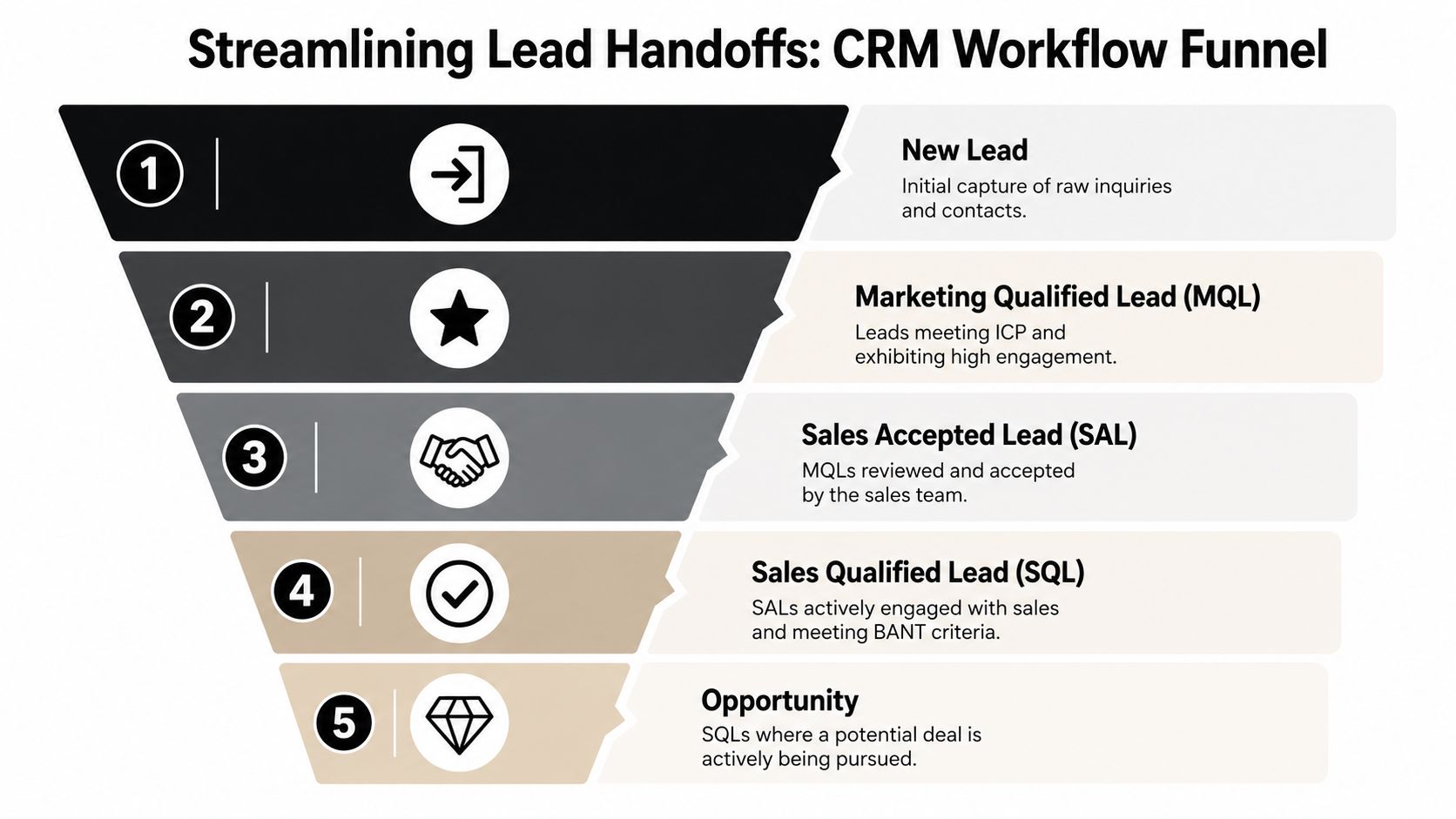
Define the handoff moments
Landbase reports that contacting a lead within the first hour can produce a 7x improvement in qualification likelihood. The same roundup reports that about 75% of marketing leads don’t qualify for direct sales engagement, which is why fast routing and early disqualification matter so much (Landbase lead qualification statistics).
That only helps if your CRM knows what to do the moment a threshold is crossed.
A practical stage model looks like this:
-
New lead Raw inbound or outbound response. No sales action yet unless a high-intent trigger exists.
-
MQL Meets ICP minimums and reaches a behavior score threshold.
-
SAL Sales reviews and accepts the lead based on visible context and routing fit.
-
SQL Direct interaction confirms the account is worth active pursuit.
-
Opportunity There’s a defined problem, stakeholder path, and next-step commitment.
The most important point is that these stages must trigger actions, not just labels.
Build automation around decisions
Your CRM and MAP should handle repetitive triage. In HubSpot, Salesforce, Marketo, or similar systems, set workflows that:
-
Assign owners automatically based on territory, segment, vertical, or product line
-
Create task deadlines when an MQL or high-score inbound enters queue
-
Push alerts for rapid follow-up on demo requests or high-intent activity
-
Recycle leads into nurture when they’re engaged but not sales-ready
-
Stamp reason codes for disqualification so your team can learn from patterns
For a broader view of how this logic fits into pipeline design, this sales process flowchart guide is useful.
Don’t delete disqualified leads
A lead can be unqualified now and still worth keeping.
Route disqualified records into clear buckets:
| Disposition | What it usually means | Next action |
|---|---|---|
| Poor fit | Wrong segment, industry, size, or use case | Suppress from sales queue |
| No current priority | Real pain, weak timing | Nurture and monitor engagement |
| Wrong contact | Account may fit, contact doesn’t | Find the right stakeholder |
| Too early | Interest exists, buying process hasn’t started | Add to educational sequence |
| Closed lost for now | Evaluated but stalled or deprioritized | Revisit on trigger events |
This is also the section where many teams bring in outside help. Alongside platforms like HubSpot and Salesforce consulting partners, Fypion Marketing is one option for B2B teams that want outbound systems built around pre-agreed qualification criteria and booked meetings rather than raw lead volume.
A handoff is only “qualified” if the receiving rep can see why the lead was passed, what signals triggered it, and what should happen next.
Measure What Matters with Lead Qualification KPIs
Qualification systems drift unless someone measures whether the machine is still producing the right opportunities.
A lot of teams watch top-of-funnel volume and call it performance. That’s not enough. You need a small set of metrics that tells you whether fit, scoring, outreach, routing, and handoff quality are aligned.
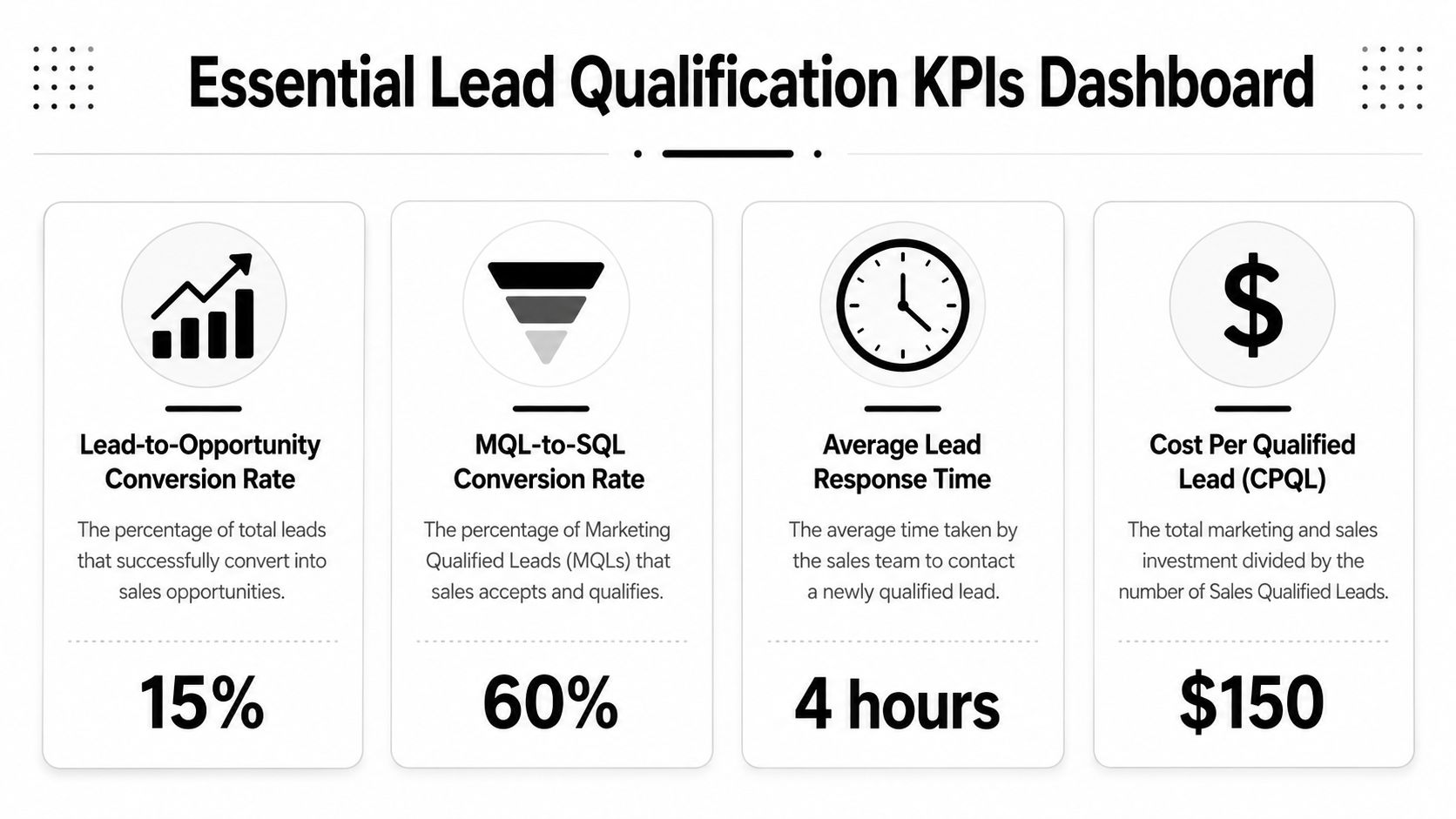
The KPI dashboard that actually helps
Track metrics that expose decisions, not vanity activity:
-
Lead-to-MQL conversion This tells you whether your acquisition channels are bringing in the right type of demand.
-
MQL-to-SQL conversion This shows whether your scoring and handoff criteria match what sales considers real.
-
Sales acceptance rate If reps reject a large share of routed leads, marketing and sales definitions are misaligned.
-
Speed-to-lead A routing system is only as good as the follow-up behavior it creates.
-
Disqualification reasons Pattern recognition comes into play. Wrong segment, wrong role, weak timing, no pain, no response, and no buying group traction each suggest a different fix.
-
Qualified pipeline creation by source Not all channels produce the same quality. Measure which ones create sales conversations that advance.
If you’re refining this inside a larger operations framework, resources on how to design and implement CRM processes can help connect qualification metrics to workflow design.
Use KPIs as a feedback loop
Don’t treat these metrics as reporting artifacts. Use them to rewrite your system.
If MQL volume is high but SQL conversion is weak, your scoring may be too generous. If sales accepts leads but opportunities stall, your conversations may be shallow or too single-threaded. If response times slip, the routing logic may be fine but manager enforcement is weak.
A useful operating review usually asks:
-
Which scored signals correlate with good meetings?
-
Which channels produce accepted leads but poor opportunities?
-
Which disqualification reasons appear most often?
-
Where are handoffs slowing down?
-
Which ICP attributes are overrepresented in closed-won deals?
For teams that want a tighter framework around reporting, this guide to lead generation KPIs is a practical starting point.
The bigger point is simple. Learning how to qualify sales leads isn’t about memorizing a framework. It’s about building a system that gets better as more data flows through it. The teams that do this well don’t just create more pipeline. They create cleaner pipeline, faster follow-up, stronger sales focus, and far less wasted effort.
If you want help building a qualification system that turns outbound into booked meetings against clear ICP and acceptance criteria, Fypion Marketing works with B2B teams on performance-focused lead generation and cold email outreach.