
Warm Calling Vs Cold Calling: B2B SaaS Strategy 2026
Most advice on warm calling vs cold calling gets the question wrong. Teams ask which one works better, then force themselves into a false choice. That usually leads to one of two bad outcomes: they either brute-force cold outreach with no context, or they wait for “warm” leads that never arrive in enough volume.
For B2B SaaS, the better question is this: how do you turn cold accounts into warmer conversations before the rep ever picks up the phone? This offers the greatest strategic benefit. Cold calling still has a place. Warm calling clearly performs better once context exists. But the optimal outbound systems use both, with email, LinkedIn activity, content engagement, and list intelligence creating the bridge between them.
A modern phone strategy isn’t just a calling strategy. It’s a sequencing strategy. The call is one touch inside a broader system that builds awareness, earns a little recognition, and gives the rep a reason to sound relevant instead of random.
Defining the Modern Sales Call
The old definition was simple. If the rep had never spoken to the prospect, it was a cold call. If there had been previous contact, it was a warm call. That definition is too shallow for how B2B buying works now.
What matters is prospect context. Has the buyer seen your company name before? Did they open an email, click a case study, visit the site, engage on LinkedIn, or get referred internally? Do they recognize the problem you solve, even if they haven’t replied yet? Those signals change the call before the first sentence leaves the rep’s mouth.
Cold calling means creating demand
A cold call is best understood as a conversation with little to no awareness, trust, or permission. The prospect may fit your ICP perfectly and still experience the call as an interruption. In that setting, the rep’s job isn’t just to pitch. It’s to create interest where none has been established yet.
That’s why cold calling still matters. It’s useful when a SaaS company is entering a new segment, testing a new vertical, or trying to cover a large total addressable market. You can’t wait for every target account to raise a hand.
Still, teams confuse “cold” with “spray and pray.” That’s a mistake. Good cold calling starts with segmentation, sharp messaging, and realistic account selection. If your reps are dialing weak-fit accounts with generic talk tracks, the problem isn’t the phone. It’s the strategy upstream.
For leadership teams sorting out channel mix, this broader framing is also useful when thinking through Outbound Sales vs Inbound Sales. Calling behaves very differently depending on whether you’re generating demand from scratch or following visible intent.
Warm calling means capturing demand
A warm call starts with some amount of familiarity. Not full trust. Not deep buying intent. Just enough prior exposure that the rep can ground the conversation in context.
That context might come from an email sequence, a demo request that stalled, webinar attendance, inbound content engagement, event follow-up, or a sequence of touches tied to a defined persona. If your targeting is weak, the call won’t feel warm even if the prospect technically opened an email. Strong persona work matters more than teams admit, which is why a disciplined approach to buyer persona development for better outreach pays off before a single dial happens.
Warmth isn’t about whether your CRM says “contacted.” It’s about whether the prospect has enough context for your call to make sense.
The real operating model
The practical distinction is this:
-
Cold calling covers territory and creates openings.
-
Warm calling converts attention into meetings.
-
Multi-channel outbound connects the two.
That’s the modern model. Don’t treat warm calling vs cold calling as isolated tactics. Treat them as linked stages inside one outbound engine.
A Deep Dive into Performance Metrics
The biggest mistake in this debate is treating call performance as a channel verdict. For B2B SaaS teams, the numbers are more useful as an operating guide. Cold calls create access to accounts you have not warmed yet. Warm calls convert interest you created earlier, often through email, retargeting, content engagement, or prior outreach. If you want predictable meetings, measure both inside the same outbound system.
Early benchmarks make that clear.
| Metric | Cold Calling | Warm Calling |
|---|---|---|
| Connect rate | 5-10% according to Apollo benchmark data | 25-40% based on the same Apollo benchmark |
| Meeting-set rate | 2.3-4.8% based on the same Apollo benchmark | 5-12% based on the same Apollo benchmark |
| Average rep cold performance | 5.4% connect rate and 4.6% meeting-set per conversation in large Apollo call datasets | Not presented in the same way |
| Elite cold performance | Up to 13.3% connect rate and 16.7% meeting-set per conversation from Apollo’s analysis of 300M+ calls | Not presented in the same way |
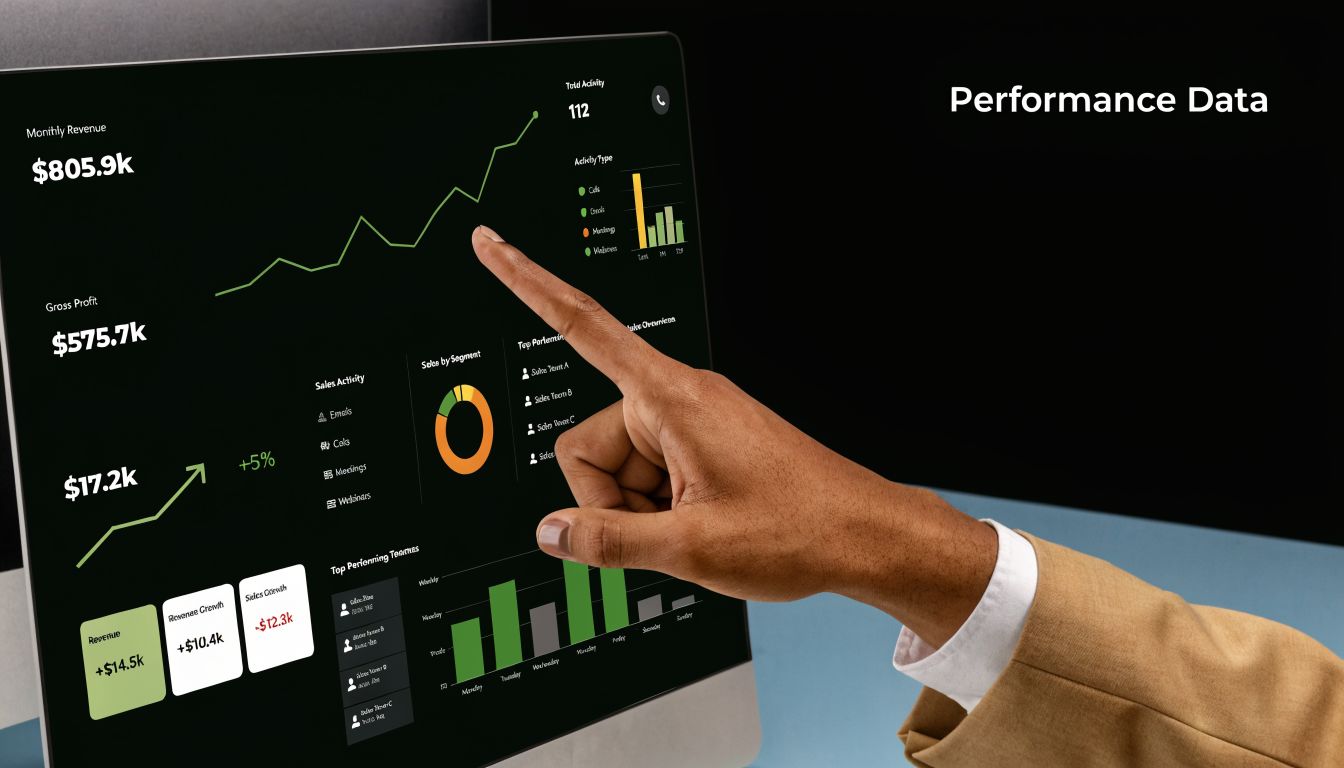
What the benchmark gap means in practice
A warm call starts with context already in place. The prospect may recognize your company name, remember a subject line, or connect the outreach to a problem they are already discussing internally. That shortens the path to a real conversation.
Cold calling carries two jobs at once. The rep has to earn attention, then create enough relevance to keep the conversation alive. That is why leadership teams often overestimate what raw dialing volume should produce.
The practical takeaway is simple. Warm calling usually gives you more output per rep hour, while cold calling gives you more market coverage. Good outbound programs need both, but they should not ask each motion to do the other’s job.
Strong reps still need a strong system
The same Apollo data shows that top performers can beat average cold benchmarks by a wide margin. That matters, but it does not erase the structural difference between calling an aware buyer and interrupting an unaware one.
Rep quality helps. So do list quality, account selection, timing, and message clarity. In my experience, the biggest lift usually comes before the rep speaks. A targeted cold email sequence that introduces the problem, stakes, and point of view makes the later call behave more like a warm follow-up than a true cold interruption. That is where multi-channel outbound produces better economics than a call-only motion.
Judge call performance by segment, list source, and sequence context. A blended team average hides too much.
Leadership teams should also measure efficiency, not just meetings booked. Handle time, disposition accuracy, callback rates, meeting show rates, and opportunity acceptance all shape actual ROI. Average Handle Time (AHT) is useful because it forces teams to connect conversation volume to time cost.
That matters even more with outsourced SDR programs or pay-per-meeting models. A busy calendar can still produce weak pipeline if the meetings are low fit, poorly timed, or disconnected from active buying priorities. The cleaner way to evaluate performance is to tie calling outcomes back to downstream funnel movement, using benchmarks like these sales conversion rates across the funnel.
Side-by-Side Analysis for B2B Tech
B2B tech teams usually frame warm calling vs cold calling as a choice. In practice, it is a systems question. The essential decision is how each call type fits your coverage model, your rep mix, and the cost of creating context before a rep picks up the phone.
Here’s the quick-reference table leadership teams usually need first.
| Dimension | Cold Calling | Warm Calling |
|---|---|---|
| Prospect readiness | Little or no prior awareness | Some prior awareness or engagement |
| Trust level at first contact | Starts near zero | Starts higher because context exists |
| SDR opening move | Earn attention fast | Reference known context and continue the thread |
| Data requirements | Can operate with lighter context, but quality targeting still matters | Works best when prior touches and signals are documented |
| Scalability | Strong for broad TAM coverage | Strong for conversion efficiency, weaker if signal volume is low |
| Objection profile | More skepticism, more interruption resistance | Lower skepticism, more substantive objections |
| Best use case | New market entry, whitespace coverage, territory development | Nurture follow-up, mid-funnel acceleration, reactivation |
| Management challenge | Activity volume without quality drift | Signal prioritization and timely follow-up |
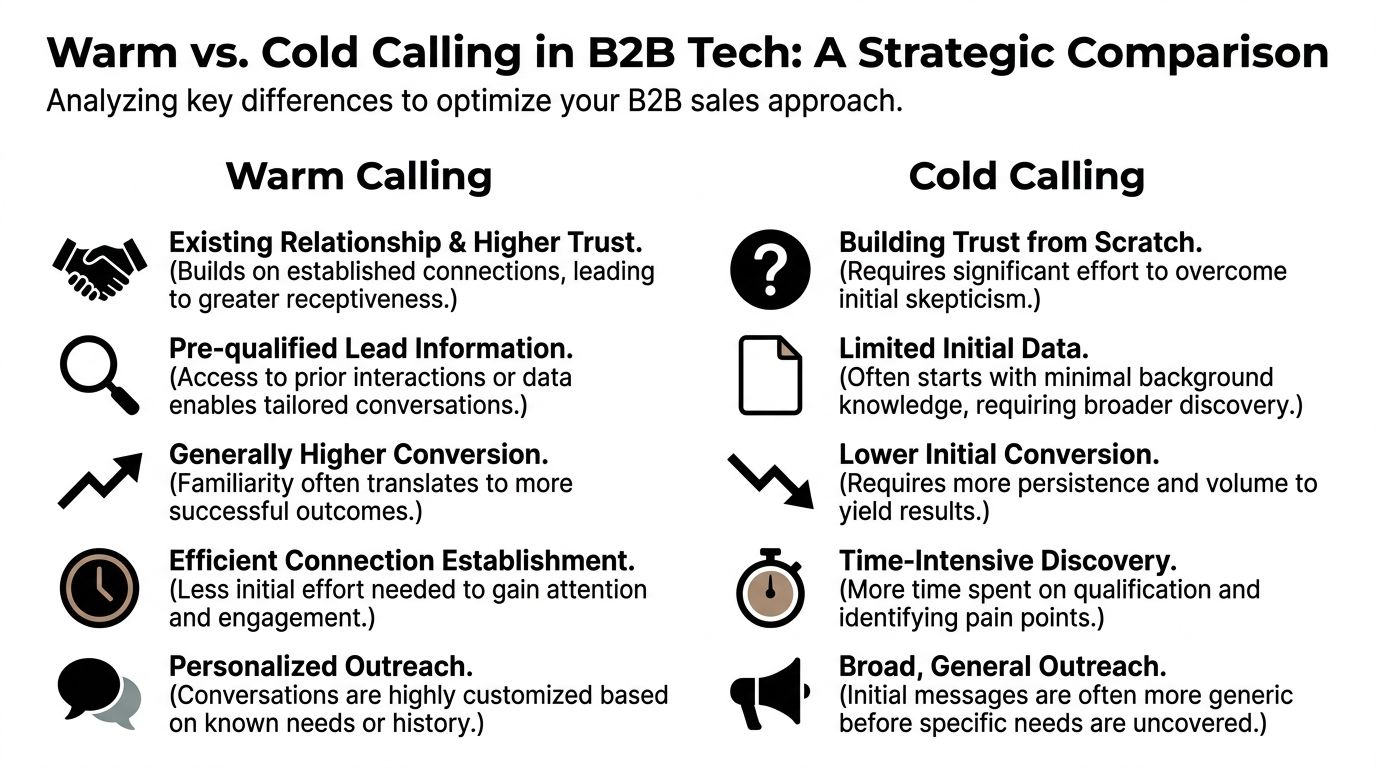
Prospect readiness changes the economics
Buyer readiness affects more than call tone. It changes conversion potential, rep efficiency, and how much skill the opener has to carry.
A true cold call asks the rep to create relevance in real time. In SaaS, that usually means compressing three jobs into the first 20 seconds: identify the problem, show why it matters to that role, and earn enough attention to ask a useful question. Warm calling removes part of that burden because the buyer already has some context, whether from a prior email, a webinar registration, a content visit, or a previous conversation.
The performance gap is directionally clear, but teams should be careful with benchmark tables. Results vary widely by segment, data quality, and sequence design. The practical takeaway is simpler: recognition improves conversation quality. That is why outbound programs built around SaaS lead generation strategy and outbound planning often use cold email first, then route engaged or exposed accounts into call tasks.
The SDR skillset is not identical
Leaders often hire for “good on the phone” and assume the rest will sort itself out. It usually does not.
Cold calling rewards a narrow set of strengths:
-
Pattern interruption without gimmicks: The opener has to sound relevant fast.
-
Emotional resilience: Reps hear more dismissals and have fewer conversational openings.
-
Fast qualification judgment: They need to decide quickly whether the account deserves another touch.
Warm calling rewards a different operating profile:
-
Context stitching: The rep connects the call to prior outreach or account activity without sounding scripted.
-
Stronger discovery: There is more room to diagnose pain, timing, and internal ownership.
-
Follow-up discipline: Warm intent decays quickly when the rep waits too long or misses the signal.
I’ve seen strong cold callers struggle in warm follow-up because they keep using interruption tactics after the buyer is already partially engaged. I’ve also seen polished follow-up reps fail in net-new calling because they cannot create urgency from zero awareness.
Scale and efficiency pull in different directions
Cold calling still has a clear role in B2B tech. It helps teams pressure-test messaging, open whitespace accounts, and get direct market feedback faster than waiting for inbound or nurture signals. If leadership needs coverage across a broad TAM, cold calling gives that reach.
Warm calling usually wins on efficiency. Reps spend more time in relevant conversations and less time fighting for basic attention. That matters when SDR capacity is limited, ACVs are high, or the handoff to AEs needs to be tighter.
The trade-off is signal creation. Warm calling only scales if marketing, outbound ops, and sales development consistently generate usable context.
Cost per acquisition depends on the system, not the label
Teams often assume warm calling is always cheaper because it converts better. That misses the setup cost. Warm calling depends on clean data, working deliverability, clear sequencing rules, and fast task routing. Without that infrastructure, the team pays for “warm” motions that are only loosely connected to real intent.
Cold calling has the opposite profile. It is less efficient per conversation, but simpler to launch because the motion depends less on prior engagement. That can be useful for a new segment test, a territory buildout, or an early-stage team that needs account coverage before the rest of the outbound engine is fully tuned.
For B2B tech, the better model is usually integrated. Use cold calling to create coverage and gather message feedback. Use cold email to create familiarity at scale. Then treat the call as a continuation of a coordinated sequence, not a standalone tactic. That is how teams get both market reach and better meeting efficiency.
Integrating Calling into Your Outbound Sequence
High-performing outbound teams do not leave context creation to the rep who picks up the phone. They build it upstream, then use the call to convert that context into a live conversation.
That is the practical way to combine warm and cold calling. Cold email handles the heavy lifting early. It introduces the company, frames a business problem, and gives the prospect a chance to recognize the topic before the rep calls. The call may still begin as a cold interruption, but it no longer lands in a vacuum.
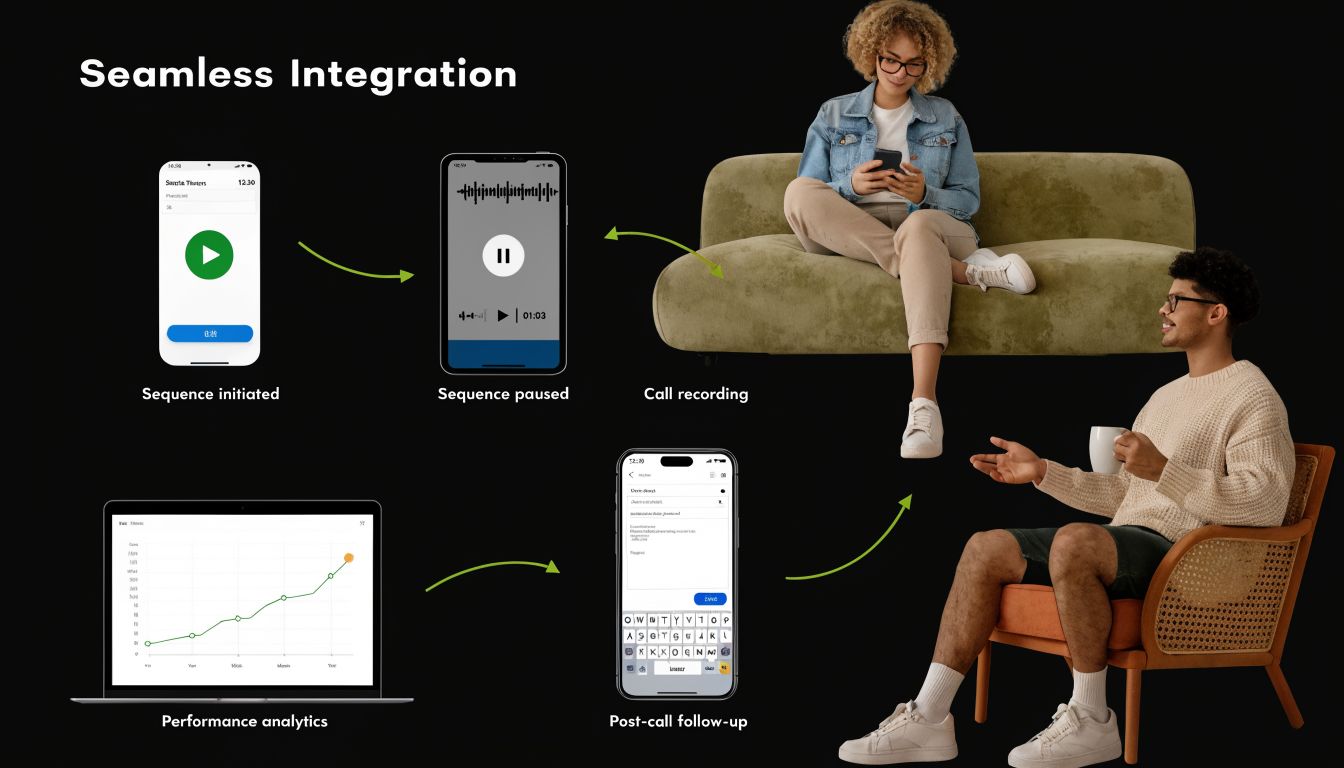
For B2B SaaS teams, that matters because call performance is shaped less by channel choice alone and more by sequence design. A call that follows a focused email, relevant account selection, and a timely follow-up will usually outperform a call dropped onto a prospect with no prior exposure. The point is not to turn every call into a fully warm conversation. The point is to improve the odds of relevance at scale.
Use cold email as the warming layer
Cold email is the most efficient warming mechanism in outbound because it scales context without asking an SDR to spend live talk time creating interest from zero. Even without a reply, the email can do useful work. It can establish the company name, introduce one problem worth discussing, and make the later call feel familiar enough to earn 20 more seconds.
This only works if the sequence is coordinated. Many teams send emails and make calls. Fewer teams make those touches reinforce each other.
A practical pattern looks like this:
-
Target accounts carefully Build from a real ICP, with segment-level pain points and buying roles that match the offer.
-
Send focused outbound emails Keep each sequence centered on one business issue. A single clear problem gives the rep a stronger call opener than a broad product pitch.
-
Use engagement signals as prioritization input Replies matter most. Repeat opens, clicks, site visits, and LinkedIn activity can help with timing, but they should not be treated as intent on their own.
-
Call with a specific reason Reference the problem, use case, or trigger behind the outreach. Do not summarize the email line by line.
-
Route outcomes with discipline Qualified interest moves to discovery. Light interest goes back into nurture. Bad-fit accounts come out of the sequence.
This operating model is what turns cold calling and warm calling from a debate into a system. If your team wants a clearer view of how that system works in practice, this guide to SDR-led demand generation through outbound cold email lays out the mechanics well.
What works and what usually fails
A good sequence changes the tone of the call. The rep is no longer opening with a generic permission question and hoping to find a pain point in real time. The rep is calling into a defined topic, such as onboarding friction, cloud cost visibility, renewal risk, or pipeline quality. That makes the conversation sharper from the first sentence.
The failure points are usually operational, not theoretical:
-
Disconnected channels: Marketing sends one message, SDRs call with another, and CRM data does not show what happened before the dial.
-
Poor timing: Reps call long after an email was opened or clicked, when the context is stale.
-
False warmth: A prospect received one email, but the team treats that account as engaged.
-
Generic call references: The rep mentions “an email I sent” instead of naming the issue that might matter to the buyer.
I see this most often when leaders treat calling as an isolated productivity metric. More dials can create more activity, but not necessarily more pipeline. The better question is whether each touch gives the next touch a stronger reason to exist.
Multi-channel works when each touch changes the next conversation. If the call sounds the same whether the prospect engaged or not, the sequence is just parallel activity.
A short walkthrough helps teams visualize the handoff.
The operating model leaders should build
The strongest setup is a coordinated outbound engine. List quality, email copy, deliverability, CRM hygiene, and SDR follow-up timing all shape call results. If one piece breaks, the phone team feels it first.
That changes how leaders should inspect performance. Review call outcomes, but also review whether email messaging matches the call track, whether engaged accounts are being called quickly enough, and whether reps can see the right context inside the CRM before they dial. Teams that do this well stop asking whether warm calling beats cold calling. They build a program where cold email warms the market, calls qualify and convert interest, and both channels contribute to pipeline.
Sample Scripts and Call Frameworks
Scripts fail when teams treat them like lines to memorize. What reps need is a framework that preserves structure while leaving room for judgment. Cold calls and warm calls should not sound like variations of the same opener.
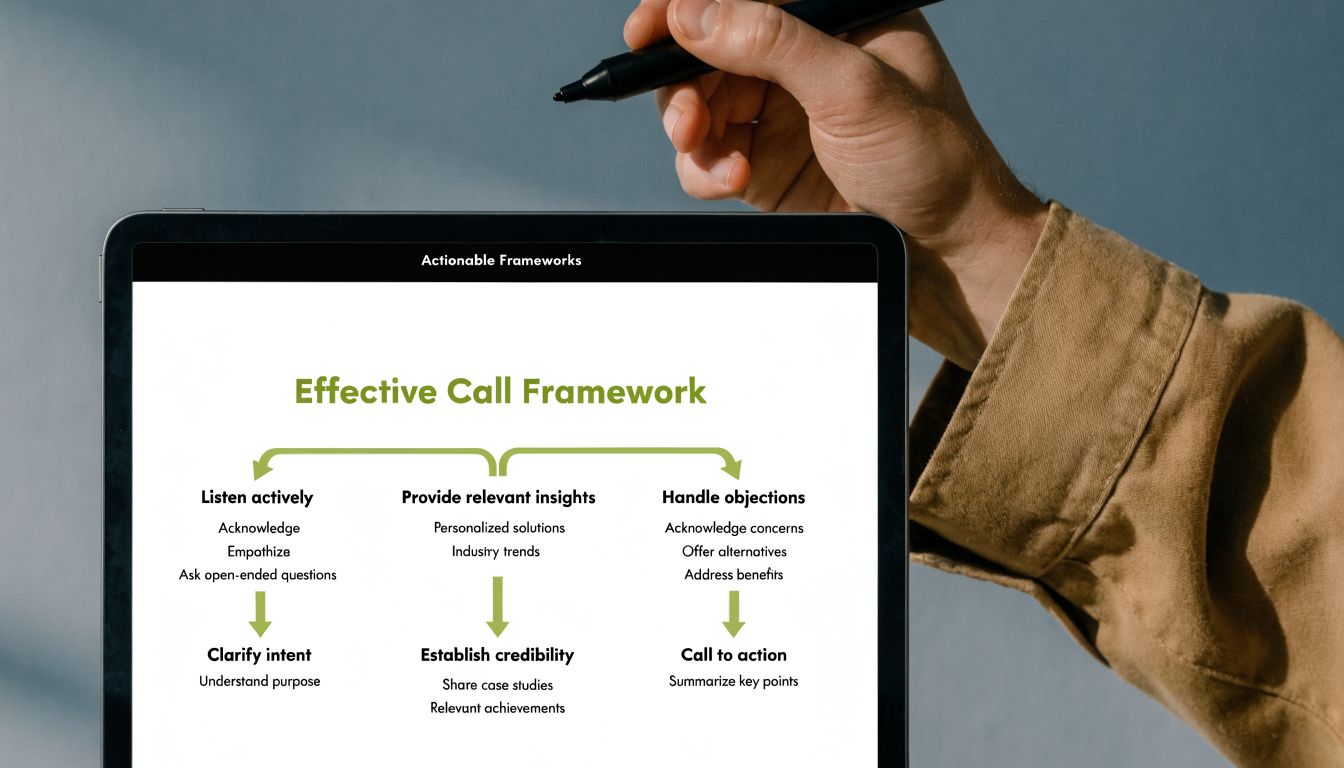
Cold call framework
A cold call needs three things quickly: a pattern interrupt, a relevant problem, and a low-friction next step. The goal isn’t to force a full demo from an unaware buyer. The goal is to earn enough attention to test fit.
“You weren’t expecting my call. I’ll be brief. I’m reaching out because we work with SaaS teams that are trying to fix [specific problem], and I wanted to see whether that’s even on your radar right now.”
That opener works because it acknowledges interruption without sounding apologetic. It also narrows the topic. Narrow beats broad on a cold call.
The flow should look like this:
-
Open with honesty: Acknowledge the interruption.
-
State one problem clearly: Pick a pain point tied to the role.
-
Ask a sorting question: Find out whether the issue exists.
-
Offer a small next step: Suggest a short follow-up if there’s relevance.
The pivot matters as much as the opener.
If the prospect gives even light confirmation, move from pitch mode to diagnosis mode. Ask how they handle the issue today, what’s breaking, and who owns the outcome internally.
Warm call framework
A warm call should sound like a continuation, not an interruption. The rep already has a thread to pull. Use it.
“I’m following up on the note I sent about [specific issue]. You may have seen it, and I wanted to call because teams usually have a sharper reaction to this on the phone than over email.”
That wording is useful because it references prior contact without pretending the prospect definitely read or loved the message. It creates room for either response.
A practical warm-call flow:
-
Reference the trigger Mention the email topic, event, content interaction, or prior conversation.
-
Confirm relevance Ask whether the issue is worth attention now.
-
Move into business context Explore process, ownership, and urgency.
-
Advance with purpose Book a discovery call only if there’s real mutual fit.
For appointment-focused teams, the best training usually happens at the transition point between interest and qualification. This playbook on B2B appointment setting frameworks is useful because it emphasizes conversation control without making reps sound robotic.
A Decision Framework for Your Sales Team
The right mix of warm and cold calling depends less on philosophy and more on business context. Leadership should make the decision based on economics, market conditions, and team capacity.
When cold calling deserves more weight
Lean harder into cold calling if your company is entering a new segment, selling into a broad TAM, or still testing where your message lands best. In those situations, live conversations provide fast market feedback. They also help uncover objections your email copy and website won’t surface on their own.
Cold calling also makes sense when your team needs direct account coverage and can support the activity discipline that comes with it. That means clean lists, strong coaching, and managers who inspect call quality rather than just dial counts.
Use it when:
-
Your market is under-mapped: You need direct conversations to identify fit.
-
Your TAM is broad: Coverage matters.
-
Your team can handle repetition: Cold acquisition requires resilience and coaching discipline.
When warm calling should lead
Give warm calling more weight when the account value is high enough to justify prep, when the buying committee is more complex, or when your team already has a strong stream of engaged accounts from outbound email, content, partner channels, or pipeline reactivation.
Warm calling is also the better fit when brand recognition is low but message relevance is strong. A few thoughtful touches before the call can change the conversation dramatically.
Prioritize it when:
-
Your accounts need context: Complex products usually do.
-
You already have engagement data: Follow-up quality matters more than raw volume.
-
Meeting quality matters more than sheer activity: Especially for smaller teams.
The practical answer is usually hybrid
Most B2B SaaS teams shouldn’t choose one permanently. They should split the motion by account state.
A practical model looks like this:
-
Net-new, untouched accounts enter email-first outbound and selective cold call coverage.
-
Engaged accounts move into warm call priority.
-
Recycled opportunities get personalized reactivation calls.
-
Existing customers or expansion paths receive highly contextual outbound from account owners or hybrid SDR/AE support.
That model keeps cold calling in the system without forcing it to carry the whole burden of pipeline generation.
The phone works best when it follows strategy, not when it substitutes for strategy.
Leaders should also decide based on who they have on the team. A startup with one founder-led seller and one SDR shouldn’t mimic a large outbound org. If resources are tight, build a smaller, cleaner sequence with stronger targeting and faster follow-up. If the team has scale, segment motions by account temperature and rep specialty instead of blending everyone into the same playbook.
Frequently Asked Questions about Modern Calling Strategies
How many touchpoints does it take to warm up a lead
There isn’t a universal number that applies across every market or account type. A lead becomes warmer when the prospect has enough context for the call to feel relevant. Sometimes that comes from one strong email and a timely call. Sometimes it takes several touches across email, LinkedIn, and content before the rep has a credible opening. Focus less on counting touches and more on whether the next call has a real reason behind it.
Does AI dialing change the warm calling vs cold calling equation
It improves speed and workflow, but it doesn’t change buyer psychology. Faster dialing can help teams work a larger list and reduce idle time. It won’t fix weak targeting, poor messaging, or bad timing. If anything, automation raises the cost of strategic mistakes because teams can now scale bad outreach more efficiently.
Is warm calling only for inbound leads or existing customers
No. That’s one of the biggest misunderstandings in outbound. A prospect can become “warm” through outbound touches alone. If they’ve seen relevant emails, engaged with a useful asset, responded on LinkedIn, or spoken to someone internally who mentioned your company, the rep has more context than a true cold call would provide.
Should SDRs handle both cold and warm call motions
Sometimes, but not always. Early-stage teams often need generalists. As the motion matures, specialization can help. Some reps are better at creating openings in difficult cold environments. Others are better at converting engaged accounts into qualified meetings. The decision should follow workflow and skill, not org-chart habit.
What’s the biggest mistake teams make
They confuse activity with strategy. More dials won’t solve a positioning problem. More “warm” follow-up won’t help if the prior touches were irrelevant. The system works when targeting, messaging, timing, and call execution all support each other.
If your team wants more qualified meetings without carrying the overhead of building the full outbound engine internally, Fypion Marketing is built for that model. They specialize in performance-driven B2B lead generation through cold email outreach, using a pay-per-meeting approach that aligns execution with sales outcomes. For SaaS and B2B teams that want cold email to do the warming work before sales conversations happen, they’re a practical partner to evaluate.