
What Is Drip Email Campaign: what is drip email campaign and how it works
A drip email campaign is just a series of automated, pre-written emails that you send to specific contacts over a set period. Think of it as your “set-it-and-forget-it” communication machine. It does the hard work of nurturing relationships by delivering the right message at the right time, guiding leads from casual interest to being sales-ready without you lifting a finger.
Unpacking the Drip Campaign Concept
Imagine you’re trying to grow a plant from a seed. You wouldn’t just dump a whole bucket of water on it at once, right? You’d give it a little bit, consistently, over time. A drip email campaign works the exact same way with your new leads. Instead of blasting them with one massive, overwhelming email, you deliver valuable info in small, easy-to-digest “drips.”
This methodical approach is fantastic for building trust and keeping your brand at the front of their minds. Each email is a deliberate touchpoint, carefully designed to educate, solve a problem, or show off your value, gently moving the person along their journey with your business. It’s a surprisingly powerful way to create a consistent and personalized experience for a lot of people at once.
The Automation Engine
The real magic behind a drip campaign is the automation. These sequences get kicked off by specific actions your contacts take or by simple time delays. Common triggers include:
-
Someone signing up for your newsletter.
-
A user downloading a whitepaper from your website.
-
A prospect who hasn’t opened an email in 30 days.
Once a trigger is pulled, the system takes over and sends out the pre-scheduled series of emails. This ensures no lead ever falls through the cracks and every single contact gets the follow-up they need.
This kind of automated nurturing isn’t just a niche tactic anymore. Projections show that by 2026, a whopping 67% of marketers will be using drip campaigns for lead nurturing, cementing their role as a core part of any modern B2B growth strategy.
If you’re just getting started with all this, a good beginner’s guide to drip email campaigns can give you a solid foundation. You can also dive deeper into building a modern B2B email marketing strategy in our detailed article.
The Building Blocks of a Powerful Drip Campaign
Every solid drip campaign boils down to three key parts working together. Think of it like a smart factory: triggers are the ‘on’ switch, segmentation is the quality control that sorts everything, and the email sequence is the assembly line that actually builds and delivers the final product. Nailing these three is the secret to getting drip campaigns right.
This visual gives you a quick snapshot of how it all connects - automated, targeted, and timely.
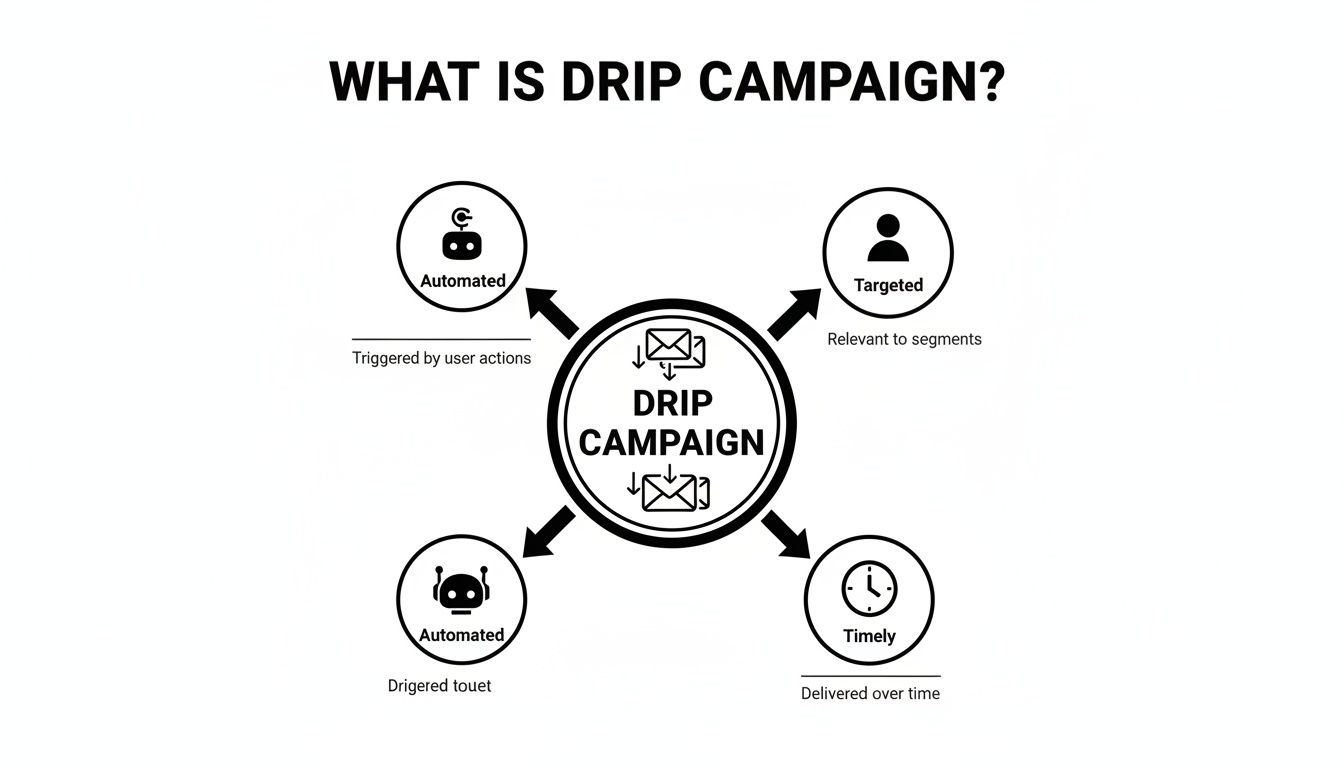
It’s a simple map, but it shows the main goal: get the right message to the right person at the right time, all on autopilot.
The Trigger That Starts It All
A trigger is just the specific action that kicks off the whole sequence. It’s the starting gun. Without a trigger, your beautifully crafted emails just sit there, waiting.
Common B2B triggers you’ll see everywhere are:
-
Form Submission: Someone downloads an ebook or fills out your “Request a Demo” form.
-
User Behavior: A new lead signs up for your product’s free trial.
-
Time-Based: A contact has gone quiet for 60 days, which triggers a re-engagement email to win them back.
Segmentation for Personalization
Once a contact is in, segmentation makes sure they get messages that actually make sense for them. This is where you slice your audience into smaller, more specific groups. A brand-new trial user doesn’t need the same email as a prospect who just read a deep-dive case study.
Proper segmentation isn’t just a “nice-to-have” anymore. With things like Apple’s Mail Privacy Protection making open rates less reliable, we have to focus on what really matters: clicks and replies. The data doesn’t lie - segmented campaigns see 100.95% higher click rates. Why? Because they’re relevant.
Good segmentation starts with knowing who you’re talking to. If your customer profiles are a bit fuzzy, now’s the time to sharpen them up. Our guide on how to create buyer personas for better outreach is a great place to start.
The Email Sequence
Finally, you have the email sequence itself. This is the series of pre-written emails that go out automatically over a set period - it’s the heart of the whole operation.
Each email should build on the last one, guiding the person on a journey. The timing is deliberate, like sending one email every three days for two weeks, all designed to gently move them toward taking that next step.
Why Drip Campaigns Are a B2B Growth Engine
In the B2B world, the sales cycle is a marathon, not a sprint. Drip campaigns are the perfect tool for pacing that race, turning a long list of cold contacts into a steady stream of qualified opportunities. They’re like an automated growth engine humming away quietly in the background.
This kind of automation saves sales teams an insane amount of time. Instead of having to manually chase down every single lead, they can pour their energy into actual conversations with prospects who have already been warmed up by the drip sequence. It’s a game-changer for efficiency and scalability.
And that’s where the real magic happens. Automated emails, including drip sequences, make up just 2% of all email volume but drive a massive 37% of all email sales. That’s an incredible 18.5x boost in efficiency compared to old-school, one-off email blasts.
From Cold Lead to Qualified Opportunity
A well-crafted sequence does more than just fire off emails - it methodically qualifies your leads for you. As people interact with your content by clicking links, checking out your pricing page, or downloading a case study, they’re basically raising their hands and showing you how interested they are. This lets you easily sort the casual browsers from the truly sales-ready buyers.
The real power of a drip campaign in B2B is its ability to build relationships at scale. It makes sure every single lead gets consistent, valuable touchpoints that position your company as a trusted authority, long before a salesperson ever picks up the phone.
This consistent brand messaging is absolutely critical. Every email reinforces your value proposition and maintains a professional, unified voice that builds confidence over time. This methodical nurturing is a core part of any B2B lead generation that actually works.
The result? Your sales team spends less time digging for gold and more time closing deals. By handing them warmer, more educated leads, drip campaigns shorten the sales cycle and dramatically increase the odds of conversion. They’re the bridge that takes a prospect from initial curiosity to a booked meeting.
Proven B2B Drip Campaign Examples You Can Actually Use
Theory is great, but let’s be honest - seeing how something works in the real world is what really matters. Drip campaigns are the engine behind a lot of modern B2B outreach, automating the slow, steady process of building relationships. They’re how you take a list of cold contacts and turn them into genuinely interested opportunities.
Let’s break down four powerful playbooks you can steal and adapt for your own business.
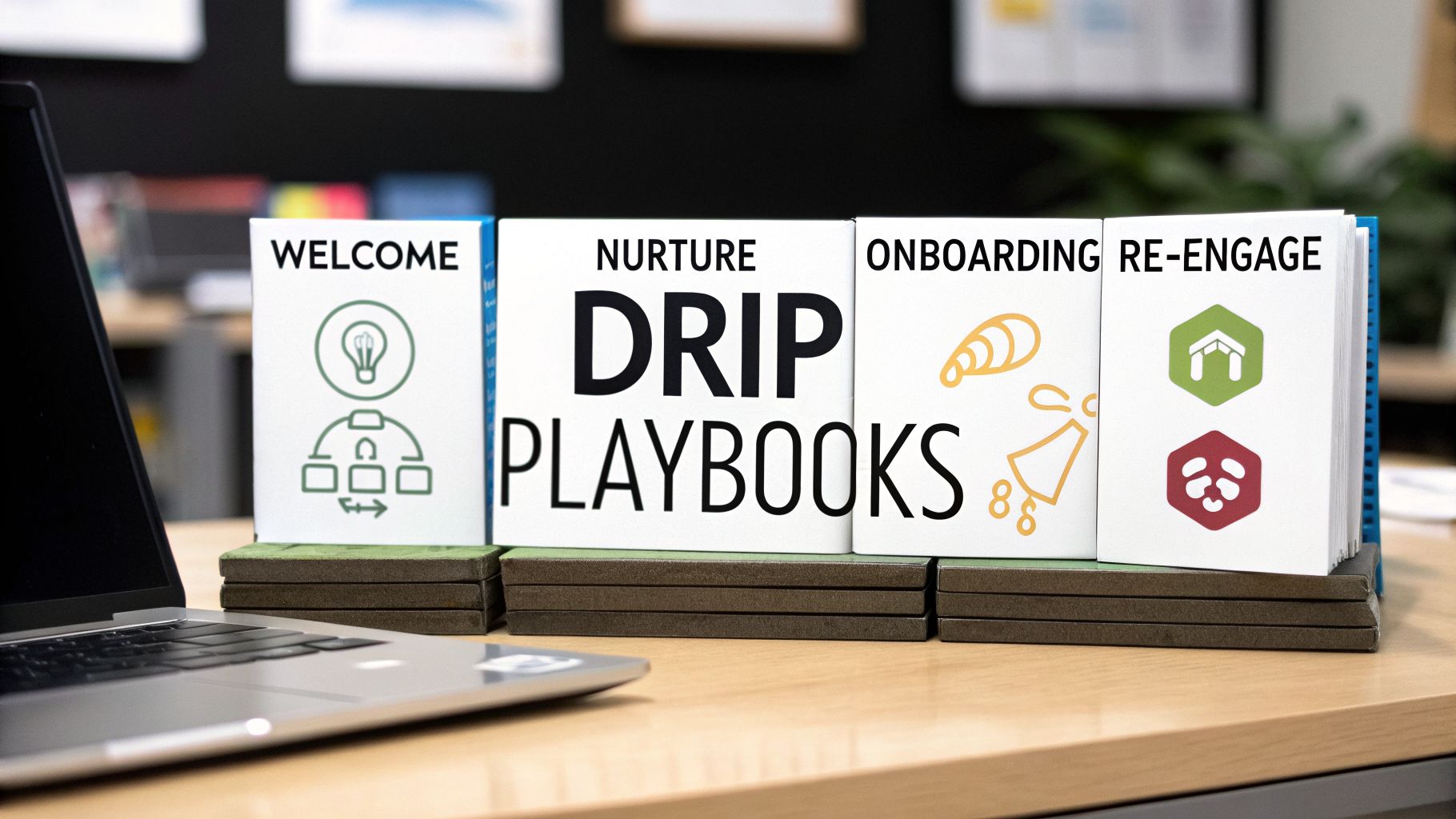
These examples show you how the right trigger and a clear goal dictate the entire flow - what you say, and when you say it.
1. The Welcome Sequence
First impressions are everything, right? A welcome series kicks in the second someone signs up for your newsletter or creates an account. You’re capitalizing on that initial spark of interest when they’re most engaged.
-
Trigger: New subscriber or user signup.
-
Goal: Say hello, set expectations, and deliver a quick win.
-
Email 1 (Immediate): A warm welcome that confirms their subscription. This is a great place to offer a popular resource or a quick tip to provide instant value.
-
Email 2 (Day 2): Follow up by highlighting what makes you different or sharing a short customer success story that resonates.
2. The Lead Nurturing Sequence
This is the classic B2B workhorse. It’s built to educate and build trust with someone who’s shown interest - like downloading a whitepaper - but isn’t quite ready for a sales call.
-
Trigger: Content download (think ebook, case study, or webinar recording).
-
Goal: Gently educate the prospect on their problem and position your company as the guide who can help solve it.
-
Email 1 (Immediate): Deliver the goods. Send them the asset they asked for, along with a brief, helpful tip related to the topic.
-
Email 2 (Day 4): Share a related blog post or another case study that digs into a common pain point they’re likely facing.
-
Email 3 (Day 8): Introduce a soft call-to-action. No hard sells here - maybe an invitation to an upcoming webinar or a link to a helpful tool.
This slow-and-steady approach pays off. In fact, triggered campaigns like these drips can deliver 30x higher returns than your standard, one-off email blasts.
3. The Onboarding Sequence
The deal is done, and now they’re a customer - or at least a trial user. The onboarding sequence is your guide, leading them to that “aha!” moment where they truly understand the value of your product.
-
Trigger: New customer or trial signup.
-
Goal: Get them using the product and loving it. The focus is on adoption and showing off key features to keep them from churning.
-
Email 1 (Day 1): Help them complete one critical first step. Make it simple and satisfying.
-
Email 2 (Day 3): Showcase a second, high-value feature they might not have found on their own.
4. The Re-Engagement Sequence
This one is for the ghosts in your contact list - those cold leads or inactive users who haven’t opened or clicked in ages. The goal is to win them back before they’re gone for good.
This can be a tough nut to crack, but a well-timed “breakup” email or a special offer can sometimes do the trick. If you’re looking for some fresh ideas, check out these super helpful sales follow-up email templates for a little inspiration.
Best Practices for High-Performing Campaigns
Kicking off a drip campaign is one thing. Building one that actually drives B2B results? That’s a whole different ballgame. It’s less about just hitting “send” on an automated sequence and more about the thoughtful, strategic groundwork that turns cold contacts into real clients.

The bedrock of any killer campaign is a single, razor-sharp objective. Before you write a single word, you have to know what success looks like. Are you trying to book more demos? Push new users toward product adoption? Or maybe just nurture leads through a long, complex sales cycle?
Whatever it is, that one goal should be the North Star for every email, every call-to-action, and every time delay in your entire sequence.
Define Your Goal and Audience
Your goal sets the destination, but your audience dictates the route you take. A sequence aimed at a SaaS startup’s CTO will read very differently from one targeting a marketing manager at a Fortune 500.
The language needs to feel professional but not stuffy, building your authority while genuinely helping them out. This is where good personalization goes beyond just dropping in a first name. Use merge tags for names and companies, sure, but also segment your audience based on their behavior or company details to make every message feel like it was written just for them.
Craft Compelling and Valuable Content
Every single email has to earn its place in the inbox. Constantly hammering them with a sales pitch is the fastest way to get ignored. Instead, shift your focus to educating and solving problems. A great drip sequence tells a story, walking the prospect through a logical journey from A to B.
-
Subject Lines are Everything: Think of your subject line as the gatekeeper to your email. It needs to be interesting, specific, and clear. Don’t be afraid to test different angles - a provocative question or a surprising statistic can work wonders.
-
One Clear Call-to-Action (CTA): Don’t make them think. Each email should have one - and only one - primary CTA. Make it dead simple for them to know what to do next.
-
Optimize Your Timing: How you space out your emails is critical. Fire them off too quickly, and you’ll come across as a spammer. Wait too long, and your lead goes cold. For most B2B outreach, sending a touchpoint every 3-5 business days is a solid starting point.
While global open rates hit 42.35% in 2025, drip campaigns in specific industries like healthcare saw a massive 56.36% view rate. It just goes to show that sequences built on real value will always crush generic promotional blasts.
Beyond the nitty-gritty of building the campaign, getting a handle on broader lead nurturing best practices is what ultimately helps convert more prospects into paying clients.
And never stop testing! Always A/B test your key elements, from subject lines to CTAs, to keep refining your approach. You’d be surprised how small tweaks can lead to huge wins in engagement. It also helps to brush up on email deliverability best practices to make sure your hard work actually lands in the inbox.
Got Questions About Drip Campaigns? We’ve Got Answers.
As you start piecing together your outreach strategy, a few common questions always seem to pop up. Let’s clear them up so you can build a killer drip campaign from day one.
How Many Emails Should Be in a Drip Campaign?
There’s no magic number here. A typical B2B nurturing sequence usually lands somewhere between 4 to 8 emails, spread out over a few weeks. The real goal is to keep providing value with each send without flooding their inbox.
Honestly, the ideal length comes down to your campaign goal and your sales cycle. A simple welcome series might only need 3 emails to get the job done. On the other hand, a deep-dive educational campaign could easily run for 10 emails or more.
What Is the Difference Between a Drip and a Nurture Campaign?
You’ll hear these terms thrown around interchangeably, but there’s a subtle yet important difference. “Drip campaign” is really the technical umbrella term for any automated email sequence that goes out based on a set schedule or a specific trigger.
A “nurture campaign” is a type of drip campaign. Its whole purpose is to build a relationship and gently guide a prospect toward making a purchase. So, all nurture campaigns are drips, but not all drips are built for nurturing (think about an onboarding sequence for a new customer).
Why does this matter? It forces you to get crystal clear on your campaign’s objective. Are you just sending out information, or are you actively trying to build a relationship that leads to a sale?
What Metrics Should I Track to Measure Success?
Open rates used to be the go-to metric, but with all the new privacy features, they’ve become pretty unreliable. It’s better to focus on metrics that show someone is genuinely interested in what you have to say.
-
Click-Through Rate (CTR): This is your bread and butter. It tells you exactly how many people are engaging with your content and clicking your links.
-
Conversion Rate: This is where the money is. It tracks how many people are taking the action you want them to, whether that’s booking a demo or signing up for a trial.
-
Unsubscribe Rate: Keep an eye on this one. If it starts creeping up, it’s a big red flag that your content is missing the mark with your audience.
At the end of the day, for any B2B campaign, the ultimate measure of success is how many sales-qualified leads or meetings you’re generating. That’s the bottom line.
Ready to turn your outreach into a predictable pipeline of qualified meetings? Fypion Marketing specializes in performance-driven cold email campaigns where you only pay for results. Book a free consultation and let’s build your growth engine.