
Appointment setting outsourcing: Scale B2B Wins with a Smart Partner

Outsourcing your appointment setting is when you bring in an outside agency to handle the heavy lifting of finding, contacting, and booking meetings with qualified prospects. Plain and simple. This frees up your in-house sales team to do what they do best: close deals, not chase down leads.
The real magic here is accelerated pipeline growth, all without the massive overhead of hiring and training your own SDR team from scratch.
Why Smart B2B Companies Outsource Appointment Setting

Let’s be clear: the move to appointment setting outsourcing isn’t just about saving a few bucks. For sharp B2B leaders, it’s a strategic play to inject speed, expertise, and scalability right into the sales funnel. It’s about shifting your mindset from seeing sales development as a cost center to treating it like a high-octane, on-demand service.
Picture this: your SaaS company has found its product-market fit. The product is solid, customers are happy, but your sales pipeline is all over the place. The traditional route? A slow, expensive, and frankly risky process of hiring in-house Sales Development Reps (SDRs). This is exactly where outsourcing flips the script and becomes a powerful growth lever.
Gaining Immediate Access to Specialized Talent
Hiring, onboarding, and training a top-notch SDR team can easily eat up months. And even after all that, there’s no guarantee of success. A bad hire can set you back in a big way. Outsourcing completely sidesteps this painful cycle.
You get instant access to a team of pros who live and breathe prospecting. These people are already experts with the latest outreach tools, multichannel strategies, and communication techniques. They show up on day one with proven playbooks and industry know-how, letting you launch sophisticated campaigns in weeks, not quarters.
Reframing the Investment as a Performance Partnership
One of the best things about modern appointment setting is the move toward performance-based models. Instead of shelling out hefty salaries and benefits for an internal team no matter how they perform, you can link up with an agency that’s financially motivated by your success.
Many of the best providers now work on a pay-per-meeting basis. This model totally de-risks the investment for you. You only pay for qualified appointments that meet your specific criteria, meaning every single dollar spent is tied directly to a real sales opportunity. This turns a simple vendor relationship into a genuine growth partnership where everyone is gunning for the same goal: filling your calendar with high-value meetings.
This performance-driven approach is critical. It ensures your partner is relentlessly focused on quality, not just quantity, because their revenue depends on delivering prospects who are genuinely interested and fit your Ideal Customer Profile.
Achieving Unmatched Scalability and Flexibility
Markets shift, and your business has to be able to pivot on a dime. An in-house team is a fixed cost and a pretty rigid structure. Scaling up means another painful hiring cycle, and scaling down can be just as messy.
An outsourced partner gives you the elasticity your business needs to grow smarter.
-
Testing New Markets: Thinking about exploring a new vertical or geography? An outsourced team can spin up a targeted campaign almost overnight without you having to build a whole new internal division.
-
Supporting Product Launches: When you drop a new feature or product, you can instantly crank up your outreach volume to generate buzz and lock in those crucial early adopter meetings.
-
Managing Fluctuations: If your business has seasonal peaks and valleys, you can scale your appointment setting up or down without the HR headaches of managing headcount.
When you think about the strategic edge outsourcing provides, it’s a lot like how companies use specialized partners for things like comprehensive outsourced call center solutions. The logic is the same: tap into specialized expertise to get better results and let your internal team focus on what they’re truly great at. For a deeper look at how this fits into a bigger picture, check out our https://www.fypionmarketing.com/post/your-guide-to-outsourcing-inside-sales.
Ultimately, outsourcing isn’t just about offloading a task - it’s about acquiring a strategic asset for predictable, scalable growth.
How to Select the Right Outsourcing Partner

This is it. Choosing your appointment setting partner is the most critical decision you’ll make in this entire process. Get it right, and you’ll have a seamless extension of your sales team, driving a predictable pipeline. Get it wrong, and you’ll burn through your budget, damage your brand, and fill your reps’ calendars with unqualified meetings that waste everyone’s time.
The trick is to look past the glossy brochures and slick sales pitches. You need to get your hands dirty and dig into their process, tech stack, and track record. You’re looking for a true growth partner, not just another vendor cashing a check.
Look for Niche Expertise, Not Generalist Claims
One of the biggest mistakes I see companies make is hiring a generalist agency. An appointment setter who was booking meetings for a logistics company last week simply won’t get the nuances of selling MarTech SaaS tomorrow. Real expertise matters. A lot.
Look for a partner with a proven track record in your specific industry. They’ll already know the key players, understand the common pain points, and speak your prospects’ language. This kind of specialized knowledge slashes the ramp-up time and massively improves the quality of conversations from day one.
Pro Tip: On discovery calls, ask them to share case studies from companies just like yours - similar size, industry, and target market. If they get vague or can’t provide relevant examples, that’s a huge red flag.
Scrutinize Their Technology and Processes
A modern appointment setting firm is way more than just a list of names and a phone. Their tech stack and workflow are direct indicators of how efficient and sophisticated they are. Don’t be afraid to ask detailed, tactical questions.
-
CRM Integration: How, specifically, do they integrate with your CRM? A seamless data flow between their system and yours (like Salesforce or HubSpot) is non-negotiable for real-time tracking and reporting.
-
Data Sourcing and Enrichment: Where do they get their contact lists? How do they verify and enrich that data? Garbage data in means garbage outreach out.
-
Outreach Channels: Are they just cold calling? Or do they use a multi-channel approach that blends email, LinkedIn, and phone outreach? A multi-touch strategy is always more effective.
-
Email Deliverability: A solid partner should be obsessed with email deliverability. This is critical for making sure your campaigns actually hit the inbox. Ask if they follow proven email deliverability best practices.
Understanding their process gives you confidence that they have a structured, repeatable system for getting results, not just a bunch of people making random calls. For more on this, check out our guide on finding a top B2B lead generation agency.
Ask Questions That Reveal Their True Approach
The discovery call is your interview. Your goal is to get past the canned answers and find out how they actually operate. I recommend preparing a few specific, scenario-based questions that force them to show their expertise.
Here are a few I always use:
-
“Walk me through how you define a ‘qualified appointment’ for a company like mine.” Their answer tells you if they value quality over quantity. You want to hear them talk about criteria like budget, authority, need, and timeline (BANT).
-
“How do you handle target list refinement after the first month?” A great partner uses initial feedback to constantly improve targeting. A lazy one just keeps hammering the same list.
-
“What does your feedback loop look like? How often will we talk and what will we review?” The right answer involves regular, structured meetings where you discuss performance, share prospect feedback, and tweak messaging together.
Their responses to these questions will tell you everything you need to know about whether you’re talking to a strategic partner or just another service provider.
The impact of picking an elite partner is massive. Take BAO, a top-tier agency, for example. They’ve set over 450,000 appointments, with an incredible 55% of those meetings converting to a second sales activity. That success rate generates around $10 million in pipeline value daily, showing what’s possible when you choose the right team.
Understanding Pricing Models and Performance Metrics

Getting the money part wrong when you outsource appointment setting is a surefire way to burn cash with little to show for it. To see a real return, you have to get your head around the different cost structures and, just as importantly, the performance metrics that actually move the needle for B2B growth.
Not all pricing models are created equal. The financial arrangement you land on directly shapes your partner’s motivation - some models reward pure activity, while others incentivize genuine, high-quality results. Let’s dig into the common setups.
Comparing Common Pricing Models
You’ll almost always run into one of three models: a monthly retainer, a pay-per-hour structure, or a performance-based fee. Each one has its place, but they carry very different levels of risk and reward.
Here’s a quick breakdown of what you can expect from the most common pricing structures for outsourced appointment setting. Think about which model best fits your company’s stage, budget, and appetite for risk.
Comparison of Appointment Setting Pricing Models
| Pricing Model | How It Works | Pros | Cons | Best For |
|---|---|---|---|---|
| Monthly Retainer | You pay a flat, fixed fee every month for a defined scope of work and a dedicated team. | Predictable costs make budgeting a breeze. Simple and straightforward. | You pay the same whether they book 2 meetings or 20. The risk is 100% on you. | Large enterprises with complex, long-running campaigns that require a fully dedicated team. |
| Pay-Per-Hour | You get billed for the raw number of hours the appointment setters spend working on your campaign. | Easy to understand and track. Can work for very short-term, experimental projects. | Rewards busywork, not outcomes. Costs can spiral quickly with zero guaranteed meetings. | Companies needing a temporary stop-gap or running a quick, targeted test campaign. |
| Pay-Per-Qualified-Meeting | You only pay a predetermined fee when a qualified appointment is booked and actually takes place. | Almost no upfront risk. You’re paying for tangible sales opportunities, leading to high ROI. | The cost-per-meeting can be higher. Requires crystal-clear qualification criteria. | Most B2B companies with a validated product, particularly SaaS and tech startups looking for growth. |
For most B2B companies that know their product solves a real problem, the pay-per-qualified-meeting model is the clear winner. It forces the agency’s success to be tied directly to yours, forging a true partnership focused on building a quality pipeline. You can dig deeper into how pay-for-performance marketing drives better results in our detailed guide.
Choosing the right model is about aligning incentives. When your partner only gets paid for delivering qualified meetings, their goals are perfectly in sync with yours, which is the foundation of a healthy, productive relationship.
This performance-based approach fundamentally changes the dynamic. Your partner is no longer just a service provider; they become a co-owner of your pipeline growth, incentivized to deliver quality meetings that convert.
Moving Beyond Vanity Metrics
Counting the number of booked appointments is a rookie mistake. A calendar packed with meetings with unqualified prospects is actually worse than an empty one - it devours your sales team’s most precious resource: time.
To really measure the success of your appointment setting outsourcing, you need to track KPIs that tie directly to revenue.
Effective measurement means looking past the top of the funnel to see how those initial conversations translate into actual business.
-
Show-Up Rate: What percentage of booked meetings actually happen? A consistently low rate (anything below 75-80%) points to problems with the qualification process or a weak follow-up game from your partner.
-
Appointment-to-Close Rate: This is the holy grail. Of the meetings set by your partner, how many eventually turn into paying customers? This metric reveals the true quality of their work.
-
Pipeline Value Generated: Add up the total potential deal value from every opportunity created by your outsourced team. This is a direct measure of the pipeline your investment is building.
-
Cost Per Acquisition (CPA): Divide your total spend with the agency by the number of new customers you closed from their meetings. This gives you a crystal-clear picture of your acquisition cost for this specific channel.
Focusing on these deeper metrics provides a complete framework for judging the true ROI of your partnership. It equips you for data-driven conversations about performance and ensures your investment fuels sustainable growth, not just busywork.
Building a Seamless Onboarding and Management Workflow
Let’s get one thing straight: outsourcing your appointment setting isn’t a “set it and forget it” deal. If you treat it that way, you’re just paying for activity, not results. The real magic happens when you build a rock-solid onboarding process and commit to managing the partnership collaboratively. This is how you turn a vendor into a true extension of your sales team.
The whole thing lives or dies on crystal-clear alignment from day one. Your partner needs to understand not just what you sell, but who you sell it to and, most importantly, why they should care.
The Kickoff Is Everything
The initial kickoff meeting sets the tone for the entire relationship. Think of it less as a handover and more as a deep-dive workshop. This is where you and your partner build the campaign’s foundation together. A flimsy start almost guarantees you’ll be dealing with poor-quality meetings down the line.
Your goal here is to get granular. Go way beyond the surface-level details. This is your chance to arm your new partner with the kind of institutional knowledge that lets them sound like a genuine expert when they reach out on your behalf.
Here’s a practical checklist to make that kickoff meeting count:
-
Ideal Customer Profile (ICP) Deep Dive: Don’t just talk about company size and industry. Dig into the specific business pains that make a prospect a perfect fit. What are the triggers that start their search for a solution like yours?
-
Define “Qualified” Together: Get specific and agree on the non-negotiables. For example, a qualified lead might be a VP-level contact at a SaaS company with 50-500 employees who has clearly stated a challenge with customer retention.
-
Value Prop & Messaging Workshop: Work together to draft the initial outreach angles. What are the top three outcomes your customers get? How do you turn those into compelling, bite-sized messages that grab attention?
-
Build an Objection Handling Playbook: What are the most common pushbacks and questions your internal sales team hears? Get your outsourced team ready with proven responses so they can handle conversations with confidence.
Creating a Tight Feedback Loop
Once the campaign is live, your job shifts from setup to steering. The single most important factor for long-term success is a tight, consistent feedback loop. This is how you constantly refine messaging, improve targeting, and make sure the quality of leads stays high.
A shared dashboard is a good start for tracking metrics like emails sent, open rates, and meetings booked. But the data alone doesn’t tell the whole story. You need context.
Real-World Scenario: I once managed a campaign for a fintech startup that was getting meetings, but the sales team kept saying they were low-quality. The problem wasn’t the agency; it was our feedback process. We were just telling them “bad lead” without explaining why. We immediately implemented a mandatory 30-minute review call every single week.
During these calls, the sales team gave specific, actionable feedback on why certain leads weren’t a good fit. Within two weeks, the agency used that intel to completely re-tool the messaging and targeting. The result? The qualified meeting rate doubled, and the pipeline value from that campaign shot up by 150% in the next quarter.
Effective management also means pushing for a modern outreach strategy. The days of just blasting emails are long gone. In fact, companies that use three or more outreach channels see engagement rates up to 287% higher than those sticking to a single channel. A smart mix of email, LinkedIn, and targeted calls ensures you’re meeting prospects where they’re most active.
Pulling this off requires a specific skill set. For more hands-on advice, check out our guide on how to manage a remote sales team for pro-level success. Ultimately, a seamless workflow built on collaboration and constant refinement is what separates a mediocre outsourcing experiment from a partnership that genuinely fuels scalable growth.
Common Outsourcing Pitfalls and How to Avoid Them
Even a perfectly planned appointment setting outsourcing partnership can go sideways. I’ve seen it happen. The line between a growth-driving machine and a cash-burning headache often comes down to sidestepping a few common, but totally avoidable, mistakes. The good news? You can spot these traps a mile away if you know what to look for.
The biggest issue I see is companies treating their new partner like a vending machine for leads instead of a true extension of their sales team. This “us vs. them” approach is the fastest route to bad meetings, misaligned goals, and a lot of wasted time and money.
The Vendor Mindset vs. The Partner Mindset
The most damaging mistake is treating your outsourced team like a disposable service you can just switch on and off. When you keep them at arm’s length, you create a communication vacuum that inevitably leads to junk appointments. They never get the real-time feedback, the deep context, or the sense of shared purpose they need to represent your brand well.
A true partner, on the other hand, is part of your team. You bring them into your world, you share the wins and losses, and you build strategy together. Shifting from a transactional view to a strategic one is everything.
A simple way to get this started on the right foot is to create a ‘Partnership Charter’ during your kickoff meeting. This isn’t some stuffy legal document. It’s a one-pager that gets everyone aligned on what matters.
-
Shared Objectives: What are the top 1-3 goals for the next quarter? (e.g., “Book 15 qualified meetings with VPs of Marketing in the fintech space.”)
-
Communication Cadence: Agree to a standing 30-minute weekly check-in and name a single point of contact on both sides. No more confusion.
-
Definition of Success: Put your exact lead qualification criteria in writing. If you need a solid framework, our sales lead qualification checklist is a great place to start.
This simple exercise forces clarity and makes sure everyone is on the same page from day one.
Misaligned Goals and Vague Definitions
Another classic failure point is a fuzzy Ideal Customer Profile (ICP). Just saying you want to target “mid-sized tech companies” is useless. No high-quality partner can work with that. Vague instructions force them to guess, which means they’ll waste precious time and resources chasing prospects that are a terrible fit.
A poorly defined ICP leads directly to appointments that make your sales reps want to pull their hair out. Not only does it burn their time, but it quickly erodes their trust in the entire program.
Cautionary Tale: I once worked with a B2B software company that outsourced their appointment setting with a weak ICP and almost no feedback process. The agency was flying blind. They kept booking similar low-quality meetings because they had no information telling them otherwise. Within 60 days, the pipeline quality tanked. The company blamed the agency and pulled the plug, but the real problem was their own lack of collaboration.
Don’t let this happen to you. Get obsessive about the details of your ICP and qualification criteria before a single call is made or email is sent.
This simple workflow shows how to onboard a partner effectively by working together to define, integrate, and refine your process.
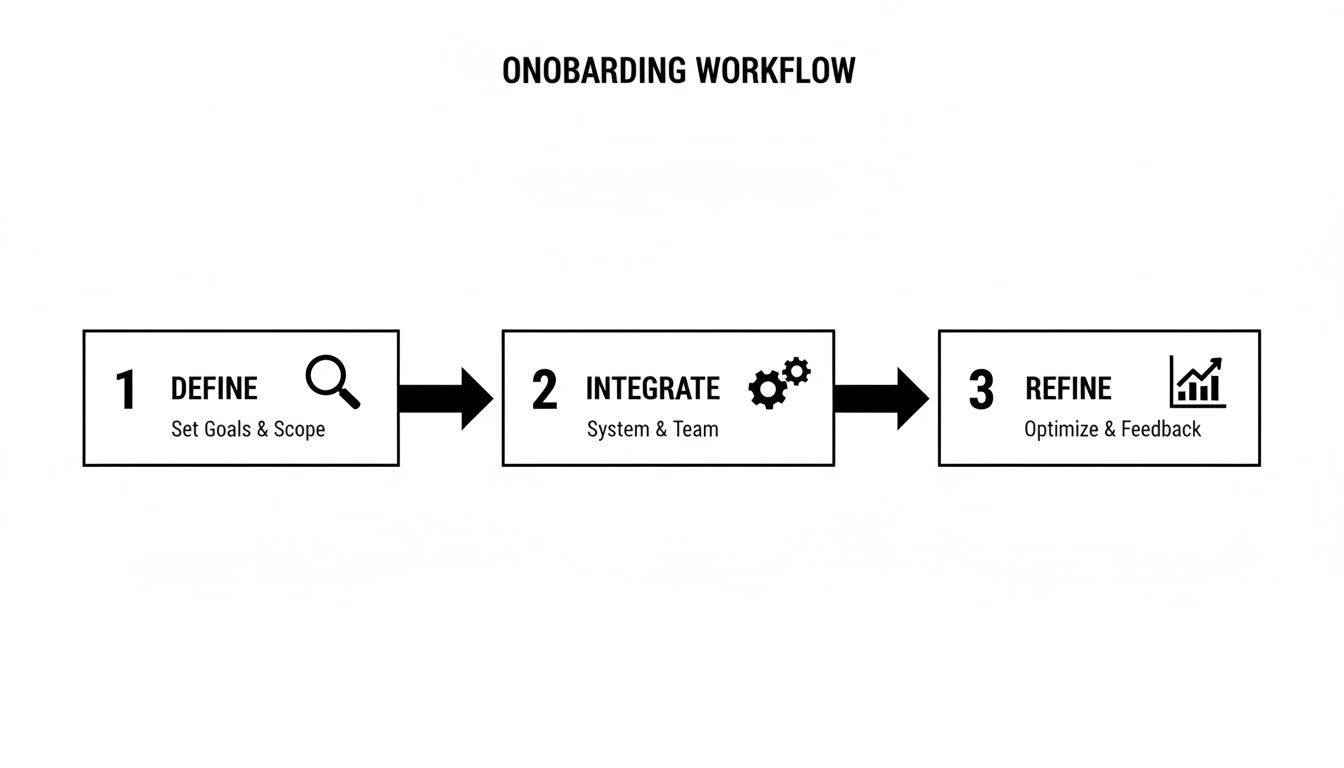
The key takeaway here is that a great partnership isn’t static. It’s a living thing that needs constant feedback and adjustments to stay sharp.
Neglecting the Feedback Loop
The final nail in the coffin for many outsourcing relationships is a broken or nonexistent feedback loop. You simply can’t expect an external team to read your sales reps’ minds. Your sales team holds the most valuable intel in the entire process - the ground truth from their discovery calls.
A successful partnership lives and dies by the quality of its feedback.
-
Positive Feedback: When a meeting is a home run, tell your partner exactly why. Which pain points hit home? What job title was perfect? Give them the good news so they can find more of it.
-
Constructive Feedback: If an appointment was a dud, get specific. Was the contact too junior? Did they have zero budget authority? Was the company totally outside your ICP? Don’t just say “it was bad.”
In stark contrast to that cautionary tale, a SaaS client of mine made weekly check-ins mandatory, with their top sales rep giving direct, unfiltered feedback. This turned into a true collaboration. The agency was able to tweak messaging and targeting on the fly. The result? Their qualified meeting rate shot up by 40% in just one quarter, giving their sales pipeline a massive boost.
By ditching the vendor mindset, defining success with crystal clarity, and committing to a rigorous feedback process, you’ll avoid these common pitfalls and build an appointment setting engine that actually drives revenue.
Common Questions About Outsourcing Appointment Setting
When leaders start looking into outsourced appointment setting, a few big, practical questions always pop up. Let’s get straight to the answers you need to move forward with clarity and confidence.
How Much Does This Actually Cost?
There’s no one-size-fits-all price tag; it really boils down to the pricing model. The old-school retainer model can run you anywhere from $3,000 to over $10,000 a month. You get a dedicated team, sure, but you’re on the hook for that fee whether they book one meeting or twenty.
The good news is that modern performance-based models have completely flipped the script. Instead of a fixed monthly bill, you pay a set fee - usually between $300 and $1,000+ - but only when a qualified meeting actually happens. This approach ties your investment directly to results, so you’re not just paying for effort.
The pay-per-meeting model is a powerful accountability check. It forces your partner to be laser-focused on delivering high-quality, sales-ready appointments because their revenue depends on the pipeline they build for you.
How Long Until We See a Real ROI?
It’s tempting to expect a flood of meetings right away, and you might see your first few appointments set within weeks. But a more realistic timeline for building a consistent, predictable pipeline is about 60 to 90 days.
Don’t rush this initial period. Think of it as a critical calibration phase where your outsourced partner is:
-
Testing and tweaking messaging based on how real prospects respond.
-
Sharpening the target list by learning which pain points and triggers actually resonate.
-
Optimizing their outreach cadence to find that sweet spot between emails, calls, and social touches.
Having a little patience during this ramp-up is the secret to long-term, scalable success. It’s what separates a few lucky breaks from a repeatable engine for growth.
Can an Outsourced Team Really Understand Our Niche Product?
This is a totally valid concern, especially if your product is technical or highly specialized. The short answer is yes - but only if you pick the right partner. A generic call center is going to fall flat on its face here. Elite agencies, on the other hand, are masters of getting up to speed, fast.
A top-tier partner won’t just skim your website. They’ll dive deep to understand the real nuances of what you offer.
Their process usually looks something like this:
-
Digging into your case studies, customer testimonials, and sales decks.
-
Interviewing your top sales reps to find out what messaging is already working.
-
Using the first few weeks of outreach as real-time market research to become fluent in your industry’s language.
The best partners pride themselves on becoming a seamless extension of your team, speaking with the same authority and confidence you do.
How Do You Maintain Lead Quality with an External Team?
Keeping lead quality high comes down to two things: a rock-solid definition of a “qualified lead” and a tight feedback loop. A reputable provider will work with you from day one to co-create strict qualification criteria - things like company size, industry, job title, and specific business pains.
But the real magic happens after the meetings. Your sales team’s feedback is the most critical part of the process. A simple “that was a bad lead” doesn’t help anyone. You need to give specific reasons: “The contact had no budget authority,” or “Their company is outside our ICP.”
This kind of actionable feedback lets the outsourced team constantly fine-tune their targeting and messaging. It ensures lead quality actually improves over time, rather than slowly degrading.
Ready to fill your sales pipeline without the risk of retainers or the headache of hiring? At Fypion Marketing, we specialize in performance-based appointment setting. You only pay for qualified meetings that show up, aligning our success directly with yours. Learn how we can build a predictable pipeline for your B2B company.