
Health Care Lead Generation: A Playbook for B2B Growth
You’re likely dealing with one of two frustrating scenarios.
Either your team already knows health care lead generation matters, but every campaign feels slower, riskier, and harder to scale than in other B2B markets. Or you’ve generated interest, booked a few meetings, and then watched deals disappear into committee review, procurement, compliance questions, and stalled follow-up.
That’s normal in health care. It’s also why generic lead gen advice falls apart here.
The market is digital, but not simple. In 2025, 77% of patients use search engines to research health care providers before booking appointments, according to RevSpark Media’s health care lead generation overview. That behavior matters beyond patient marketing. It tells you the broader market now expects to self-educate, compare options, and validate vendors before replying. If your outbound motion ignores that, you’ll sound behind before the first call.
Your Health Care Lead Generation Playbook
Health care lead generation works when you treat it like a precision sales system, not a volume game.
Most teams fail for predictable reasons. They target institutions instead of people. They write outreach that sounds like software copy. They ask for meetings before earning attention. And they bolt compliance on after the campaign is already live.
A better playbook starts with a simple shift. Focus on qualified meetings with the right stakeholders, not raw lead counts. In health care, the wrong meeting creates drag. The right meeting creates momentum across a buying group.
Three operating rules matter most:
-
Start with research, not list size. Build around account context, role-specific pain points, and timing signals. A small, accurate list beats a bloated one every time.
-
Keep compliance upstream. Your data handling, tools, message content, and workflows need guardrails before the first send.
-
Make relevance visible fast. Decision-makers won’t decode vague value props. They respond when you show you understand a real operational problem.
For provider-side teams trying to sharpen digital growth alongside outbound, this independent practice growth playbook is useful because it reflects how modern practices think about patient acquisition, operational pressure, and AI-enabled efficiency. If your outbound team also supports inbound, align both motions so the message prospects see in search, email, and social doesn’t conflict. A practical way to tighten that connection is to map outreach themes against your inbound lead generation strategy.
Practical rule: In health care, messaging earns the meeting only after targeting earns the right to send it.
Navigating the Compliance Maze Before You Begin
Compliance isn’t a final review step. It’s the operating environment.
That doesn’t mean B2B health care outreach is impossible. It means you need cleaner processes than you’d accept in a typical SaaS campaign. If your team is casual about data sourcing, tracking, vendor setup, or discovery questions, you create avoidable risk.

Separate patient marketing from B2B outreach
This is the first distinction to lock in.
If you market to patients, you’re much closer to sensitive personal data, consent issues, intake flows, and communications that can drift into protected information. If you market to B2B decision-makers at health care organizations, the workflow is generally more flexible, but your team still has to avoid collecting, storing, or discussing protected health information in routine outreach.
That means your cold email should stay focused on business pain, operational friction, staffing pressure, reporting burdens, integration concerns, or workflow issues. It should not invite someone to send patient details, sample records, or screenshots containing protected information.
Do this and don’t do that
Use this as a simple internal checklist before launch:
-
Do source business contact data carefully. Use reputable B2B data sources, verify titles manually, and document where records came from.
-
Don’t scrape indiscriminately. If your team can’t explain how a contact entered the system, you already have a governance problem.
-
Do use vendors that support your compliance posture. If a tool will store regulated data or support workflows where sensitive information could appear, involve legal and security before rollout.
-
Don’t treat your martech stack like a standard startup stack. In health care, convenience-first tool choices often create downstream cleanup.
-
Do write guardrails for reps. Discovery questions should stay at the organizational and operational level.
-
Don’t ask for examples that prompt protected information. Even well-meaning prospects can overshare if you phrase a request badly.
Make vendor management boring and disciplined
Health care marketing teams get into trouble when nobody owns the operational details.
You need a clear inventory of systems involved in outreach, qualification, routing, and CRM syncing. You also need to know which vendors require deeper review, including a Business Associate Agreement where applicable. This is one of those areas where “we assumed it was covered” isn’t a defense.
If your campaigns touch prospects in Europe or process data from EU stakeholders, pair your health care compliance review with broader privacy operations. Formbricks’ 2025 GDPR checklist is a practical resource for turning abstract privacy requirements into implementation tasks.
Keep your outbound message one layer above sensitive information. Talk about workflow, cost pressure, access, staffing, reimbursement, reporting, or system friction. Leave patient-level detail out of it.
Build approval into the workflow
The easiest way to stay compliant is to reduce improvisation.
Create approved templates, escalation paths, approved data fields, and CRM notes standards. Train reps on what to do when a prospect shares more than they should. Review landing pages, forms, meeting schedulers, and follow-up sequences together instead of reviewing each channel in isolation.
Teams that need a practical view of positioning, channel choice, and regulated-market messaging can compare their setup against this guide to B2B marketing in the healthcare industry.
Defining Your Ideal Healthcare Buyer Persona
“Hospital” isn’t a buyer persona. Neither is “clinic group.”
Health care lead generation improves when you map the actual decision path inside the account. The mistake many organizations make is treating every stakeholder as interchangeable. They aren’t. The person who feels the problem, the person who checks budget, and the person who blocks security risk all read your message differently.
Start with buying roles, not job titles
A clean persona model usually includes at least these role types:
-
Clinical champion This person feels the pain directly. They care about workflow, care delivery friction, staff burden, and operational bottlenecks. They’ll engage if your message sounds grounded in day-to-day reality.
-
Operational owner Often responsible for implementation impact. They care about throughput, process reliability, reporting, staffing coverage, and whether the solution creates more work than it removes.
-
Financial gatekeeper This stakeholder wants a credible business case. They’ll push on cost, prioritization, budget timing, and whether the initiative displaces something else.
-
IT or security reviewer Their default stance is caution. They want to know how the system fits the current environment, what it touches, and whether your team understands governance.
-
Executive sponsor This person usually isn’t the first reply, but they often decide whether the project stays alive. They care about strategic fit, risk, and confidence in the vendor.
Build persona notes around objections
Good personas aren’t biographies. They’re response models.
For each role, write down four things: what they’re measured on, what frustrates them, what they’re likely to object to, and what proof they trust. That gives your team a real basis for copy, not a slide deck full of demographics.
A practical persona snapshot might look like this:
| Persona | Main concern | Likely objection | Message angle |
|---|---|---|---|
| Clinical leader | Workflow and outcomes | “This will disrupt staff” | Reduce operational friction |
| Operations leader | Throughput and adoption | “We don’t have bandwidth” | Easier implementation path |
| Finance leader | Spend and prioritization | “Show the return” | Clear cost logic and efficiency |
| IT leader | Integration and security | “This adds risk” | Controlled rollout and governance |
| Executive | Strategic fit | “Why now?” | Priority alignment |
Use sources that reflect real professional context
For list building, LinkedIn Sales Navigator is still one of the best places to validate title, tenure, and org structure. Pair that with health system websites, speaker rosters, conference attendee ecosystems, and professional association directories. The point isn’t to collect more names. It’s to understand who influences the decision and who gives you the cleanest entry point.
A clinical director may be easier to engage than a C-suite executive and still be more useful in opening the account. In many health care campaigns, that path is more productive than trying to force a top-down motion from the first touch.
If your team needs a refresher on turning account research into practical segmentation, this guide on how to create buyer personas for better outreach is a good companion resource.
The best health care buyer persona isn’t the most detailed one. It’s the one your SDR, strategist, and account executive can all use the same way.
Crafting Cold Outreach That Gets Replies
Cold outreach still works in health care. Generic outreach doesn’t.
The fastest way to kill response rates is to send a polished email that could apply to any company in any industry. Health care buyers are overloaded, skeptical, and used to vague claims. If your message doesn’t show situational relevance immediately, it gets ignored.
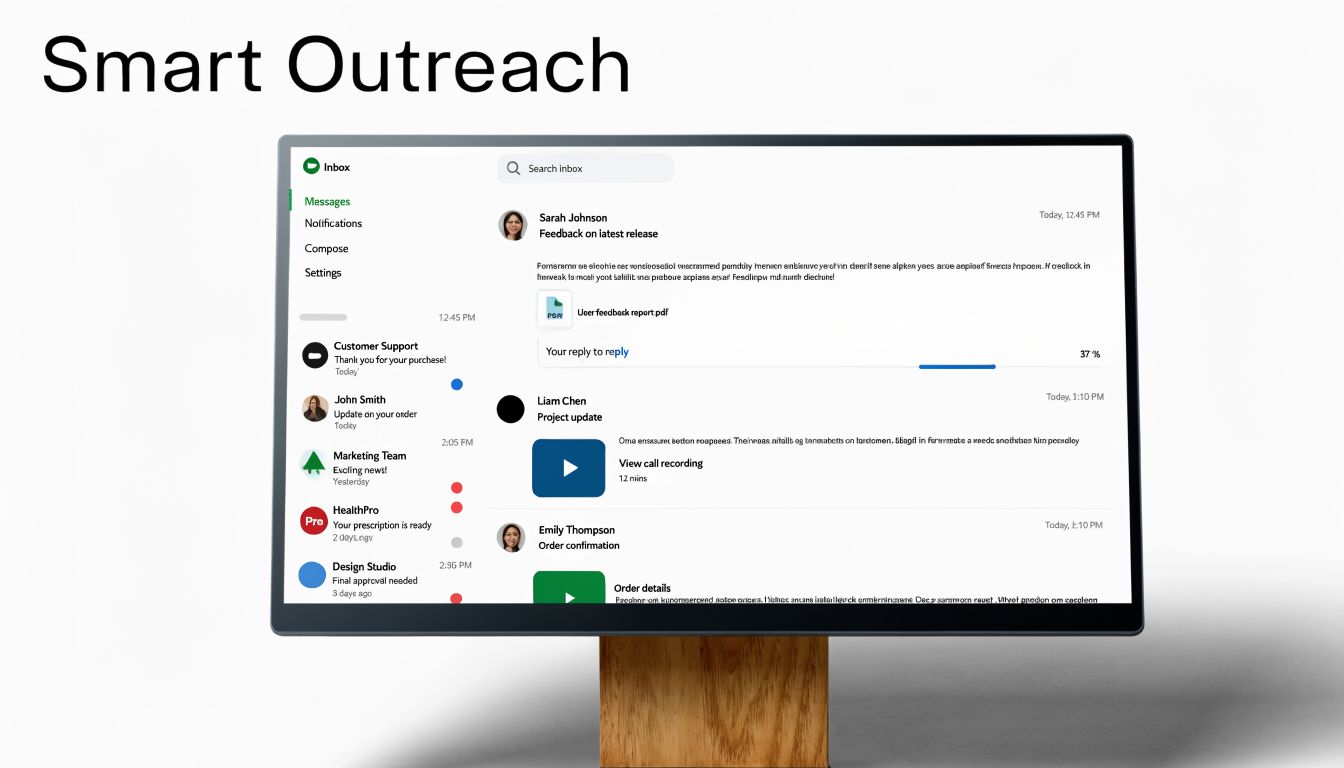
A useful benchmark comes from a 2025 analysis of health care SaaS campaigns, which found average cold email open rates of 18 to 22 percent and meeting booking rates of 0.8 percent. The same analysis noted that hyper-personalized campaigns tied to stakeholder-specific pain points achieved response rates three times higher. That tells you exactly where the advantage lies. Not in sending more. In writing better.
Lead with the problem they already recognize
Most weak outreach starts with the sender. Strong outreach starts with the recipient’s environment.
If you’re writing to a radiology leader, don’t introduce your platform in line one. Start with backlog pressure, scheduling friction, staffing strain, image turnaround issues, or referral leakage. If you’re writing to a revenue cycle leader, open with denial pressure, workflow gaps, or reporting friction.
That doesn’t mean stuffing industry jargon into the first sentence. It means proving you know what kind of problem belongs to that role.
A practical cold email structure
This structure works because it respects how health care professionals read:
-
Relevant opener Acknowledge a plausible operational issue, strategic priority, or recent trigger.
-
Specific consequence Show the downstream effect of that issue in language the buyer uses internally.
-
Credible offer Suggest a useful next step that feels low pressure.
-
Simple CTA Ask for a small reply, not a large commitment.
Example framework:
Subject: reducing intake friction for specialty referrals Hi [First Name], Reaching out because teams in [segment] often hit the same issue when referral volume rises. Staff spend more time routing, following up, and fixing handoff gaps than they expected. That usually shows up as slower response times, inconsistent patient follow-through, and added admin load across front-office and clinical teams. I have a short breakdown of how similar organizations evaluate that bottleneck before changing process or tooling. Worth sending over?
That email works better than a feature-heavy pitch because it gives the prospect an easy way to engage without defending their budget or calendar.
What to avoid
Some mistakes are common enough to call out directly:
-
Product-first openings Buyers don’t care that your platform is a new kind of solution. They care whether you understand the burden they’re carrying.
-
Aggressive CTAs “Can we book 30 minutes this week?” is too much for a first touch in many health care contexts.
-
Overclaimed outcomes If you can’t support a claim, don’t write it. Health care buyers are alert to overstatement.
-
False personalization Mentioning a company name and title isn’t personalization. Referencing a role-specific pressure point is.
For teams sharpening copy standards, this guide on how to write a cold mail is a useful reference.
A good follow-up sequence matters too, especially in regulated markets where trust builds slowly. This breakdown is worth watching before your next rewrite:
Use professional restraint
The best health care outreach sounds calm, informed, and useful.
It doesn’t shout. It doesn’t oversell. It doesn’t force urgency where none exists. It respects the fact that many buyers are balancing operational pressure, internal politics, and risk review at the same time.
Field note: Relevance beats cleverness. The email that sounds slightly plain but clearly informed will outperform the flashy one most of the time.
Expanding Reach with a Multi-Channel Strategy
One email thread rarely carries an entire health care buying process.
That’s not because outreach fails. It’s because health care decisions often move through committees, reviews, shifting priorities, and long pauses. A prospect may agree with your premise today and still not be ready to act for months.
According to Datamatics BPM’s health care lead generation analysis, converting a lead in this market typically takes 12 to 20 targeted touchpoints over 12 to 24 months. That’s why the strongest programs combine calls, emails, and social engagement instead of betting everything on one channel.
Think in coordinated sequences
Multi-channel doesn’t mean spraying messages everywhere.
It means each touchpoint supports the next one. A prospect sees your name in LinkedIn comments, receives an email referencing a relevant operational issue, gets invited to a useful webinar, then hears from a rep who can continue the same conversation without resetting context.
A simple structure looks like this:
-
Email for initial relevance Use it to introduce the problem and test whether the message resonates.
-
LinkedIn for familiarity Reinforce credibility through profile positioning, thoughtful comments, and selective connection requests.
-
Calls for live context Use them when timing matters or when accounts are engaged but not replying digitally.
-
Content for self-education Give buyers something they can circulate internally, especially when multiple stakeholders need to align.
Use content as a qualification tool
A whitepaper, compliance brief, CMS-related explainer, or clinician-led webinar should do more than “build awareness.” It should help you identify which accounts are moving.
When a contact consumes role-relevant content and then engages with outreach, the conversation changes. You’re no longer trying to create interest from scratch. You’re stepping into an active evaluation process.
Attribution discipline matters at this stage. If your team cannot determine whether a booked meeting originated from cold email alone, LinkedIn reinforcement, or content-assisted nurturing, budget decisions become guesswork. A comprehensive guide to marketing attribution is useful for setting up cleaner channel analysis before your reporting gets messy.
Don’t confuse presence with pressure
Health care buyers respond to consistency, not constant interruption.
Your sequence should feel coherent. Same pain point. Same business case. Same strategic thread. If each channel says something different, you don’t look professional. You look disorganized.
A good multi-channel program makes the buyer feel like your team understands the account. A bad one makes them feel chased.
Separating Prospects from Suspects with Lead Scoring
Not every engaged contact is a real opportunity.
That matters more in health care because meetings are expensive. Sales cycles are long, internal review is heavy, and the wrong handoff can waste weeks. A useful lead scoring model helps your team decide who needs immediate follow-up, who belongs in nurture, and who should be left alone for now.
Score both fit and intent
A practical model combines who they are with what they do.
Fit includes role, organization type, and alignment with your ideal account profile. Intent includes actions that suggest active evaluation. If you score only engagement, you’ll overvalue curious readers. If you score only fit, you’ll miss timing.
The strongest models also weigh behavior differently. A generic content visit matters less than a pricing request or a multi-stakeholder demo request. In health care campaigns, behavior tied to implementation, ROI, and evaluation usually deserves more weight than surface-level interaction.
Example B2B Healthcare Lead Scoring Model
| Action or Attribute | Description | Points |
|---|---|---|
| Target job title match | Decision-maker or strong influencer in a relevant function | High |
| Ideal organization fit | Account matches your segment, care setting, and buying profile | High |
| Viewed pricing information | Strong buying-intent behavior | 30 |
| Requested a demo with multiple stakeholders | Indicates active internal evaluation | 25 |
| Downloaded an implementation guide | Shows practical purchase interest | 20 |
| Attended an ROI webinar | Suggests business-case evaluation | 15 |
| Consumed general content | Early engagement, but lower intent | 10 |
| Non-target role with light engagement | Weak fit and weak timing | Low |
Those point values for specific behaviors reflect health care lead scoring guidance discussed in the verified industry material. The exact cutoff for MQL or SQL should depend on your sales model, deal size, and buyer complexity.
Keep the model usable
The best scoring model is the one reps will trust.
If scoring becomes too abstract, sales ignores it. If it’s too simplistic, marketing loses confidence in it. Start with a small set of meaningful signals, review accepted versus rejected leads with sales, and refine from there.
For teams building this inside their CRM, this walkthrough on how to master B2B lead scoring to boost sales effectiveness is a practical starting point.
A lead score should answer one question fast. Does this contact deserve a real sales motion right now?
Tracking ROI in a Long-Cycle Environment
In health care, waiting for closed revenue to judge campaign quality is too slow.
You need a dashboard that shows whether your pipeline is getting healthier before deals close. Otherwise, you’ll shut off channels that are working, keep channels that only look busy, and struggle to defend budget in front of leadership.

A useful benchmark from CallRail’s health care marketing statistics is that organic health care leads average $320 and paid leads average around $400, while lead-to-opportunity conversion in the sector typically sits between 15% and 25%. Those numbers matter because they force discipline. Cheap leads that never mature are not efficient. Expensive leads can still be profitable if quality is strong and conversion holds.
Build the dashboard around leading indicators
Track the metrics that help you make decisions early:
-
Cost per lead by channel Useful for comparing paid, organic, outbound-assisted, and partner-supported motions.
-
Lead-to-opportunity conversion This tells you whether targeting and qualification are doing their job.
-
Pipeline velocity Watch how quickly qualified leads move from first conversation to next-stage activity.
-
Channel-specific opportunity quality Look beyond booked meetings. Which sources produce sales-accepted opportunities?
-
Forecast confidence In long-cycle environments, a healthy forecast depends on stage quality, not just total pipeline count.
Review channels like an operator
A practical reporting rhythm asks uncomfortable but necessary questions.
Are organic leads cheaper because they’re better, or because they’re underqualified? Are paid leads costing more because the campaigns are inefficient, or because they’re reaching harder-to-access but valuable accounts? Is outbound creating initial meetings that never progress, or is it supplying high-fit accounts that need more nurture before movement shows up?
That’s why dashboards should connect cost, stage progression, and opportunity quality. Looking at any one metric in isolation creates false confidence.
Use ROI tracking to reallocate, not just report
The point of measurement isn’t a prettier slide deck. It’s budget movement.
When a channel consistently produces qualified opportunities inside your target profile, fund it. When a source fills the CRM with low-intent names, cut it or tighten the filter. In health care lead generation, disciplined reallocation matters because time and rep attention are usually scarcer than top-of-funnel volume.
If your team wants a pipeline that rewards outcomes instead of activity, Fypion Marketing is built around that model. They run performance-driven B2B outreach with no upfront fees, no retainers, and no setup costs, so you pay for booked, qualified meetings that match agreed criteria. It’s a strong fit for teams that want a more accountable way to scale outreach in complex markets like health care.