
How to Nurture B2B Leads: The 2026 SaaS Playbook
You sent a cold campaign, got a handful of decent replies, and then the pipeline stalled.
Not because the list was bad. Not because the offer was useless. Usually it stalls because the reply was only a signal of possible interest, not buying readiness. Someone says “open to learning more,” “send details,” or “circle back next month,” and teams treat that as either a meeting now or a dead lead later. Both moves waste opportunity.
Most cold outreach programs break, especially in pay-per-meeting models. The hard part isn’t getting the first response. The hard part is turning a neutral or mildly positive reply into a real sales conversation without sounding pushy, generic, or desperate. To nurture B2B leads well, you need a system that respects intent, sharpens qualification, and gives the buyer a reason to keep moving.
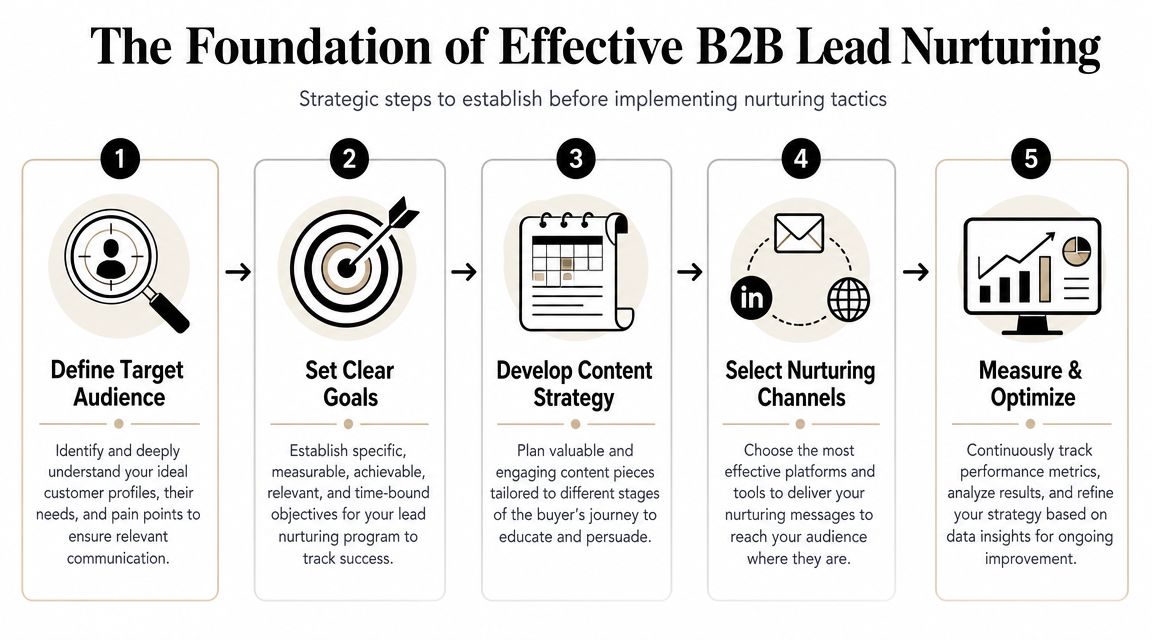
The Foundation of Effective B2B Lead Nurturing
Strong nurturing pays because it filters signal from noise. Companies excelling at lead nurturing generate 50% more sales-ready leads at a 33% lower cost, according to monday.com’s summary of the benchmark. That matters even more in outbound, where many replies are curious but not ready. A structured nurture layer keeps sales from chasing weak timing, weak fit, or both.
Segment by buying friction, not just firmographics
Cold replies are often segmented by title, industry, or company size. That’s useful, but it’s not enough. For nurture, the better cut is what is stopping this person from booking now.
A practical segmentation model for outbound replies looks like this:
-
Aware but unconvinced. They understand the problem but don’t yet trust your approach.
-
Interested but low priority. They replied politely, but timing is weak.
-
Curious delegate. They answered, but they’re not the final decision-maker.
-
Active evaluator. They ask process, implementation, or comparison questions.
-
Bad fit with a hidden lesson. They won’t buy, but their objections can improve your messaging.
If your team still debates what counts as a real lead, it helps to align on a shared definition early. This breakdown on what a lead is in business is a useful reference point before you build handoff rules.
Practical rule: A cold reply is not a stage. It’s an entry point into a segment.
Build a content library around objections
Once segments are clear, attach one asset type to one buying obstacle. Don’t build a giant nurture library first. Build the minimum set that answers the questions your replies already reveal.
For SaaS teams, the most useful outbound nurture assets are usually:
-
Short problem memo. A concise email or one-page note that frames the operational issue.
-
Targeted proof piece. A case-study style summary, customer story, or results narrative without hype.
-
Walkthrough asset. A short video demo, annotated screenshots, or workflow explanation.
-
Decision support asset. Implementation notes, ROI framing, stakeholder FAQs, or common rollout concerns.
Match the asset to awareness
The approach to lead nurturing determines whether teams look sharp or look spammy. Sending a demo to someone who only said “interesting” is too early. Sending thought leadership to someone asking integration questions is too late.
Use a simple mapping:
| Reply signal | Likely stage | Best next asset |
|---|---|---|
| “Send more info” | Early consideration | Short educational note or problem-specific article |
| “Not a priority” | Low urgency | Trend, trigger, or missed-opportunity content |
| “How does this work?” | Mid-stage evaluation | Short demo or workflow explanation |
| “Who else uses this?” | Validation stage | Relevant social proof |
| “Need internal buy-in” | Decision support | ROI framing or implementation FAQ |
The best nurture programs feel personal because they are. They don’t just personalize with a name token. They respond to what the buyer signaled.
Designing Your Cold-to-Warm Email Sequence
A cold prospect replies, “Looks interesting. Send over some details.” Weak teams then pounce with a calendar link and lose momentum. Strong teams slow the sale down just enough to earn the meeting.
Nurtured leads have been shown to make 47% larger purchases than non-nurtured leads, and companies with structured nurturing see an average 20% increase in sales opportunities, as summarized by Salesgenie’s lead nurturing statistics roundup. In outbound, that shows up when the sequence moves from curiosity to credibility before the ask.
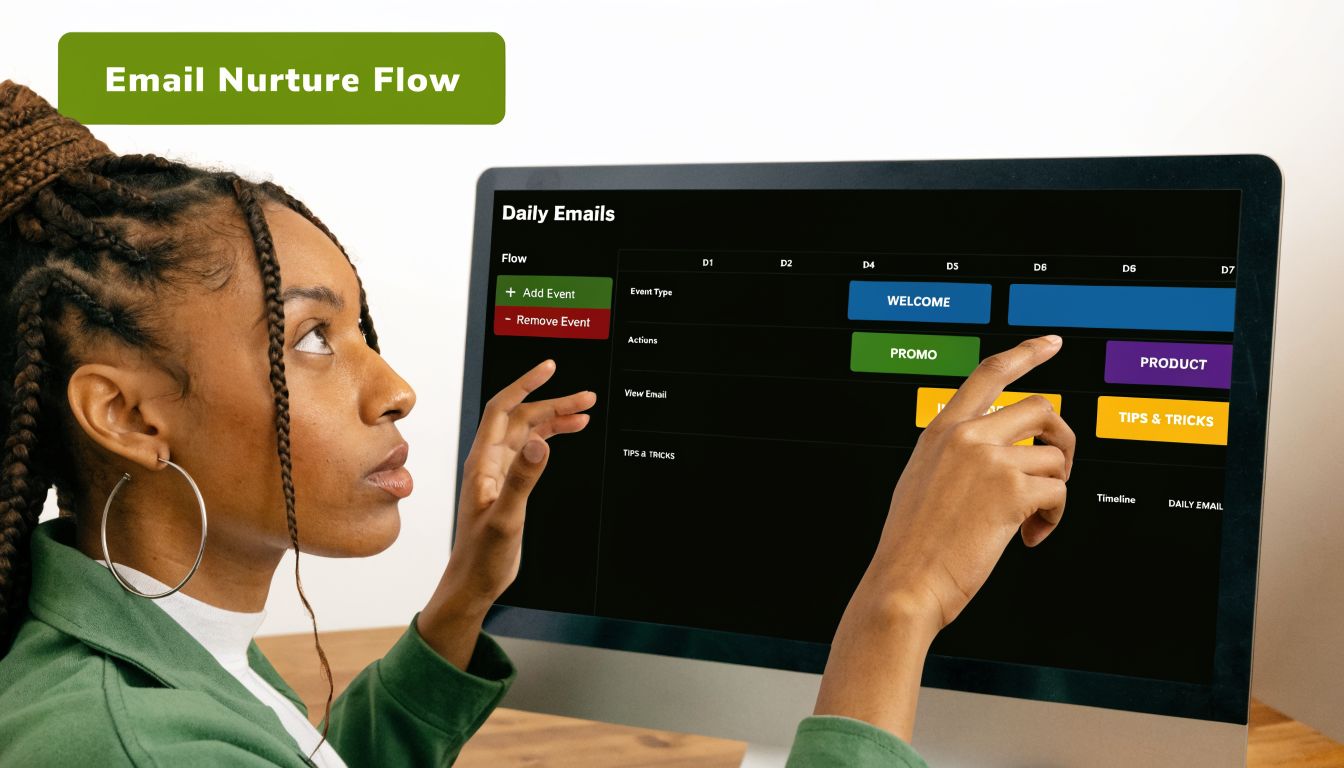
A simple four-email progression
Here’s a sequence that works well after a neutral or positive reply from cold outreach.
Email 1. Value-add
Subject: Re: details
“Thanks, [Name].A quick place to start:
Teams usually look at this for one of three reasons:
-
pipeline quality is inconsistent
-
reps are spending time on low-intent conversations
-
follow-up after first interest is too manual
If helpful, I can send a short breakdown of how SaaS teams structure the handoff from reply to booked meeting.”
This email works because it doesn’t assume urgency. It organizes the problem.
Email 2. Social proof without chest-thumping
“Sharing one example framework we use when a prospect replies but isn’t meeting-ready yet:
-
classify the reply by intent
-
send one relevant proof asset
-
watch for evaluation signals
-
ask for a call only after engagement shows momentum
That usually creates a much better conversation than trying to book immediately.”
Notice the pattern. No inflated claims. No hard pitch. Just proof through process.
For teams that want more ideas on sequencing educational follow-ups, RepurposeMyWebinar’s guide to nurturing leads is worth reviewing because it shows how content can carry the conversation without making every email a sales ask.
The email that creates tension
By the third touch, the lead should feel you understand the cost of staying put.
The challenge isn’t typically lead volume after outbound. It’s a transition problem. Replies come in, but nobody knows which ones need education, which need proof, and which are ready for sales. That’s usually where meetings are lost.
That kind of note agitates the problem without sounding theatrical. It’s especially effective when tied to the exact pain point named in the original cold campaign.
A good reference point if you want to compare sequence structures is this set of email drip campaign examples.
After the lead has consumed something or responded again, you can embed richer media:
The final nudge
The ask should feel like a continuation, not a jump cut.
If it’s useful, I can walk you through how teams handle this in practice and show where replies usually convert into qualified meetings. Worth a look next week?
That line works because it’s specific. You’re not asking for “a quick chat.” You’re offering clarity on a known problem.
Implementing a Practical Lead Scoring Model
Cold outreach creates a mixed bag of intent. One prospect replies “interesting,” another visits the pricing page twice, and a third forwards your note internally. If you treat all three the same, your reps either chase too much or miss the ideal opening.
The fix isn’t a bloated enterprise scoring system. It’s a lightweight model that combines fit and behavior.
Score two things only
Start with two buckets.
Explicit score is who they are.This includes role, company profile, use case match, and whether the account fits your sales motion.
Implicit score is what they do.This includes replying, clicking a specific link, revisiting your site, asking implementation questions, or engaging with decision-stage content.
The key is not the exact math. The key is consistency. Sales should know why a lead reached the threshold, and marketing should know what behaviors matter.
Example B2B Lead Scoring Model
| Action / Attribute | Points Assigned | Example |
|---|---|---|
| ICP match on industry | High | B2B SaaS company in your target vertical |
| ICP match on role | High | Director of Marketing, VP Growth, Head of Sales |
| Positive reply to cold email | Medium | “Open to learning more” |
| Asked for more details | Medium | “Can you send information?” |
| Clicked a case study or proof asset | Medium | Engaged with a customer example |
| Visited pricing or demo page | High | Viewed late-stage pages after email click |
| Watched product walkthrough | Medium | Consumed solution-oriented content |
| Asked about implementation | High | “How hard is rollout?” |
| Multiple stakeholders engage | High | A second person from the same account replies |
| Unsubscribed or said not relevant | Negative | Remove from active sequence |
What to do with the score
Use three operating states instead of one binary handoff.
-
Nurture. Good fit, weak intent.
-
Watch closely. Good fit, rising engagement.
-
Sales-ready. Good fit, clear evaluation behavior.
This keeps reps from jumping in too early while still giving them a reason to act when intent sharpens.
A practical scoring model should tell a rep what happened, not just flash a number.
If you want a deeper walkthrough on structuring this inside a B2B funnel, this guide on mastering B2B lead scoring to boost sales effectiveness is a strong companion resource.
Common scoring mistakes
The most common failure is overvaluing shallow activity. Opens are weak buying signals. Generic clicks aren’t much better unless the asset clearly maps to stage.
Another mistake is ignoring reply quality. “Not now” from the right buyer can be more valuable than a click from the wrong one. In outbound, text responses often reveal more intent than dashboard activity.
Forging Your Sales and Marketing SLA
Without an SLA, lead nurturing turns into a quiet argument.
Marketing says sales ignored warm leads. Sales says the leads weren’t ready. Meanwhile the prospect sits in a sequence getting generic follow-ups from automation while a rep decides whether to reach out. That’s how meetings die.

What the SLA must define
A useful SLA is simple enough to use and strict enough to remove ambiguity.
It should cover:
-
MQL definition. What combination of fit and engagement keeps the lead in marketing nurture.
-
SQL definition. What specific behaviors trigger a sales handoff.
-
Handoff mechanics. Where the lead appears, who owns it, and what context gets passed.
-
Response expectation. How fast sales follows up after the threshold is met.
-
Disposition rules. How sales marks outcomes such as no fit, no timing, active project, or no response.
-
Feedback loop. How objections, call notes, and quality judgments flow back into the nurture program.
Why this matters more now
B2B buyer journeys are longer and more unpredictable than ever. Generic education alone stops working once buyers move into evaluation. At that point, they need behavior-based personalization and answers to decision-stage questions like ROI, rollout, and internal justification.
That shift breaks down fast when sales and marketing use different definitions of readiness.
For example, marketing may see a prospect who clicked a case study and visited the demo page as ready for outreach. Sales may want one more signal, such as a direct implementation question. Neither side is wrong. The mistake is leaving that judgment undocumented.
A lean SLA template
| SLA component | Example working rule |
|---|---|
| MQL | ICP-fit contact who replied or engaged with relevant nurture content |
| SQL | MQL with clear evaluation behavior or direct buying conversation |
| Sales follow-up | Personalized outreach tied to the last engaged asset |
| Recycle rule | If timing is off, return to segmented nurture with a reason code |
| Feedback cadence | Weekly review of accepted, rejected, and recycled leads |
Misalignment doesn’t just lower conversion. It changes the buyer experience. Prospects feel the disconnect immediately.
The best SLAs don’t read like legal documents. They read like operating instructions.
Measuring Success with the Right KPIs
Most nurture reporting is too soft to guide action. Teams stare at opens, clicks, and sends, then wonder why booked meetings stay flat. The answer is simple. Activity isn’t the same thing as progression.
IndustrySelect’s overview of lead nurturing makes the right point: high-performing programs are treated like revenue systems, not just email campaigns, and they can produce 20% more sales opportunities compared to non-nurtured leads when teams define KPIs before launch and track both activity metrics and pipeline outcomes.
Split metrics into leading and lagging
Leading indicators tell you whether the sequence is earning attention.
-
Reply quality
-
Asset clicks by content type
-
Repeat visits from nurtured leads
-
Engagement with proof or decision-stage content
-
Positive reply rate after the first follow-up
Lagging indicators tell you whether the program is moving revenue.
-
MQL to SQL conversion
-
Meetings booked from nurtured replies
-
Recycled leads that later convert
-
Pipeline created from nurtured outbound leads
-
Cost per qualified meeting
Read the pattern, not just the number
A metric only matters if it changes what you do next.
| KPI pattern | What it usually means | What to fix |
|---|---|---|
| High opens, low clicks | Subject line works, body doesn’t create next-step interest | Tighten message-content match |
| Good clicks, poor meeting rate | Asset is interesting but not persuasive enough | Improve proof, CTA, or handoff timing |
| Strong engagement, weak SQL acceptance | Sales and marketing disagree on readiness | Rework SLA and score threshold |
| Low engagement after positive replies | Follow-up feels generic or too aggressive | Personalize around original response context |
This is also where conversion-funnel thinking helps. If your nurture touches generate interest but not movement, review broader guidance on optimizing B2B conversion funnels and apply the same lens to your reply-to-meeting path.
Build one dashboard your team will actually use
Keep it narrow. One page is enough:
-
Top-of-funnel response quality
-
Nurture engagement by segment
-
Sales acceptance
-
Meetings booked
-
Pipeline influence
For teams formalizing that dashboard, this reference on lead generation KPIs for 2026 helps tie activity metrics back to business outcomes.
Don’t optimize for volume. Optimize for stage progression.
Advanced Plays and Common Pitfalls to Avoid
Once the basics are running, the tricky leads start to matter more. These are the ones that answered but didn’t convert, went quiet after early interest, or pushed the conversation into a vague future. At this point, good teams separate from automated noise.
How to handle “not right now”
Treat this response as a segmentation event, not a rejection.
A practical reply looks like this:
-
Acknowledge timing. Don’t argue with it.
-
Clarify the reason. Budget cycle, current vendor, internal priority, or headcount freeze.
-
Park them in the right track. The content should match the reason they paused.
-
Set a real re-entry trigger. Renewal window, hiring change, product launch, planning season.
If someone says “check back in six months,” don’t send six months of random content. Send occasional material tied to the issue they care about, then return when the timing signal makes sense.
Re-engage with context, not pressure
Cold lead reactivation fails when the message acts like no time has passed. It also fails when the only angle is “just bumping this.”
Try one of these instead:
-
New angle. Share a different problem framing than the original outreach used.
-
Observed trigger. Reference a role expansion, category shift, or visible change in their motion.
-
Decision support. Offer something useful for internal evaluation, not another generic intro.
The fastest way to lose a once-interested lead is to restart the conversation at zero.
Three mistakes that quietly kill nurture
First, teams fake personalization. Adding a first name isn’t relevance. Referencing the original reply, the specific use case, or the buyer’s likely blocker is.
Second, they over-send. A positive reply doesn’t mean permission to flood the inbox. If engagement drops, reduce frequency and improve specificity.
Third, they make nurture company-centric. Buyers don’t need more updates about your platform, team, or funding. They need help making a buying decision.
For teams building outbound systems around this motion, the playbook behind SDR-led demand generation with outbound cold email is useful. If execution bandwidth is the issue, agencies such as Fypion Marketing handle cold email outreach, follow-up workflows, and meeting qualification within a pay-per-meeting model.
Use conversations to improve the sequence
The fastest source of nurture improvement is the language buyers already use. Review reply threads and sales calls for repeated objections, stalled questions, and phrases tied to evaluation. Tools built around conversation intelligence can help teams capture that input and turn it into better follow-ups, objection-handling assets, and sharper scoring rules.
Frequently Asked Lead Nurturing Questions
The mechanics of nurture B2B leads often look simple until the first edge cases appear. These are the questions that come up most once the system is live.
FAQ
| Question | Answer |
|---|---|
| How soon should I follow up after a positive cold reply? | Fast enough that the conversation still feels live, but not with an immediate meeting ask unless the buyer signals clear urgency. Start with relevance, not pressure. |
| What if the lead says “send details” but never replies again? | Move them into a short follow-up track built around one problem, one proof point, and one light CTA. If they stay silent, shift to a lower-frequency nurture path. |
| Should every nurtured lead get the same sequence? | No. Segment by likely blocker, role, and engagement behavior. A technical evaluator needs different follow-up than a budget owner. |
| When should sales step in? | When the lead shows both fit and buying behavior. That can come from direct questions, decision-stage content engagement, or multi-stakeholder activity from the same account. |
| What content works best after cold outreach? | Short, specific assets usually work better than broad thought leadership. Use material that answers a live objection or helps the buyer evaluate. |
| How long should a nurture track run? | Long enough to cover the real buying cycle, but not as one constant sequence. Use shorter bursts around active interest, then lower-touch follow-up for delayed timing. |
| What’s the biggest mistake in outbound lead nurture? | Treating every response as a demo request. Most positive replies are invitations to continue the conversation, not skip straight to the close. |
| How do I know if nurture is helping? | Look for progression. Better replies, more qualified handoffs, more accepted meetings, and stronger movement from first response to sales conversation. |
A strong nurture system doesn’t feel like automation to the buyer. It feels like competent follow-up. That’s the standard.
If your team is generating replies from cold outreach but struggling to turn them into qualified meetings, Fypion Marketing can help build and manage that transition. They focus on B2B cold email systems, reply handling, and booked-meeting workflows, which makes them a practical option for companies that want outbound run on a performance-based model.