
What Does an Appointment Setter Do? The Ultimate Guide

An appointment setter’s job is pretty straightforward on the surface: they turn potential leads into actual, scheduled meetings for a sales team. Their whole world revolves around making that first contact, figuring out if there’s real interest, and getting a high-value conversation on the calendar.
Think of them as the critical bridge connecting your marketing efforts to your sales closers.
What an Appointment Setter Really Does
Forget the idea of a simple scheduler. A modern appointment setter is more like the strategic “air traffic controller” for a company’s entire sales pipeline. Their mission is to guide potential customers from a tiny flicker of interest all the way to a confirmed meeting with a sales executive.
They are the gatekeepers who make sure the sales team’s calendar is filled with genuine opportunity, not just busywork.

This role is absolutely foundational to growing revenue predictably. Appointment setters carefully filter leads, handle all the initial outreach, and qualify prospects so sales reps can spend their time only with people who are ready to talk business. This kind of specialization is a huge part of modern B2B lead generation found here: https://www.fypionmarketing.com/post/lead-generation-b2b-the-ultimate-modern-guide.
To get a feel for their day-to-day, here’s a quick look at the core functions of the role.
Appointment Setter Role At a Glance
The table below breaks down exactly what an appointment setter does and why it matters so much to the sales team’s success.
| Core Function | Primary Objective | Key Outcome for Sales |
|---|---|---|
| Initial Prospect Outreach | Initiate first contact and open a dialogue with potential customers. | Feeds the top of the sales funnel with fresh, targeted leads. |
| Lead Qualification | Vet prospects to confirm they match the ideal customer profile. | Ensures sales reps’ time is spent on high-potential deals. |
| Calendar Management | Book qualified meetings directly onto the sales team’s calendar. | Creates a predictable stream of qualified sales opportunities. |
Ultimately, a good appointment setter is the engine that keeps the entire sales machine running smoothly and efficiently.
An effective appointment setter transforms a cold list into a warm pipeline. They create the initial spark that lets closers focus on building relationships and finalizing deals, making them an indispensable engine for any B2B company looking to scale.
And as you might expect, technology is changing the game here, too. To see how AI is getting involved, it’s worth checking out this ultimate guide to AI sales appointment setters.
The Daily Playbook of a Top Appointment Setter
Ever wonder what a top-tier appointment setter actually does all day? It’s not just about hammering the phones. A great setter’s day is a masterclass in structured persistence, mixing sharp research with a relentless, multi-channel attack. It’s a systematic process designed to turn a cold lead into a qualified meeting.
It all starts with the prospect list. They don’t just take a list and start dialing. Instead, they dig in, meticulously researching and refining it to make sure every single company fits the ideal customer profile - based on industry, size, and even the tech they’re using. This upfront homework is what separates a generic, easily-ignored message from one that starts a real conversation.
Executing Multi-Channel Outreach
Once the list is locked and loaded, the real action begins. Modern appointment setters know that their prospects are scattered across different platforms, so they coordinate their outreach to show up everywhere.
-
Strategic Cold Email: They write short, personalized emails that get to the point and grab attention fast. These aren’t your typical spammy blasts; they’re part of a carefully timed sequence. To see what makes these messages land, check out these cold email tips to book more meetings in 2025.
-
LinkedIn Engagement: They use platforms like LinkedIn for more than just sending a connection request. They add context by referencing a recent post, a company announcement, or even sending a quick voice note to cut through the noise.
-
Targeted Phone Calls: The phone is far from dead. Calls are perfect for direct outreach, warming up a lead after an email, or quickly handling questions and objections on the spot.
This mix-and-match approach works because it meets buyers where they are. In fact, a staggering 73% of B2B buyers use more than one channel during their purchasing process, making this strategy non-negotiable.
Qualifying and Handling Objections
Getting a reply is only half the battle. The moment a prospect engages, the setter’s role flips from outreach to qualification. They use proven frameworks like BANT (Budget, Authority, Need, Timeline) to ask smart, targeted questions that reveal if there’s a genuine fit.
An appointment setter’s most critical skill? Learning to love the word “no.” They don’t hear objections as rejection; they hear them as requests for more information. Turning a “we’re not interested right now” into a conversation about future needs is what separates the good from the great.
They calmly navigate that initial pushback, asking follow-up questions to uncover the real pain points hiding beneath the surface. By meticulously qualifying every lead, they protect the sales team’s calendar from dead-end meetings and ensure every booked appointment is a solid step toward new revenue.
The Skills That Separate Good from Great
Knowing the day-to-day tasks of an appointment setter is one thing. Understanding what makes them genuine revenue drivers is another story entirely. The best setters aren’t just making calls; they have a specific blend of soft skills and hard-nosed discipline that keeps the sales pipeline full of genuinely good opportunities.
It really boils down to how they do what they do.
Exceptional communication, both verbal and written, is the absolute foundation. A great setter can slice through a busy prospect’s day and articulate a value proposition in a way that’s clear, compelling, and gets right to the point. This has to be paired with an almost unshakable resilience - they see rejection not as a roadblock, but just another step in the process.
Core Competencies of Elite Setters
Beyond just being a good talker, top performers have a few key abilities that turn a basic outreach call into a strategic conversation.
-
Active Listening: The best setters listen far more than they talk. They ask smart, probing questions and actually hear the answers to uncover real pain points and see if there’s a true fit.
-
Organizational Prowess: Juggling dozens of leads at different stages is no small feat. They live in their CRM, keeping notes clean, follow-ups scheduled, and making sure nothing slips through the cracks.
-
Coachability: The sales world changes fast. A setter who actively asks for feedback and is willing to adapt their approach will always outperform someone stuck in their ways.
A huge piece of the puzzle is their ability to effectively qualify sales leads. This ensures the sales team’s time is spent on high-potential prospects, not dead ends. For a deeper look, you should check out our sales lead qualification checklist for B2B success.
The true art of appointment setting is turning a brief, cold interaction into a meaningful business opportunity. It takes empathy to get a prospect’s challenges and strategic thinking to position a meeting as the obvious next step.
This simple workflow breaks down the repeatable process that successful setters follow every single day.
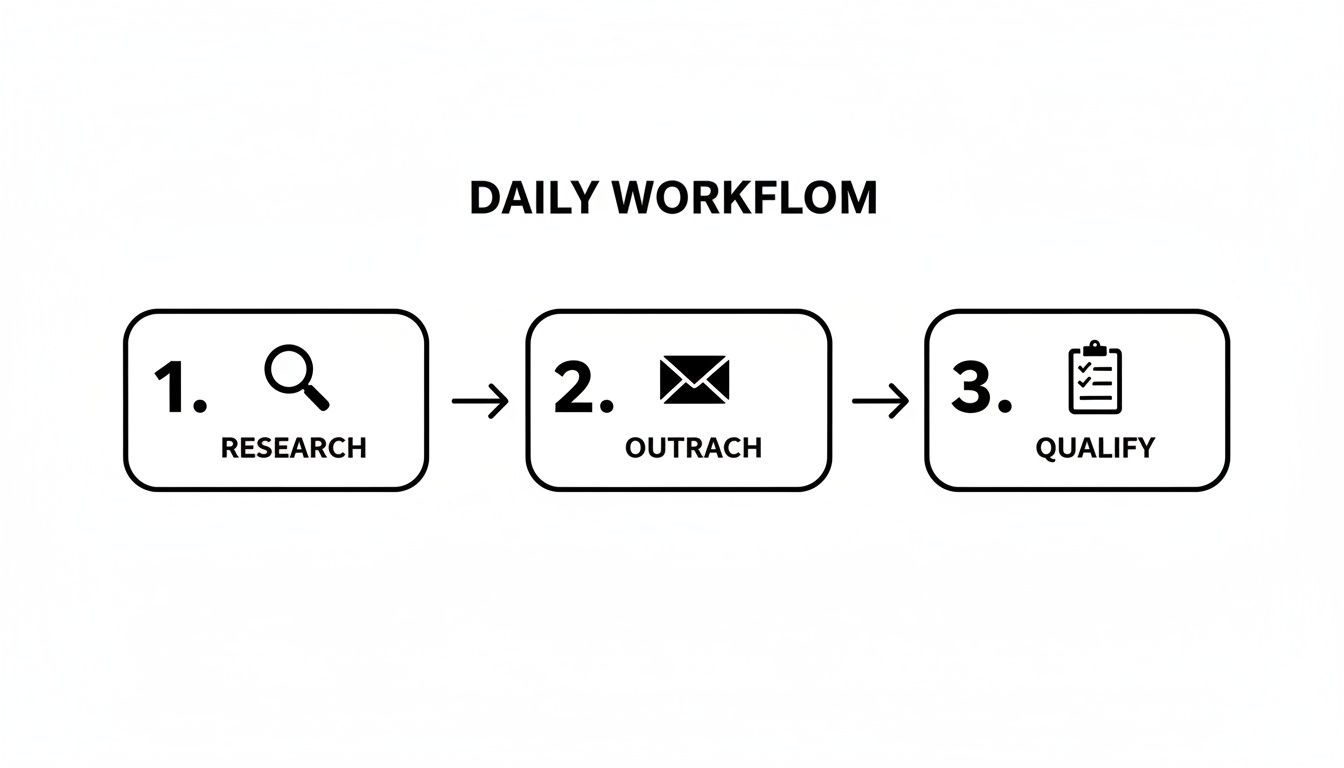
As you can see, it’s all about disciplined research, consistent outreach, and sharp qualification skills working together to produce real results.
Finally, being tech-savvy is non-negotiable. This role has evolved right alongside scheduling software. In fact, that market is projected to jump from $470.79 million in 2024 to $1,804.34 million by 2033. That explosive growth shows just how critical mastering these tools has become for an efficient workflow.
Finding Their Place in the B2B Sales Funnel
To really get what an appointment setter does, you have to see where they slot into the bigger sales machine. Picture the B2B sales process like a funnel. At the very top, you have all sorts of general interest; at the bottom, you have deals getting signed. The appointment setter lives and breathes at the top of that funnel.
They are the crucial link between broad marketing efforts and focused, one-on-one sales conversations. Their main job is to take a Marketing Qualified Lead (MQL) - someone who’s kicked the tires a bit, maybe by downloading a guide - and turn them into a Sales Qualified Lead (SQL). Honestly, this handoff is one of the most critical moments in the entire sales cycle.
The Great Handoff: MQL to SQL
An MQL is a great start, but it’s really just a spark of curiosity. An SQL, on the other hand, is a prospect who’s been properly vetted, confirmed to have a genuine need, and - most importantly - has agreed to a meeting. That transformation is the appointment setter’s entire game.
This creates a powerful division of labor within the sales team. By filtering and qualifying every single opportunity, appointment setters completely free up the company’s “closers,” or Account Executives. Instead of burning their days chasing down leads and making endless cold calls, these senior sales pros can pour their energy into the high-stakes activities that actually bring in money.
This focused workflow lets them concentrate on:
-
Running in-depth product demos
-
Putting together detailed proposals
-
Navigating complex negotiations
By owning the top of the funnel, appointment setters build a sales process that’s both predictable and efficient. They make sure the closers are always talking to well-vetted, high-potential prospects, which has a massive impact on conversion rates and builds a much healthier pipeline.
It’s a symbiotic relationship that makes the whole sales operation stronger. The setter tees up the opportunity, and the closer knocks it out of the park. Each role makes the other far more effective.
Measuring What Matters for Appointment Setters
So, how do you actually know if an appointment setter is any good? It’s easy to get fixated on the number of meetings they book, but that’s a classic rookie mistake. To really understand their impact, you need to dig into the Key Performance Indicators (KPIs) that tell you about the quality of their work, not just the quantity.

Looking at the right data is what separates busywork from real results. It forces a shift from just filling the calendar to feeding high-quality opportunities into the sales pipeline - which is what actually grows the business.
Core Performance Metrics
Every company is a bit different, but a handful of core metrics will always give you a clear picture of an appointment setter’s performance. Think of these KPIs as telling a story about their ability to book the right kind of meeting.
-
Meeting Show-Up Rate: What percentage of the appointments they book actually happen? A high show-up rate is a great sign that the setter is sparking genuine interest and setting clear expectations.
-
Meeting Qualification Rate: Of the meetings that do happen, how many does the sales exec consider “qualified”? This is the ultimate stress test. It tells you if the setter is truly targeting the right people.
-
Pipeline Contribution: This one is all about the money. How much potential revenue did the meetings from this setter add to the sales pipeline? This metric ties their daily grind directly to the company’s bottom line.
The most important question to ask when evaluating an appointment setter isn’t “How many meetings did you book?” It’s “How many of your meetings turned into legitimate sales opportunities?” This mindset ensures their efforts are perfectly aligned with what the business actually needs.
Top-tier B2B appointment setters often aim for 10-15 qualified meetings per week, which has become a gold standard in the industry. It’s also worth noting that companies using three or more outreach channels - like email, LinkedIn, and calls - often see their engagement rates jump by as much as 287%.
For a full rundown on the numbers that matter most, you might want to check out our complete guide on mastering lead gen KPIs for business growth.
So, you’re ready to bring appointment setters into the fold. Now comes the big question: do you build your own team from the ground up, or do you bring in an outside agency?
Each path has its own set of pros and cons, and the right choice really depends on your company’s goals, budget, and how fast you need to move.
Building an in-house team gives you the ultimate level of control. You can hand-pick every person, bake them directly into your company culture, and train them on the nuances of your product until they know it inside and out. This creates a super tight feedback loop between your setters and your account executives.
The flip side? It’s a serious investment. You’re not just paying salaries; you’re on the hook for benefits, management overhead, software licenses, and all the time it takes to hire, train, and get them up to speed.
The Outsourcing Alternative
Don’t have the time or capital for all that? Outsourcing is often a more flexible and budget-friendly way to get started. When you partner with a specialized agency, you’re plugging into a team that’s already trained, armed with proven processes, and ready to hit the ground running from day one.
This model is built for agility. You can scale your efforts up during your busy season or dial them back when things are quiet without the headaches of hiring and firing.
The real magic of outsourcing is that it flips a fixed cost - like salaries - into a variable one. You’re paying for results (booked meetings), not just hours worked. This keeps everyone laser-focused on the only thing that matters: filling your sales pipeline.
It’s a model that’s catching on. Industry data shows that 60-70% of SaaS and tech companies now outsource their appointment setting, often cutting their lead generation costs by a whopping 40-60% compared to hiring in-house. You can dig into some of these appointment scheduling market insights on skyquestt.com.
Ultimately, the decision comes down to your priorities. Do you need speed and cost-efficiency, or do you value total control above all else? For a deeper dive into making this choice, check out our guide to outsourcing inside sales.
A Few Common Questions
If you’re still piecing it all together, that’s perfectly normal. Let’s tackle some of the most common questions people have about appointment setters and how they really fit into the picture.
What’s The Difference Between an Appointment Setter and a Telemarketer?
It’s a great question, and the answer comes down to the end goal. While both roles often pick up the phone, their core missions are worlds apart. A telemarketer is almost always pushing for a direct sale on that first call.
An appointment setter, on the other hand, is playing the long game. Their entire focus is on qualifying a prospect and scheduling a meaningful conversation for a sales executive. They’re starting a relationship, not trying to close a deal on the spot.
Are Appointment Setters Still Relevant with AI?
Absolutely. It’s easy to think AI will automate everything, but the truth is a bit more nuanced. Automation and AI are fantastic for the grunt work - like firing off initial emails or managing basic follow-ups.
But a skilled human setter shines where technology falls short. They bring personalization, navigate tricky conversations, and build the kind of genuine rapport that actually gets a busy executive to agree to a meeting. High-value B2B sales are built on trust, and that’s still a human-to-human process.
The best appointment setters see AI as a powerful assistant, not a replacement. It helps them find the right people to talk to and automates the tedious stuff, freeing them up to focus on the strategic conversations that land meetings.
What Is a Typical Career Path?
The appointment setter role is one of the best launching pads for a massive career in sales. You learn the fundamentals of outreach, qualification, and resilience right on the front lines. A common journey looks something like this:
-
Appointment Setter: This is where you master top-of-funnel prospecting and learn how to open doors.
-
Sales Development Representative (SDR): Here, you’ll take on more responsibility for nurturing leads and digging deeper into prospect needs.
-
Account Executive (AE): You move into a “closing” role, running the demos and getting contracts signed.
-
Sales Management: Eventually, you can step up to lead and mentor your own team of setters or AEs.
How Are Appointment Setters Compensated?
Most companies use a hybrid model. It’s designed to provide stability while rewarding performance. This usually means a solid base salary paired with a commission or bonus structure.
The bonus part is almost always tied directly to the results they produce. Common metrics include:
-
The number of qualified appointments they successfully book.
-
The show-up rate for those meetings (because a no-show doesn’t help anyone).
-
The total pipeline revenue generated from their set appointments.
At Fypion Marketing, we specialize in filling your calendar with qualified meetings so your team can focus on what they do best - closing deals. We run on a simple pay-per-meeting model, so you only ever pay for real results. Book a free consultation today and let’s talk about building your sales pipeline.