
Mastering b2b lead generation outsourcing for scalable growth
Outsourcing B2B lead generation is when you hire an outside agency to take over the whole process of finding, talking to, and qualifying potential customers. For a lot of SaaS and tech companies, it’s simply the fastest way to build a sales pipeline and let your internal sales team do what they do best: close deals, not hunt for them.
Why Top Businesses Outsource B2B Lead Generation

Before we get into the how, it’s important to understand why so many successful companies are leaning into this model. This isn’t just about handing off tasks. It’s a core piece of a modern growth strategy, especially for businesses that already have a solid product-market fit.
The True Cost of an In-House Team
Trying to build a lead gen team from scratch is expensive, and many of the costs are hidden. It’s not just about salaries. You have to factor in the time and money for recruiting, onboarding, training, and managing new hires.
Then there’s the tech stack. Your CRM, data tools, and sales automation software can easily run you thousands of dollars every single month.
The average sales rep only spends about a third of their day actually selling. The rest of their time gets eaten up by prospecting and admin work - a huge inefficiency that outsourcing solves head-on.
This means your highly-paid closers are spending most of their week on lower-value activities. A specialized agency, on the other hand, has already paid for all this stuff and spread the cost across all their clients, making it a much more efficient model for you.
Accelerating Your Sales Pipeline
One of the biggest wins with b2b lead generation outsourcing is speed. Seriously. A good agency can get a targeted campaign up and running in a few weeks, not the months it would take you to build a team. They already have the proven playbooks, the tech stack, and the trained experts ready to hit the ground running.
Understanding the powerful benefits of outsourced lead generation services is the first step for any business that wants to scale without breaking the bank. An external partner can deliver real, measurable results way faster than an internal team you have to build from zero. For a SaaS or tech company in a race for market share, that speed is a massive competitive edge.
This quick start translates directly into a faster-moving sales pipeline, filling your team’s calendars with qualified meetings. To dig deeper into the financial side of this, check out our guide on how to https://www.fypionmarketing.com/post/reduce-customer-acquisition-cost-proven-strategies-to-grow.
Ultimately, outsourcing isn’t just about saving money. It’s about turning your investment into predictable revenue and freeing up your best salespeople to focus on closing.
How to Choose the Right B2B Lead Generation Partner
Picking the right partner to handle your B2B lead generation can feel daunting. But getting this decision right is everything. You’re not just hiring a vendor to blast out emails; you’re looking for a team that becomes an extension of your own, whose success is directly tied to yours.
The market is definitely crowded. There are over 300,000 specialized lead gen companies out there, all fighting for your business. This fierce competition is a good thing, though - it pushes the best agencies to innovate. In fact, top-tier partners can deliver up to 50% more sales-ready leads by using strategies and tech that most in-house teams just don’t have access to.
Dig Into Their Process and Expertise
When you hop on a discovery call, your job is to get past the sales pitch and into the how. A truly great partner will have no problem pulling back the curtain on their entire process, from start to finish. You need to know exactly how they build targeted lists and what they do to keep that data clean.
Don’t be afraid to ask direct, specific questions about their methods:
-
List Building: How do you actually find and verify contacts that fit our Ideal Customer Profile (ICP)? Are you pulling from static databases or using real-time data sourcing?
-
Personalization: What’s your game plan for personalizing outreach beyond a simple {FirstName} and {Company} tag? Can you show me some real examples of how you’ve done this?
-
Industry Knowledge: What’s your track record in our specific niche? Have you worked with companies that have a similarly complex B2B sales cycle?
Their answers will tell you everything you need to know. You’ll quickly see whether they have a sophisticated, repeatable process or if they’re just running a generic playbook for all their clients. Always look for an agency that can clearly explain its strategy for researching your market.
A huge red flag is any agency that guarantees a specific number of leads. You can’t guarantee a fixed quantity while also promising true quality. Instead, focus on partners who are obsessed with the quality of the meetings and are transparent about how they’ll optimize to get there.
Compare the Different Engagement Models
Not all outsourcing partnerships are built the same way. Getting a handle on the different pricing models is crucial for making sure your incentives are aligned and your budget is being spent wisely.
Different agencies structure their partnerships in various ways. Here’s a quick breakdown of the most common outsourcing models to help you figure out what’s best for your business.
Agency Model Comparison
| Model | Best For | Pros | Cons |
|---|---|---|---|
| Retainer-Based | Companies needing consistent, ongoing support for a wide range of activities beyond just meetings. | Predictable monthly cost, broader scope of services. | No direct link between payment and performance; you pay regardless of results. |
| Pay-Per-Meeting | Businesses focused purely on ROI and getting qualified sales conversations booked. | You only pay for results (qualified meetings that show up). Zero financial risk. | May have higher upfront setup costs; scope is tightly focused on appointment setting. |
| Hybrid Model | Organizations looking for a balance between a predictable partnership and performance incentives. | Blends the stability of a retainer with the motivation of performance-based pay. | Can be more complex to structure and track than other models. |
Understanding these options is key to finding a structure that works for you.
For most B2B companies, especially those in SaaS and tech, the pay-per-meeting model is a no-brainer. It completely removes the risk and ensures you’re only paying for what actually matters: qualified conversations for your sales team.
To give you a head start, we’ve compiled a list of the top B2B lead generation agencies for 2025 that specialize in these kinds of modern, performance-driven approaches. Choosing the right partner means digging into their process, confirming their expertise, and picking a model that sets you both up to win together.
Getting Your Outsourced Campaign Off to a Strong Start
Once you’ve picked your agency, the real work begins. The next 90 days are absolutely make-or-break. I can’t stress this enough: a solid, detailed onboarding process is the single biggest predictor of success when you’re outsourcing B2B lead generation. This is where you build the entire foundation.
A good setup goes way beyond just handing over a contact list. It’s about a deep, collaborative dive into your business. You need to work with your agency to hammer out your Ideal Customer Profile (ICP) and buyer personas. They have to understand not just who you sell to, but what keeps them up at night - their real pain points, goals, and buying triggers.
This is a simple framework we use for vetting partners. It helps keep the process organized.
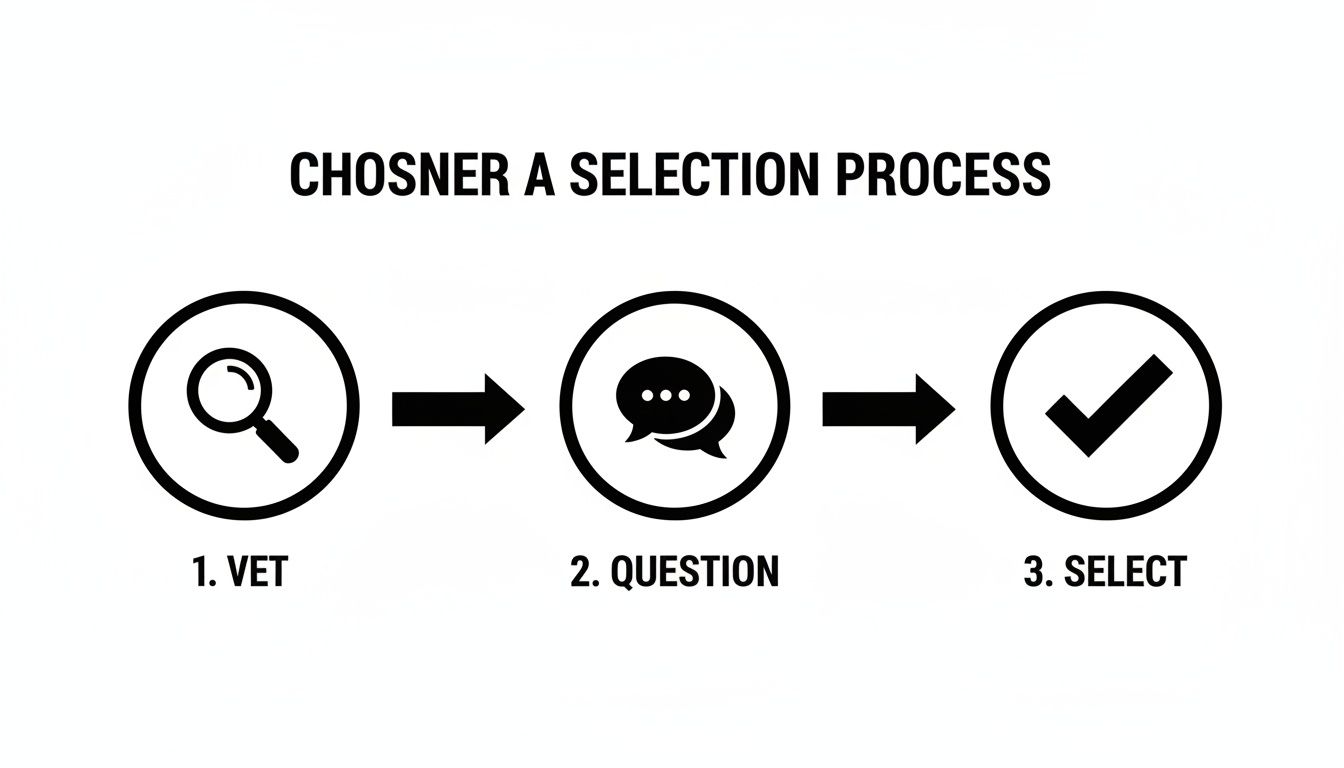
Following a clear process ensures you end up with a partner who’s actually aligned with where you want to go.
Building the Outreach Strategy Together
With a crystal-clear ICP in hand, you can start building the outreach strategy. And no, this isn’t just about giving a thumbs-up to some email templates. You have to make sure the messaging truly sounds like you and speaks directly to the problems your audience is facing.
Here are a few things you absolutely must do together:
-
Messaging Angles: Brainstorm the key value props and pain points you want to hit. What’s the core message?
-
Objection Handling: Don’t make them guess. Arm your agency with the common objections your sales team already hears and the best ways to respond.
-
Success Stories: Give them your best case studies and testimonials. This is the social proof that makes their outreach believable and powerful.
The whole point is to get your agency talking like an insider. The more context you give them about your market, the more their outreach will connect, and the better the appointments will be.
This initial teamwork pays off, big time. We see an average ROI improvement of 43% when companies outsource B2B lead generation compared to trying to do it all in-house. It’s because this upfront alignment lets specialized pros hit the ground running. You can get your first qualified leads in just 2-4 weeks, which is a massive jump from the 3-6 months it often takes to ramp up an internal team.
The Technical Setup: Don’t Skip This
While you’re working on strategy, your agency should be handling the critical backend tech stuff. This is completely non-negotiable. It’s all about protecting your main company domain and making sure emails actually land in the inbox.
Any agency worth its salt will never send cold emails from your primary domain.
Instead, they’ll set up and “warm up” brand new, similar-looking domains just for outreach. This involves a slow, steady process of sending emails to build a good sender reputation with providers like Google and Microsoft. If you want a deep dive on how this works, check out our step-by-step instructions for technical setup for cold emailing.
Finally, you need to agree on what a “sales-qualified appointment” (SQA) actually is. Write it down. This definition should be specific about the prospect’s job title, company size, and the exact need or interest they’ve confirmed. This makes sure every meeting they book is one your sales team is genuinely excited to take. To make sure you’re getting the most out of your investment, it’s crucial to follow proven B2B lead generation best practices from day one. Getting this right prevents a ton of wasted time and ensures the campaign is generating real sales opportunities, not just chatter.
Managing and Measuring Your Campaign Performance
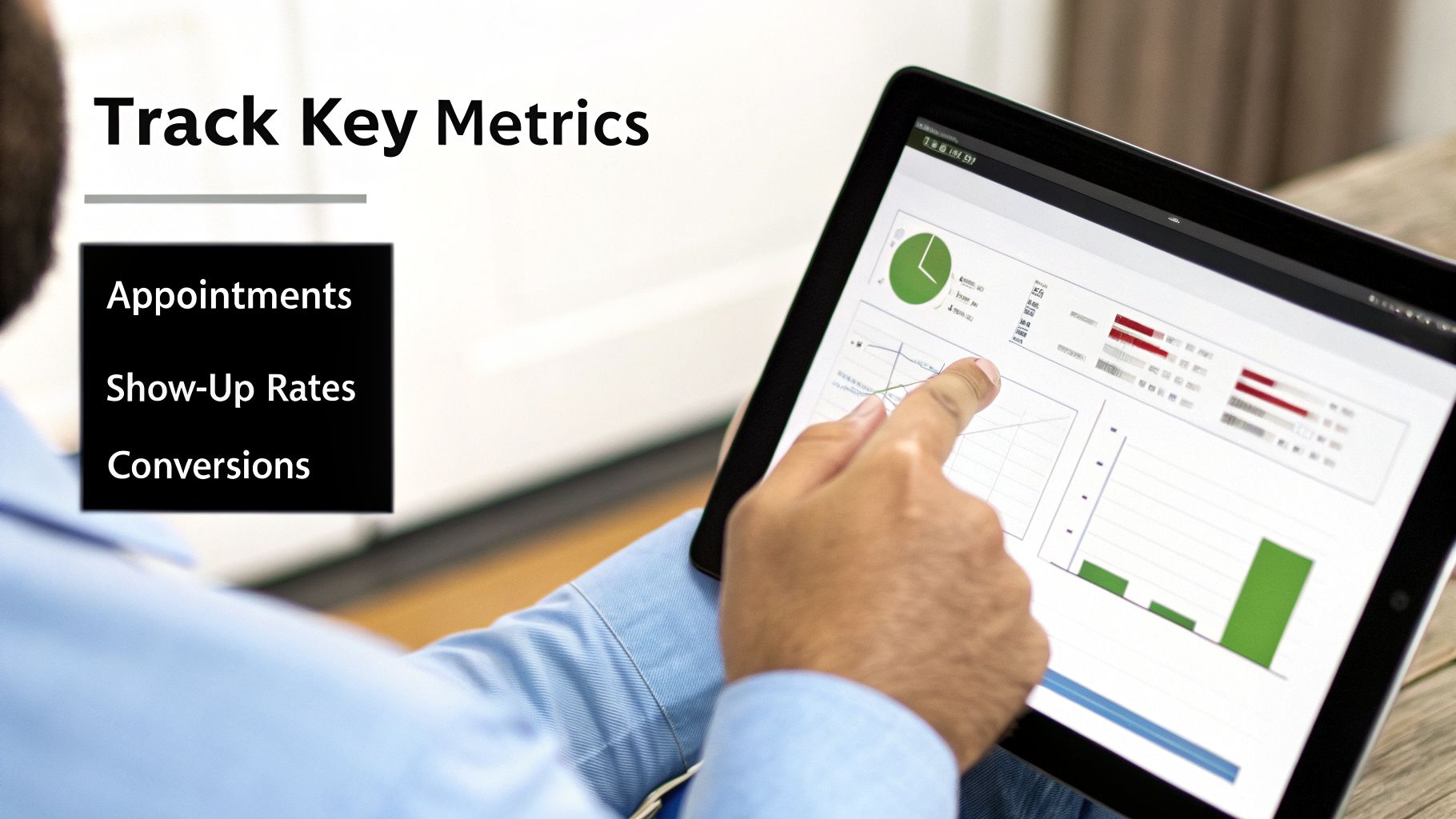
Once your outsourced campaigns are live, the real work begins. The focus shifts from setup to performance, and this is where a strong partnership truly shows its value.
Effective management isn’t about micromanaging your agency. It’s about building a solid feedback loop based on the metrics that actually drive revenue. Forget getting lost in vanity metrics like open rates or clicks. While your agency should keep an eye on those for technical reasons, your attention needs to be squarely on the numbers that impact your sales pipeline.
The whole point of b2b lead generation outsourcing is to book qualified meetings, not just generate inbox activity.
Tracking the Metrics That Matter
To figure out the real return on your investment, you need a clear dashboard of key performance indicators (KPIs). These are the non-negotiable data points you and your agency should be looking at every single week.
Your main focus should be on these three things:
-
Qualified Appointments Booked: The total number of meetings set that meet your specific “sales-qualified appointment” criteria. This is your top-line result.
-
Appointment Show-Up Rate: What percentage of those booked meetings actually happen? A low rate here could point to issues with the prospect’s intent or the agency’s confirmation process.
-
Lead-to-Opportunity Conversion Rate: Of the meetings that happen, how many does your sales team convert into real pipeline opportunities? This is the ultimate test of lead quality.
These are the metrics that tell the true story. For example, if you’re booking a ton of appointments but the show-up rate is terrible, the problem isn’t the initial outreach - it’s likely the follow-up. That’s a concrete insight you can tackle with your partner.
The most productive partnerships I’ve seen are built on weekly check-in calls that last no more than 30 minutes. The entire conversation revolves around reviewing these core metrics and, most importantly, the quality of the meetings from the previous week.
Running Productive Weekly Check-Ins
A successful partnership lives and dies by consistent, high-quality communication. Your weekly meeting is the engine that drives continuous improvement. It’s your opportunity to give direct feedback that helps the agency sharpen its targeting and messaging.
Here’s a simple framework for a productive weekly call:
-
Review Core KPIs: Start with the numbers. How many meetings were booked? How many showed? How many turned into opportunities?
-
Analyze Meeting Quality: Go through each meeting held. Was the prospect a good fit? Did they get your value proposition? Was it a genuine sales opportunity or just a “tire-kicker”?
-
Identify Winning Patterns: Talk about what’s working. Which job titles, industries, or messaging angles are bringing in the best meetings? This tells the agency exactly where to double down.
-
Provide Actionable Feedback: Be specific. Don’t just say “the leads were bad.” Instead, say, “The three meetings with marketing managers were great, but the two with IT directors weren’t a fit because they don’t control the budget for this.”
This feedback loop is what turns your outsourcing investment into a predictable growth engine. The agency takes your real-world insights to sharpen their aim, ensuring each week’s campaign is smarter than the last.
If you want to go deeper on this, our guide on mastering lead gen KPIs for business growth provides a more detailed look at the metrics that count. By focusing on outcomes, you create a partnership that consistently delivers pipeline growth.
Common Pitfalls in B2B Outsourcing to Avoid
Outsourcing can be a fantastic move for your business, but let’s be honest - there are plenty of traps you can fall into. The idea of b2b lead generation outsourcing has exploded in popularity. A recent analysis from Prospeo’s lead generation outsourcing report actually found that 59% of B2B companies now hand off at least part of this work, which shows just how much we’re relying on specialized agencies.
But a successful partnership isn’t a given. I’ve seen these relationships go sideways firsthand when a few key things aren’t sorted out right from the very beginning. Here’s where things usually go wrong.
A Fuzzy Ideal Customer Profile
Want a surefire way to fail? Give your agency a vague or poorly defined Ideal Customer Profile (ICP). It sounds simple, but it happens all the time. If you can’t clearly articulate who your best customers are - their exact titles, industries, company size, and the specific problems that keep them up at night - how can you possibly expect an outside team to find them for you?
This lack of clarity is a direct line to low-quality meetings. Your sales reps will find themselves on calls with people who have zero budget, no decision-making power, or, worst of all, no actual need for what you’re selling. It’s a massive waste of everyone’s time and it completely torpedoes any trust in the process.
Before you even think about signing a contract, get your ICP down in writing. Make it crystal clear. A good agency will help you sharpen it, but the initial groundwork has to come from you. This is completely non-negotiable.
Misaligned Expectations on Lead Quality
Another huge problem I see is when your definition of a “good lead” is worlds apart from the agency’s. You might be expecting every appointment to be with a prospect who’s ready to pull out their credit card, while the agency is just focused on hitting a quota of people who tick a few boxes on the ICP checklist.
This disconnect always ends in frustration. Your sales team starts complaining about the terrible lead quality, and the agency feels like they’re hitting their targets and don’t understand the problem.
To get ahead of this, you absolutely have to work together to define what a “sales-qualified appointment” (SQA) truly means. Get painfully specific about the criteria:
-
Role and Seniority: The prospect must hold a certain title or have the authority to make a buying decision.
-
Confirmed Need: They need to have acknowledged a specific business problem that your product or service actually solves.
-
Intent: The prospect has to understand that the point of the call is to explore a potential solution, not just a casual chat.
This alignment becomes even more critical if you’re working with a performance-based payment model. If you want to dive deeper into structuring these kinds of deals, we’ve put together a guide on pay-for-performance marketing that you might find useful.
Treating Your Agency Like a Vendor
The final, and maybe most damaging, mistake is treating your outsourcing partner like a disposable vendor you can just hire and forget. Being too hands-off is a recipe for disaster. If you just “set it and forget it,” you’re completely missing the most crucial part of the entire process: the feedback loop.
Your agency is flying blind without your input. They need consistent, detailed feedback on the quality of each meeting to fine-tune their targeting and messaging.
A simple weekly check-in call to review the appointments from the past week and talk about what’s working (and what’s not) is absolutely essential. A real partnership is a two-way street built on collaboration and transparent communication.
Thinking about outsourcing your B2B lead generation? It’s a big move, and naturally, you’ve got questions. I get it. You’re not looking for fuzzy promises; you need to know how this actually works in the real world and what it means for your sales pipeline.
Let’s cut through the noise and tackle the questions I hear most often from businesses just like yours.
How Much Does B2B Lead Generation Outsourcing Actually Cost?
The price tag for outsourcing usually comes in two flavors.
You’ve got the traditional agencies that work on a retainer. These guys might charge you anywhere from $3,000 to $10,000+ a month. You get consistent effort, but the fee isn’t tied directly to how many meetings they book. It’s a predictable cost, but not always a performance-driven one.
Then there’s the more modern, pay-per-meeting model. This is where things get interesting. Instead of a hefty upfront fee, you only pay a set price - usually between $200 and $600 - for each qualified appointment that lands on your calendar. This approach puts all the risk on the agency, not you. They have to deliver real, high-quality meetings to get paid.
How Long Until I Start Seeing Results?
This is one of the biggest wins of outsourcing. If you were to build an in-house team from scratch, you’d be looking at 3 to 6 months of hiring, training, and ramp-up time before you see a steady flow of leads.
With a good agency, things move much faster. They already have the team, the tech, and the process dialed in.
You should expect to see the first qualified appointments popping up on your sales team’s calendars within 30 to 45 days of kicking things off. After that, as the agency fine-tunes the outreach based on early data, the volume should start to climb.
What’s My Job in All of This?
Your role changes, but you definitely don’t just hand over the keys and walk away. Your involvement is what makes the whole thing work.
Think of yourself as the strategic guide, not the person in the trenches.
-
At the start: You’ll work closely with the agency to nail down your Ideal Customer Profile (ICP). Who are we targeting? What makes a meeting “qualified”?
-
Once campaigns are live: Your most critical task is giving fast, honest feedback on the meetings. Was the contact a good fit? Was the timing right? This feedback loop is the fuel the agency uses to sharpen its targeting and messaging.
-
Ongoing: You’ll have regular check-ins to review performance, making sure everyone is hitting the goals you agreed on.
Can This Even Work for My Niche Industry?
Absolutely. In fact, this is where specialized agencies really shine. We’ve worked with clients in some incredibly specific and complex markets.
An expert agency’s real skill isn’t knowing your niche inside and out on day one. Their expertise is in the process - a battle-tested system for deep research, smart list-building, and crafting outreach that resonates. That process works across almost any industry.
When you’re talking to potential partners, ask them about their experience in other complex verticals. A great agency will be upfront about their research methods and how they plan to get up to speed to find the right decision-makers in your world, no matter how unique it is.
Ready to stop hunting for leads and start closing deals? Fypion Marketing delivers qualified sales appointments directly to your calendar on a pay-per-meeting basis - no retainers, no setup fees, just results. Discover how our performance-driven approach can build a predictable sales pipeline for your business.