
Lead generation services b2b: Find your best customers with proven tactics
So, you’ve got a killer product, but your sales pipeline is looking a little… empty. Your sales reps are spending more time hunting for leads than they are actually selling. If that sounds familiar, you’re not alone. This is exactly where B2B lead generation services come into the picture.
Think of it as hiring a specialist. Instead of your sales team doing the time-consuming work of finding and vetting potential customers, you bring in an expert agency to do it for you. They fill your pipeline with genuinely interested prospects, freeing up your team to focus on what they do best: closing deals.
What Are B2B Lead Generation Services Really?

Let’s use an analogy. Imagine you need to find a very specific, high-value fish in a huge ocean. You could spend months guessing where to cast your line, what bait to use, and what time of day to go. Or, you could hire a seasoned fishing guide who knows the exact spots and techniques to land your target on the first day.
B2B lead generation services are that expert guide for your business. They don’t just cast a wide, hopeful net. These are specialized agencies that use proven strategies to connect you with your ideal customers - the ones who actually want to talk to you.
More Than Just a List of Names
There’s a common misconception that these services just sell you a list of contacts. A good agency is a true partner. They blend their expertise, technology, and a methodical process to handle the entire top of your sales funnel.
This partnership is built on a few key pillars:
-
Targeted Prospecting: They dig deep to find companies and individuals that are a perfect fit for your Ideal Customer Profile (ICP).
-
Strategic Outreach: They don’t just spam people. They craft personalized outreach campaigns, usually through channels like cold email and LinkedIn, that get a response.
-
Lead Qualification: This is the crucial part. They vet anyone who shows interest to make sure they have a real need, the authority to make a purchase, and the budget to back it up.
-
Appointment Setting: The final step is booking qualified meetings directly onto your sales team’s calendars. This creates a predictable stream of solid opportunities.
Why Businesses Turn to Lead Generation Agencies
From fast-growing SaaS startups to established tech firms, many companies hit the same wall. They have limited resources, their team lacks specialized prospecting skills, and cutting through the market noise is just plain hard. It’s no surprise that over 63% of marketers say generating traffic and leads is their biggest challenge.
B2B lead generation is the process of identifying ideal potential buyers for your product or service and enticing them to purchase. Because future success depends on generating interest from the right sources, it is a critical first step.
An agency partner helps you jump over these hurdles by giving you an external team of specialists. This brings a level of scale and efficiency that’s tough to build in-house without spending a ton on hiring and training. The goal is to get past just “generating leads” and start delivering consistently high-quality, sales-qualified opportunities. If you’re fuzzy on the details, you can explore our complete guide to SQLs to see what makes a lead truly sales-ready.
By outsourcing your prospecting, you can turn your sales operation from a reactive, unpredictable chore into a reliable engine for revenue growth. It’s all about creating a straight line to the conversations that actually matter.
Choosing Your Approach To B2B Lead Generation
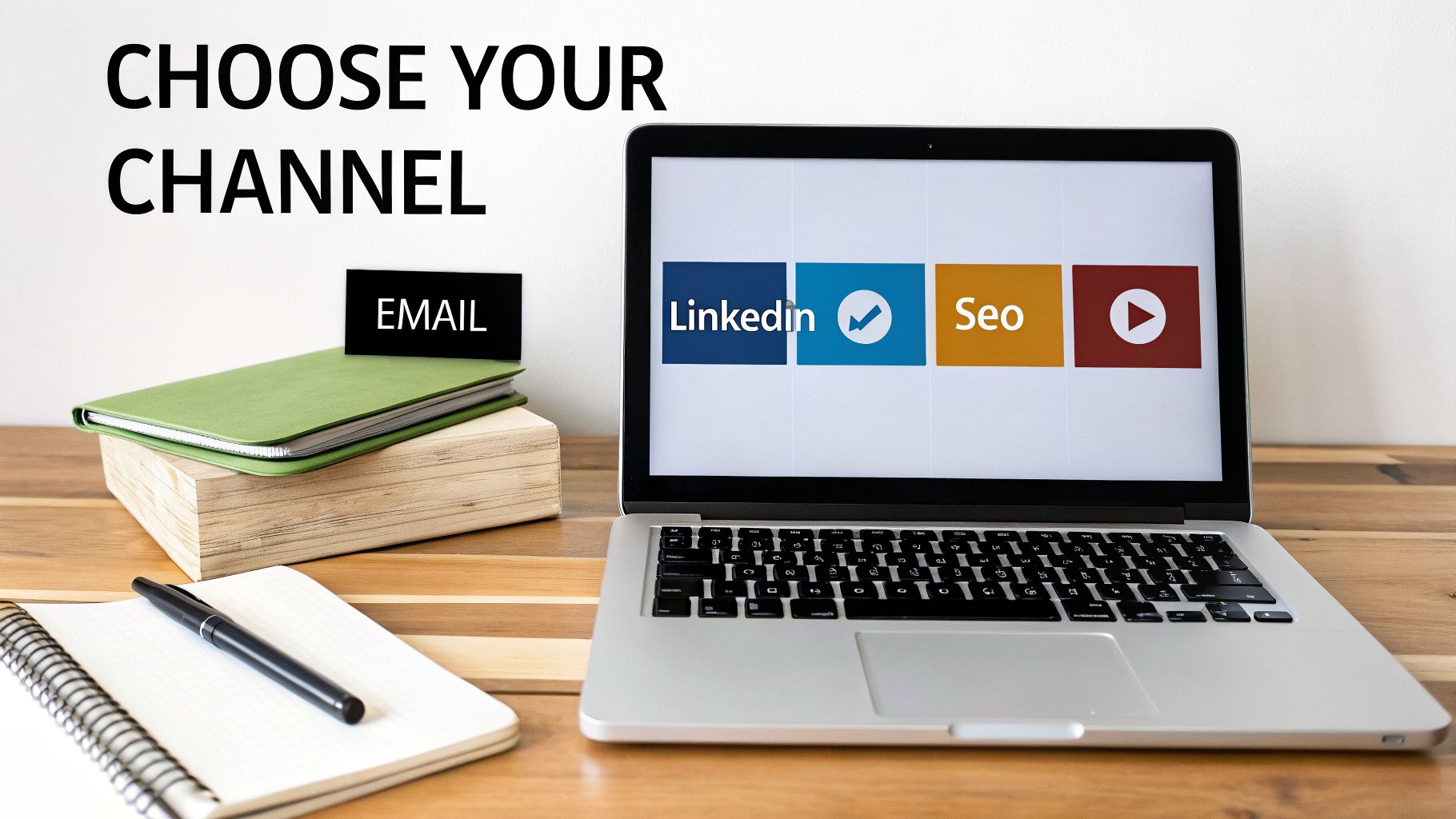
Picking the right B2B lead generation strategy is a lot like choosing the right tool for a job. You wouldn’t use a sledgehammer to hang a picture, and you wouldn’t try to break down a wall with a tiny screwdriver. The best approach depends entirely on your goals, who you’re selling to, and how fast you need to see results.
Not all lead gen services are the same. Some are built for quick wins to get your pipeline moving fast. Others are more of a slow burn, designed to build brand authority and create a steady stream of inbound leads over the long haul. Understanding the difference is the first step to making a smart investment.
Outbound Strategies For Immediate Impact
Outbound is all about being proactive. You’re not waiting for people to find you; you’re reaching out directly to potential customers who fit your ideal profile but might not even know you exist. Think of it as knocking on the right doors.
-
Cold Email Outreach: This is a direct, straightforward, and highly scalable method. An agency creates personalized emails and sends them to a curated list of decision-makers. It’s perfect for B2B companies with a clear, niche audience - like a SaaS firm selling compliance software to finance directors. You can start seeing results within the first month.
-
LinkedIn Marketing: This is where outreach meets professional networking. It’s a mix of sending connection requests, personalized InMails, and actually engaging with your prospects’ content. Because it’s a professional platform, it’s the perfect place to build credibility before you ever make a sales pitch.
In B2B, LinkedIn is king. A massive 89% of B2B marketers use it for lead generation, and for good reason. It’s proven to be 277% more effective for generating leads than Facebook or Twitter, driving an incredible 80% of all B2B social media leads. This is why a multi-channel approach is so powerful - you can use LinkedIn’s targeting to build hyper-personalized contact lists for your email campaigns.
Inbound Strategies For Long-Term Growth
Inbound marketing is about pulling customers in by creating valuable content and experiences they’re actually looking for. You’re basically building a magnet for your brand that attracts prospects who are actively searching for the solutions you provide.
An inbound strategy is a long-term investment in your brand’s authority. The leads it generates are often highly qualified because they have sought you out, indicating a strong existing need and interest.
This approach takes patience. It can be months before you really start to see traction. But the results are sustainable and compound over time, creating a real asset for your business. To get it right, you have to follow the established B2B lead generation best practices that top agencies use to build authority and trust from the ground up.
Comparing Inbound And Outbound Methods
Let’s break down the key differences so you can decide which path - or combination of paths - is right for you.
SEO and Content Marketing
-
Core Mechanic: Creating high-quality blog posts, whitepapers, and guides that rank on search engines for the keywords your customers are using.
-
Ideal Use Case: Businesses that want to become the go-to experts in their industry and build a sustainable, long-term flow of organic leads.
-
Time to Results: 6-12 months to see significant traffic and lead flow.
Pay-Per-Click (PPC) Advertising
-
Core Mechanic: Paying for ad placements on search engines or social media to get in front of a targeted audience.
-
Ideal Use Case: Companies that need leads now and have the budget to test and optimize ad campaigns. It’s great for promoting a specific offer or landing page.
-
Time to Results: Almost immediate. You can start seeing results within days or weeks of launching a campaign.
Honestly, the most effective strategy is often a mix of both. For example, a tech startup might use outbound cold email to book meetings right away while investing in SEO to build a pipeline for the future.
If you’re interested in models that focus purely on results, our guide to performance-based lead generation explains how agencies can tie their success directly to yours. The best B2B lead generation services will help you figure out the exact approach that fits your company’s situation and growth goals.
How B2B Lead Generation Agencies Get Paid
Want to know how a lead generation agency is really motivated? Just look at how they get paid. Their pricing model isn’t just about sending an invoice; it tells you exactly where they’ll focus their energy and what they consider a “win.”
Getting this right from the start is critical. It ensures you and your agency are rowing in the same direction, aiming for the same goal: landing real, high-quality sales opportunities for your team.
Let’s pull back the curtain on the most common ways these agencies structure their fees. Think of it like hiring someone - some models are like a fixed salary, while others are pure commission.
The Traditional Retainer Model
The classic monthly retainer is the oldest model in the book. You pay a fixed fee every single month for access to the agency’s team, tools, and time. This payment covers their operational costs, from software licenses to the salaries of the people running your campaigns.
It’s a lot like putting an employee on your payroll. You’re paying for their effort and the resources they use, not necessarily a specific number of meetings booked or deals closed. Retainers can start at a few thousand dollars and easily go over $10,000 per month, depending on the agency’s reputation and what they’re doing for you.
The catch? This model puts most of the risk squarely on your shoulders. If a campaign flops, you’re still on the hook for the full retainer. It makes the most sense when the work is broad and hard to tie to a single outcome, like building brand awareness or conducting complex market research.
Performance-Based Pricing Models
A more modern approach ties an agency’s pay directly to the results they generate. This completely flips the script, shifting the risk from you (the client) to the agency. It creates a powerful incentive for them to deliver something tangible.
This usually comes in a few flavors:
-
Pay-Per-Lead: Here, you pay a set price for every contact that meets a pre-agreed list of criteria (think job title, industry, or company size). It’s a step up from a retainer, but a “lead” can still just be a name and an email in a spreadsheet - not a guaranteed conversation.
-
Pay-Per-Appointment or Pay-Per-Meeting: This is the gold standard for performance-based lead generation services b2b. You only open your wallet when the agency successfully schedules a qualified sales meeting on your team’s calendar.
The real beauty of a pay-per-meeting model is its simplicity: you pay for an actual outcome, not just effort. This ensures the agency is just as invested in generating sales-ready conversations as you are.
This model forces an important conversation right at the beginning: what, exactly, is a “qualified” meeting? Before any contract is signed, you must nail down the firm criteria - the prospect’s role, company size, and specific pain points. Getting this definition crystal clear prevents any confusion and makes sure you only pay for valuable at-bats for your sales team.
Understanding the different ways agencies structure their fees is the first step. Below is a quick breakdown to help you compare the most common models at a glance.
Comparing B2B Lead Generation Agency Pricing Models
This table shows you the key differences in how these models work, where the risk lies, and which situations they’re best suited for.
| Pricing Model | How It Works | Client Risk Level | Best For |
|---|---|---|---|
| Monthly Retainer | You pay a fixed fee each month for services, regardless of the results. | High | Broad-scope projects like brand building, content creation, or when a dedicated team is needed. |
| Pay-Per-Lead | You pay a set price for each contact that meets basic qualification criteria. | Medium | Campaigns focused on top-of-funnel list building where volume is a key goal. |
| Pay-Per-Meeting | You only pay when a qualified sales meeting is booked on your calendar. | Low | Businesses focused on ROI who want to pay directly for sales opportunities, not just effort. |
| Hybrid Model | A smaller base retainer is paired with performance bonuses for hitting targets. | Shared | Clients who want some budget stability for the agency but also need to incentivize specific results. |
Ultimately, choosing the right model comes down to your goals and how much risk you’re willing to take on.
For those who want to dive deeper into performance-based partnerships, it’s worth understanding the specifics of how to pay for performance marketing to align agencies with real revenue, as it’s the most direct way to connect your marketing spend to bottom-line results.
Hybrid and Other Models
Some agencies try to get the best of both worlds with a hybrid model. This usually involves a smaller monthly retainer combined with performance-based bonuses for hitting specific targets, like booking a certain number of meetings.
This approach offers a middle ground. The retainer gives the agency some financial stability to cover its base costs for strategy and setup, while the performance fees keep them hungry to deliver results.
At the end of the day, there’s no single “best” model for everyone. A retainer offers predictable monthly costs, but a pay-per-meeting structure is the surest way to know your agency is 100% focused on filling your pipeline with opportunities that can actually become customers.
How To Calculate The Real ROI Of Lead Generation
Measuring the success of any B2B lead generation service can’t just stop at counting leads. That’s a vanity metric, plain and simple. If you really want to justify what you’re spending, you have to get down to the brass tacks: the actual financial return on your investment (ROI).
When you calculate ROI, you stop treating lead generation like a cost center and start seeing it for what it is - a predictable way to drive revenue. It’s the framework you need to know if an agency is actually delivering, and it gives you the hard numbers to make a business case for putting more money behind what works.
Key Metrics You Need To Track
Before you can even think about ROI, you need to be tracking a few key performance indicators (KPIs). These are the numbers that will feed your calculation and paint a clear picture of how your campaigns are really doing.
-
Cost Per Lead (CPL): This is your most basic efficiency metric. How much are you paying for every single lead that comes through the door?
-
Customer Acquisition Cost (CAC): This takes it a step further. It tells you the total cost to not just find a prospect, but to actually turn them into a paying customer.
-
Lead-to-Customer Conversion Rate: This percentage shows you how good your sales team is at closing the deals your agency brings them. A low rate might point to issues with lead quality or your sales process.
-
Customer Lifetime Value (LTV): This is the big one. It’s the total amount of revenue you can realistically expect from one customer over the entire time they do business with you.
All these metrics have to work together. A super low CPL doesn’t mean much if none of those leads ever buy anything.
Putting It All Together: A Simple ROI Formula
You don’t need an accounting degree to figure out the ROI on your lead generation. The math is surprisingly straightforward. It just compares what you got back to what you put in.
ROI Formula: ((Total Revenue from New Customers - Total Investment) / Total Investment) x 100
Let’s run through a quick, real-world scenario to see how this plays out.
Imagine you hire a lead generation services b2b agency that charges you on a pay-per-meeting model.
-
Investment: You spend $5,000 for the month.
-
Results: The agency sets up 10 qualified sales meetings for your team.
-
Conversions: Your team is sharp and closes 2 of those meetings, landing you two new customers.
-
Customer Value: On average, each new customer has a lifetime value (LTV) of $15,000.
First things first, calculate your total revenue generated: 2 customers x $15,000 LTV = $30,000.
Now, we just plug those numbers into our formula:
(($30,000 - $5,000) / $5,000) x 100 = 500% ROI
A 500% return is the kind of number that ends debates. This simple calculation gives you the data to hold your agency accountable and make smart decisions with your budget. If you want to dive deeper, you can read our practical guide on how to calculate marketing ROI and apply this thinking across all your campaigns.
This visual shows how you can think about the journey from effort to result, which is really the heart of any ROI calculation.
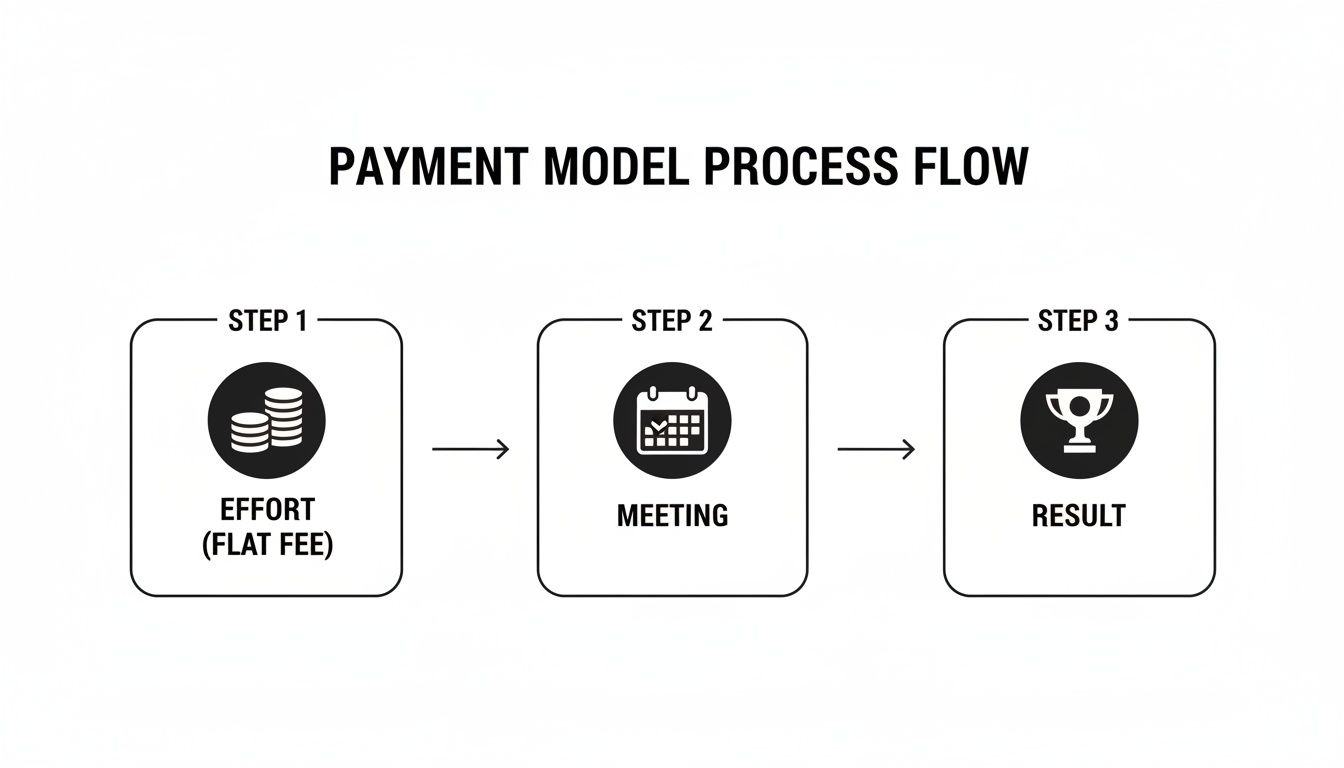
The flow here shows how different payment models can line up with actual outcomes. You can move from just paying for effort, to paying for meetings, and finally to paying for closed deals - tying your spend directly to your success.
Beyond The Basic Formula
While this core formula is a great start, you can always dig deeper. A huge part of any good lead gen strategy is always looking for ways to improve your return. For example, if webinars are a big part of your funnel, learning how to get more ROI from your webinars can give your overall numbers a serious lift.
By consistently tracking these KPIs and using the ROI formula, you get out of the guessing game. You create a system where every dollar you spend on finding new customers is tied directly to real, bottom-line growth.
Your Checklist For Hiring The Right Agency Partner

Picking an agency to fuel your sales pipeline is one of the biggest calls you’ll make. Get it right, and they become a genuine extension of your team, delivering a steady flow of qualified meetings. Get it wrong, and you’ll burn through your budget and maybe even tarnish your brand’s reputation.
This isn’t a decision you should make on a gut feeling. It needs a proper, structured process. This checklist will give you a clear framework to vet potential partners, ask the hard questions, and confidently pick a lead generation services b2b agency that actually gets you closer to your growth goals.
Vet Their Industry Specialization
Not all agencies are the same. The one crushing it for e-commerce brands will likely fall flat trying to navigate the complexities of high-ticket SaaS sales. You need a partner who speaks your language because they live in your world.
Start by asking some direct questions:
-
Do you specialize in our industry (e.g., SaaS, fintech, professional services)? You’re looking for deep experience, not just a casual mention on their website.
-
Can you show us case studies from companies like ours? Vague promises are a huge red flag. You need to see concrete proof.
-
What’s your experience with our Ideal Customer Profile (ICP)? They should be able to talk specifics about the job titles, pain points, and challenges of the exact people you sell to.
An agency that already has a proven track record in your vertical brings valuable insights to the table from day one. This saves you a ton of time and money on the “learning curve” because they already know which channels work, what messaging hits home, and how to get around the unique roadblocks in your market.
Scrutinize Their Process and Transparency
The “how” is just as critical as the “what.” A good agency will be an open book about their methods. If their process feels like a mysterious black box, you should probably walk away.
Here’s what you need to dig into:
-
Lead Qualification Process: How do they define a “qualified lead”? Get their exact definition of a “qualified meeting” and make sure it aligns perfectly with what your sales team needs. This is non-negotiable.
-
Technology and Tools: What tech stack are they using for prospecting, outreach, and analytics? This gives you a peek into how sophisticated their operation really is.
-
Communication and Reporting: What does their reporting look like? You should expect regular, clear updates on the metrics that matter, like meetings booked, reply rates, and open rates.
The data shows a pretty stark reality: an incredible 79% of marketing leads never convert into sales, usually because of poor qualification and nurturing. This is precisely why an agency’s process is so important. A partner focused on quality over sheer quantity, with a transparent qualification system, is the only way to avoid wasting your team’s time on leads that go nowhere. You can explore the B2B lead generation statistics on pipeline.zoominfo.com to see more on this.
Look For Red Flags
As you talk to different agencies, keep an eye out for some classic warning signs. These red flags are often a dead giveaway that a partner is more interested in your wallet than your success.
A great agency sets realistic expectations based on data and experience. A poor one sells you an impossible dream. Knowing the difference is key to a successful partnership.
Be skeptical of any agency that:
-
Promises Guaranteed Results: Nobody can guarantee a specific number of closed deals. Lead gen has too many variables, and anyone making those kinds of promises is being unrealistic and unprofessional.
-
Lacks Transparency: If they’re cagey about their methods, where they get their data, or who is even working on your account, it usually means they have something to hide.
-
Pushes a One-Size-Fits-All Strategy: A generic “proven process” signals a lack of strategic thinking. Your business is unique, and your lead gen strategy should be, too.
-
Uses High-Pressure Sales Tactics: A confident agency with real results doesn’t need to rush you. They let their process and their track record do the talking.
Finding the right agency is a journey of due diligence. For more on what to look for, you might find it helpful to check out our guide to a top B2B lead generation agency, which has a few more tips on making the right choice.
By using this checklist, you can cut through the slick sales pitches and focus on what really matters: finding a transparent, experienced partner who can deliver real, measurable results for your business.
Answering Your Top Questions About B2B Lead Generation Services
Even with a solid grasp of the models and metrics, you’re bound to have some final, practical questions before signing on the dotted line. It’s a big decision, and you need total clarity before you partner with an agency.
Let’s tackle the most common questions we hear from business leaders. The goal here is to clear up any lingering confusion and give you the confidence to find the right partner to fuel your growth.
How Quickly Will We Start Seeing Meetings?
This is always the first question, and for good reason. You’re paying for results, not just effort. The real answer depends on the agency’s process and the groundwork they need to lay first.
Any good agency will need a bit of a runway to get going. This ramp-up period, usually 2 to 4 weeks, isn’t just downtime - it’s where the magic happens.
Here’s what’s going on behind the scenes:
-
Deep Dive Research: They’re digging into your market, checking out the competition, and locking down your Ideal Customer Profile (ICP).
-
Crafting the Message: This involves writing and split-testing different email angles to see what actually gets a response.
-
Building Your Hit List: They’ll put together a highly curated list of contacts that perfectly match your criteria.
-
Warming Up the Tech: This is a big one. They’ll set up and warm up new email domains to make sure their outreach lands in the inbox, not the spam folder.
Once that foundation is set, the campaigns go live. You should realistically expect the first qualified meetings to start popping up on your sales team’s calendars within 30 to 45 days of signing the contract. Anything faster is a red flag that they might be cutting corners on the prep work.
What Exactly Is a “Qualified Meeting” We Pay For?
This is the most critical question in any pay-per-meeting deal. If this isn’t crystal clear from day one, you’re setting yourself up for headaches. The definition of a “qualified meeting” can’t be a fuzzy concept; it has to be a concrete, agreed-upon checklist.
Before a single email is sent, you and the agency must define the exact criteria a lead has to meet for the meeting to count.
A “qualified meeting” isn’t just a calendar invite. It’s a confirmed conversation with a prospect who has been pre-vetted against your specific, non-negotiable criteria. This ensures your sales team only talks to people who have a real shot at becoming customers.
This checklist usually boils down to a few key things:
-
The Right Person: The prospect holds a specific title or seniority (e.g., Director, VP, or C-level).
-
The Right Company: Their business fits your firmographic rules, like industry, employee count, or annual revenue.
-
An Acknowledged Problem: The prospect knows they have a pain point that you can solve.
-
Intent to Look: They’ve agreed to the meeting specifically to evaluate a new solution.
If a meeting gets booked but the person doesn’t meet this checklist - say, they’re an intern, not a director - you don’t pay. Simple as that. This definition protects your budget and forces the agency to focus on prospects who can actually buy from you.
How Does This Plug Into Our Sales Team?
Bringing in an outside lead gen team should make your sales reps’ lives easier, not harder. A smooth, seamless integration is what separates the pros from the amateurs, ensuring a clean handoff from their appointment setter to your account executive.
A professional lead generation services b2b agency will operate like an extension of your own team. The integration process is actually pretty simple and all about efficiency.
Here’s how it usually works:
-
Calendar Sync: You’ll give the agency access to your sales reps’ calendars. They’ll book meetings directly into open slots, avoiding any back-and-forth.
-
CRM Push: All the important lead data - contact info, the conversation so far, and qualification notes - gets pushed right into your CRM. Your reps get all the context they need before they even join the call.
-
Handoff Protocol: You’ll establish a clear process. When a meeting is booked, your rep gets an automatic notification with a full brief on the prospect and why they’re talking.
-
Feedback Loop: This is crucial. After each meeting, your sales team gives the agency quick feedback. This helps the agency constantly refine targeting and get you even better meetings over time.
The goal is to create a “plug-and-play” system. The agency does all the heavy lifting at the top of the funnel, letting your sales team walk into warm, qualified conversations ready to do what they do best: close deals.
At Fypion Marketing, we specialize in a pure pay-per-meeting model, eliminating risk and aligning our success directly with yours. If you’re ready for a predictable pipeline of qualified sales meetings without the burden of retainers or setup fees, book a free consultation with us today.